戴中豪的《Dream Machine》讓觀眾想像及說出自己的夢想

Dream Machine
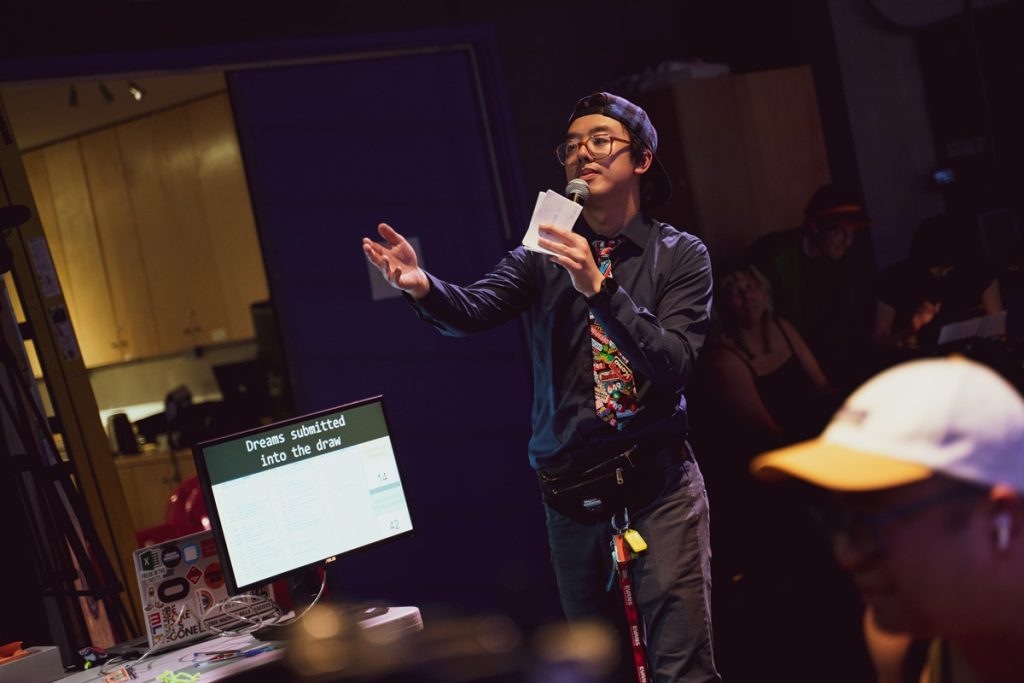
Howard Dai will perform Dream Machine as a work-in-progress at Progress Lab 1422 in late June. Photo by Kimberly Ho.

戴中豪的《Dream Machine》讓觀眾想像及說出自己的夢想

[戴中豪將於六月底在 Progress Lab 1422 演出開發中作品 (work-in-progress) 《Dream Machine》。攝影:Kimberly Ho]

戴中豪 (Howard Dai) 在台灣長大時,特別喜歡看揭曉樂透中獎號碼的電視節目。這類節目以及其他遊戲節目的華麗與刺激感,讓這位現居溫哥華的演員兼 rice & beans 劇團的駐團藝術家留下深刻印象。這也成為他創作《Dream Machine》(夢想機器)的靈感來源——一場大型沉浸式互動演出,將造夢與彩券抽獎融合在一起。

「透過彩券抽獎的動作與形式,《Dream Machine》(夢想機器)試圖探討移民與賭博之間的平行關係:移民過程中,父母對子女的期望,以及他們所必須做出的犧牲,」rice & beans 劇團網站這麼寫道。「這是一場沉浸式體驗,將直接喚起觀眾內心現有或早已遺忘的夢想與渴望。在這部作品中,戴中豪希望策劃一個空間,讓參與者透過夢想相遇,並以各自的抱負互相鼓勵。」

去年十二月,戴中豪擔任主創藝術家,與溫哥華亞裔加拿大劇場合作舉辦這齣戲的工作坊。本月稍早,他又在由 Rumble Theatre 主辦的 Tremors Festival 上,以開發中作品的形式演出《Dream Machine》。根據觀眾回饋,他將於 6 月 26 日與 27 日晚上 7 點在 PL1422 免費再度呈現此劇(請點此連結預約入場)。

戴中豪曾參演《Salesman in China(推銷員在中國)》與《Romeo & Juliet(羅密歐與茱麗葉)》(Stratford 製作)。他亦曾擔任兩部 East Van Panto 製作的助理導演,並於 2022 年擔任 PuSh 國際表演藝術節的駐村數位藝術家。

Dream Machine
Howard Dai’s recent shows at the Tremors Festival have helped him refine Dream Machine. Photo by Kimberly Ho.

[戴中豪近期在 Tremors Festival 上的演出,幫助他進一步完善《Dream Machine》。攝影:Kimberly Ho]

《Dream Machine》與觀眾互動

在與 Pancouver 的 Zoom 訪談中,戴中豪提到,他在先前一齣名為《菠蘿麵包 Pineapple Bun》的戲中,已觸及彩券與離散者的內疚感,該劇背景設定在台北的一家麵包店。而在仍在開發階段的《Dream Machine》中,他則能讓整齣劇完整圍繞在「彩券」這個主題上,同時加入觀眾互動。

他熱愛劇場的現場性,也認為觀眾是每場演出不可或缺的一環。在 Tremors Festival 的演出之前,他請觀眾在紙上寫下一個屬於自己的夢想。戴中豪在其他節目演出期間製作出一份試算表,將每個夢想與其所屬的觀眾對應起來。到了演出時,這些夢想就成了抽獎彩券的一部分,觀眾也可選擇是否公開分享自己的夢想。

某種程度上,戴中豪是在鼓勵人們寫下並說出來自己的夢想。他相信這麼做甚至可能提升實現夢想的可能性。更重要的是,這是一種在全球充滿負面新聞的氛圍中,保持對未來樂觀態度的方法。至於他自己,目前的夢想大多是短期的。

戴中豪將於 6 月 26 日與 27 日晚上 7 點在溫哥華 PL1422 演出開發中的《Dream Machine》(夢想機器)。請點此連結報名入場。在 Instagram 上追蹤《Dream Machine》(夢想機器) dream.machine.show。有關戴中豪的相關資訊,請瀏覽他的個人網站或閱讀 Pancouver 的專題報導。

閱讀原文 >> 點此連結

立即行動

Pancouver 激發創造力並促進一個更具包容性的社會。請支持我們關注多元的藝術家!來自加拿大境內的捐款可獲得稅務收據。

分享這篇文章

精選華文翻譯文章

Mama Yang

楊媽媽在《愛子歸來》中展現何謂人性

楊媽媽宛如一位走出陀思妥耶夫斯基小說的角色。就像《白痴》中的梅什金公爵,她展現了基督信仰中「愛鄰如己」的理想。但不同的是,楊媽媽並非虛構人物,而是一位住在紐約的高齡移民寡婦。台灣導演李靖惠在她細膩的紀錄片《Come Home, My Child(愛子歸來)》中,記錄了楊媽媽的真實人生。  

繼續閱讀 »

The Society of We Are Canadians Too created Pancouver to foster greater appreciation for underrepresented artistic communities. A rising tide of understanding lifts all of us.

We would like to acknowledge that we are gathered on the traditional and unceded territories of the Coast Salish peoples of the xʷməθkwəy̓əm (Musqueam Indian Band), Skwxwú7mesh (Squamish Nation), and Səl̓ílwətaɬ (Tsleil-Waututh Nation). With this acknowledgement, we thank the Indigenous peoples who still live on and care for this land.

This project is funded in part by the Government of Canada.

The Society of We Are Canadians Too created Pancouver to foster greater appreciation for underrepresented artistic communities. A rising tide of understanding lifts all of us.

We would like to acknowledge that we are gathered on the traditional and unceded territories of the Coast Salish peoples of the xʷməθkwəy̓əm (Musqueam), Skwxwú7mesh (Squamish), and Səl̓ílwətaɬ (Tsleil-Waututh) Nations. With this acknowledgement, we thank the Indigenous peoples who still live on and care for this land.

Enjoying Pancouver?

Independent arts journalism needs readers like you!

If you value stories like this, please consider supporting Pancouver.