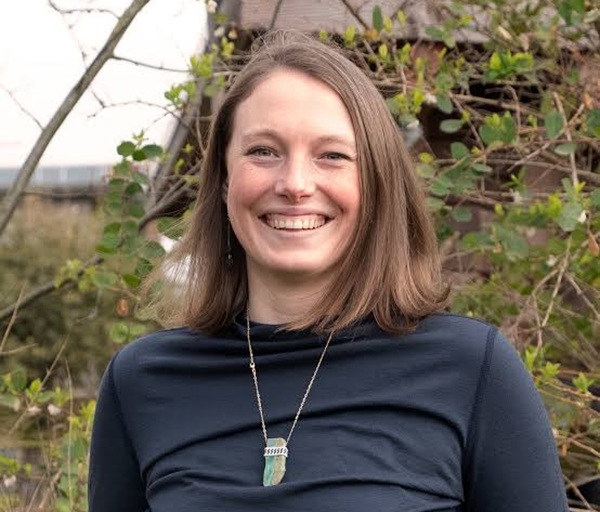
Family and friends are mourning the loss of one of Vancouver’s best-known advocates for inclusion. Alden Habacon was principal and founder of Inclusive Excellence Strategy Solutions, which offers workshops, other training opportunities, and public speaking.
From 2004 to 2010, Habacon was manager of diversity initiatives at the Canadian Broadcasting Corporation. Over the next five years, he served as the University of British Columbia’s director of intercultural understanding strategy development. And in 2013, Habacon co-edited Spark: The Inspiring Life and Legacy of Milton K. Wong along with the philanthropist’s daughter, Elizabeth Wong, and niece, Joanna Wong.
Fundraiser Fred Lee expressed sadness over the news on social media.
“He was a generous leader, cherished mentor, and extraordinary friend to many; a champion of diversity and inclusion,” Lee wrote on Instagram. “I’ve had the privilege of working with Alden at UBC, CBC and the wider community. Alden’s vision and dedication to making the world a better place were unmatched.”
Habacon is survived by his wife and three sons. A GoFundMe page has been created to support the family.
On his company website, Habacon stated that he moved from Manila to Canada at the age of two. He lived in Winnipeg, Edmonton, and Regina, where he joined the Canadian Army Reserve. He was 17 years old at the time and the only Filipino Canadian in an all-white platoon, which included a white supremacist.
After moving to Metro Vancouver, Habacon married into a Chinese Canadian family and became a father.
My two future teenagers supporting @AWCanada #BurgersToBeatMS while spending #qualitytime at the beach. pic.twitter.com/FHxOWo1mND
— Alden E. Habacon (@aldenhabacon) August 19, 2021
Habacon defined cultural navigators
At Simon Fraser University in the late 1990s and early 2000s, Habacon attended the School of Contemporary Arts. He became president of the Visual Arts Student Union. Later, he said that he learned how to change the world at SFU. In 2004, he founded Schema Magazine, which is an interculturally oriented online magazine.
The friendly, energetic, intense, and often dapper Habacon passionately advocated for seeing people as having a multiplicity of identities. In a 2009 TEDxVancouver Talk, Habacon spoke eloquently about cultural navigators who illustrated his point. He noted that many are often 1.5- and second-generation immigrants.
“Cultural navigators are broadly defined as those able to manoeuvre through and around complex networks of cultural spaces,” Habacon said. “These are networks they have built through immigration, their family roots, through social capital, and through living in diverse cities all over the world.”
Pancouver adopted “Become a Cultural Navigator” as its slogan when it launched in 2022.
In his talk, Habacon declared that the problem with the federal government’s “Multiculturalism 1.0” policy was that it used ethnicity as the “main identifier” in a Canadian “mosaic”.
“Essentially, you are oversimplified to being an ethic tag,” Habacon said. “In other words, in the mindset of the mosaic, you are your ethnicity regardless of how little or how much it is actually part of your everyday life.”
Watch Alden Habacon’s 2009 TEDxVancouver Talk.
In place of Multiculturalism 1.0, Habacon proposed embracing an “interculturalism schema” grounded in three assumptions.
“The first is that ethnicity informs your identity but does not define it,” he stated. “In contrast, the mosaic is essentialist. It basically takes up all of you and it reduces you to what your ethnicity is regardless of how little or how much it is a part of your life.”
Going beyond the “mosaic”
The second assumption, Habacon stated, is that “cultural identity is fluid.” The mosaic, on the other hand, “assumes one’s cultural identity is static”.
He also emphasized that all forms of culture shape identities, which was his third assumption.
“We are a collective mash-up of all sorts of things, like our heritage, our work culture, our education,” Habacon said. “The mosaic, in being based on ethnic allegiance, assumes that all this other stuff that make up who you are—like media, literature, and travel—do not matter.”
Through an intercultural schema, Habacon proposed looking upon others as “products of their cultural fluidity” rather than seeing them as “ethnic” or of a “certain ancestry”.
In 2011, Habacon began speaking about “Multiculturalism 3.0”, which he described as more aspirational.
In the 2012 speech above, Habacon decried what he saw as a rift between Canadian-born people of Asian ancestry and first-gen Asian immigrants. He first observed this as a Grade 12 student in Burnaby.
“Where I came from, there were not enough Canadian-born Asians and first-generation Asians to form two separate groups,” he stated. “But here I was trying to make sense of these distinct classes of immigrants within the same ethnic group.”
Habacon added that students didn’t realize that to white supremacists, they were all part of the same group. “And in being divided, they never stood a chance.”
Habacon sought meaningful bonds
Furthermore, Habacon argued that this was a class divide, which only grew over time.
“Perhaps multiculturalism in B.C. has never been about ethnic diversity but always been about class diversity—how class has been racialized,” he said. “Struggling to overcome class divisions across and within cultural groups has become, in my opinion, the current and future challenge of multiculturalism, particularly in B.C.”
He closed his talk by suggesting B.C. could decide between two types of multiculturalism. One would produce “what appears to be peaceful coexistence”. The other would “form meaningful bonds between profoundly different groups of people”.
“As we adjust our frames of mind for aspirations of social sustainability, we will need to be more intentional about fostering dynamic community interaction and community cohesion,” Habacon advised. “We will need to move beyond cognitive knowledge of racism and we will need to acknowledge that the healing of Aboriginal communities is part of our sustainability. And we will need to get better at being an interfaith place.”
Over the years, Habacon shared his ideas as a consultant with a wide range of organizations. They included Vancity, UBCP/ACTRA, WorkSafeBC, and Vancouver International Airport Authority. He also interviewed employees, conducted a staff survey and offered training sessions at the Royal BC Museum during the pandemic. This came after the head of Indigenous collections and repatriation, Lucy Bell, resigned and accused the museum of racism.
In addition, Habacon was a former board member of S.U.C.C.E.S.S. and co-founder of the Asian Canadian Journalists Association, Vancouver.

Challenging Vanoc’s representation
Habacon occasionally took public stands. In 2010, for example, he wrote an opinion piece for Schema Magazine decrying the lack of diversity among eight flag bearers at the Vancouver Olympics opening ceremony.
“Listen, if you’re going to reflect Canada’s diversity, you can’t go full out on Aboriginal representation and then fail to represent the visible diversity of the local population,” Habacon declared. “Vancouver is a city where ‘visible minority’ and ‘ethnic minority’ don’t mean anything anymore, because of the sheer size of the Chinese and South Asian populations.”
Habacon pointed out that if anyone watched the ceremony on TV, they wouldn’t know that it took place in North America’s most Asian city.
“Have any of the producers been to a high school in Vancouver?” he asked.
Follow Pancouver on X @PancouverMedia and on Instagram @PancouverMedia. Follow Charlie Smith on Bluesky @charliesmithvcr.bsky.social.