
By Jolene Hui
Sprinkle some Parmesan into your grilled cheese. That is the secret drag host Jaylene Tyme shared with performer Yuki the Juggler during rehearsals, and the anecdote she uses to exemplify how collaboration between Indigenous and non-Indigenous folks can lead to something great, no matter how mundane.
The thoughtful curation of the sixth Transform Festival was informed by Jaylene’s humorous yet personal storytelling as an Indigenous two-spirited transgender woman, complemented by a silent auction spotlighting Indigenous art after the show. Although unpolished choreography, an unfortunate wardrobe malfunction, and performer nerves undermined promises of an “epic”, “mind-blowing” night, the festival’s commitment to celebrating Indigenous artists and individuality shines through.
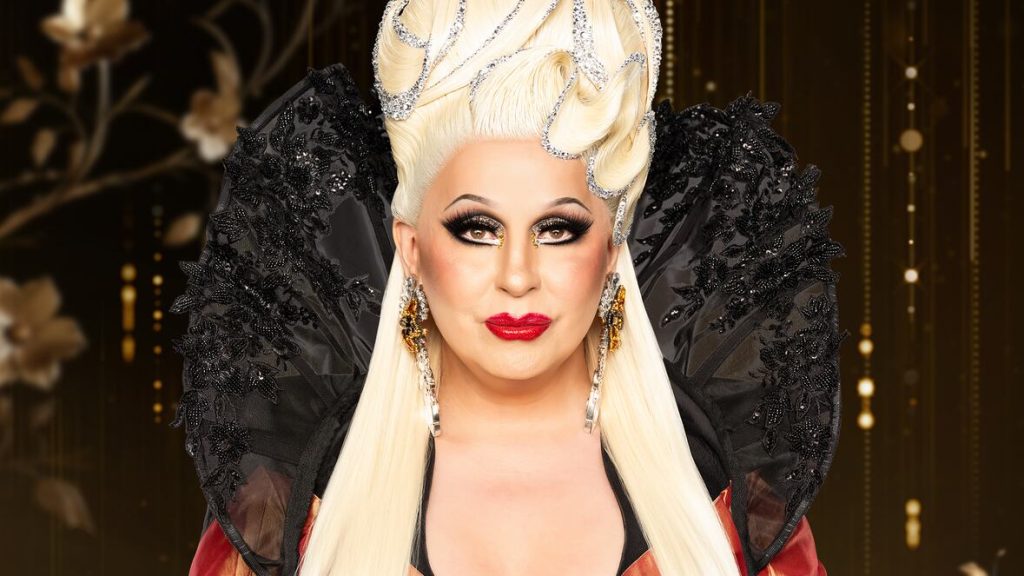
The all-ages Opening Night Bash took place on November 6, 2025, bringing Maddi Bulloch, Emma Pennell, Lola Loops, and Yuki the Juggler to the Vancouver Playhouse in a variety showcase directed by Sarah Pelzer. Carefully arranged drapes symbolize the weaving together of cultures and identities, while Métis performer Jaylene Tyme from Canada’s Drag Race bridges the diverse performances that shift between celebratory and reflexive. The evening embodies the festival’s theme of “braiding worlds”, illustrating what it truly means to empower Indigenous artists while fostering collaboration with non-Indigenous artists.
Though there were seats to be filled, it is quickly evident the moment Jaylene struts in with a lip-sync performance of “Ain’t No Mountain High Enough” that the energy in the room would make up for those empty seats. The spotlight bounces off the sequins on her glamourous
green costume and the accompanying headpiece—somewhat resembling a sparkly green peacock Christmas ornament—as Jaylene basks in the hooting and the hollering of the crowd which from children, to college students, to queer couples, to more mature groups. She takes an extended moment before introducing the themes of the night, to which the crowd was more than receptive. She softened her playful demeanour as she reminded audiences of the sacredness of unity and Indigeneity, a skillful balance that guides the crowd’s energy for the rest of the night.
The first act of the night: a fusion circus performance by Yuki the Juggler, Lola Loops, and Maddi Bulloch. The passing around of props across performers of multiple disciplinaries mirrored the flow of creative energy unrestricted by binaries and cultural differences, celebrating the very theme of braiding worlds. The audience’s gaze was glued to the hypnotic action on stage, although this immersion was interrupted by fumbles from the performers, understandably unnerved by the weight of being the opening act on opening night.
Emma Pennell impresses the crowd
The crowd adapted their energy for the somber musical act by Mi’kmaw Operatic soprano Emma Pennell. Pennell’s impressive vocal projection was enhanced by the acoustics of the venue, her vibrato creating the most tender atmosphere. Only at the end of the performance did I realize I had been scrunching my eyebrows even without understanding the story being told; I can only imagine how much more impactful the lullaby piece would be had there not been a language barrier.
The sincere energy intensifies into anger during the contemporary dance act by Saulteaux-Cree dancer Maddi Bulloch and her ensemble, which encapsulates the resistance of Indigenous communities and pays tribute to Indigenous victims. The dancers contorted their bodies to spoken affirmations validating shared, intergenerational Indigenous traumas from cultural erasure and residential schools. The dancers’ costumes were in the same shade of deep orange which created a mesmerizing, cohesive whole, yet their individualism was celebrated by unique costumes that flattered their bodies and personalities. The message that unity does not require an erasure of differences was realized in this simple detail.
Colour cohesion was conserved when Jaylene returned to the stage in a costume she had worn in Canada’s Drag Race—an orange dress inspired by the Monarch butterfly, featuring orange handprints associated with Truth and Reconciliation. Jaylene shares her experiences as a victim of the Sixties Scoop, where Indigenous children were forcibly removed from their families to be adopted by non-Indigenous families. In that brief moment, a complex feeling washed over me. How can I empathize with something so horrible as someone thriving in a system built on oppression? I bring this up for non-Indigenous readers and myself to ruminate on, but this moment is not about us. Jaylene’s vulnerable anecdote and the symbolism sewn into her dress is fitting of the name of the Transform Festival, as we honour the victims and survivors of Indigenous history.
Emotional authenticity and passion became the show’s greatest strengths, as fumbles that haunted the fusion circus act unfortunately returned during V’ni Dansi’s Métis Jig act and Yuki’s juggling performance. A dancer’s shoe came apart in the middle of the performance, disrupting the rhythm of himself and his partner. Despite the duo seemingly losing steam after this mishap, the dancer persevered with just one shoe, which I can only imagine to be much harder than it looks in a rhythm based dance act. The audience remained on the edge of their seats for Yuki’s juggling act. His laser-focus on balancing (too many) items was shared among the audience, as we all held our breaths so as to not distract the performer.
Creating connections through performances
Although Yuki dropped a few items here and there, the crowd cheered him on as he restarted his stunts with even more careful precision with success each time. I was later asked why these flawed performances should be worthy of someone’s time and money. I think that entering a show knowing that it serves a larger purpose than pure entertainment, that it aims to create connection, makes you feel like a part of something larger than yourself. And that feeling is arguably more powerful than the exhilaration of a perfectly executed circus act that dissipates after the performance. What stuck with me after the performances wasn’t the wardrobe malfunction or the minor bumbles, but how the dancers persevered, how the audience clapped along to the rhythm of their shoes, how they cheered at the end of every performance regardless of its level of refinement, and the contagious smile from a brunette dancer that embodied the passion of every performer who stepped on stage that night.
The final performance of the night was a glimpse into the Starwalker experience, an award-winning musical written and directed by Oji-Cree artist and festival curator Corey Payette, which would take place on November 14. Soloists took over the stage in an ode to identity; lyrics celebrated every performer and audience member. I couldn’t help but revisit in my mind Jaylene Tyme’s incredible outfit changes when they sang “God in Drag, You’re Beautiful”. With a final reappearance from Jaylene, our night ended in a round of applause and some charcuterie from the silent auction.
On the bus ride home, I found myself thinking of a particular audience member in the diverse, intercultural crowd—a toddler sitting on his caretaker’s lap who buzzed with excitement throughout the night, clapping, cheering, and waving at Jaylene who reciprocated with affection. During a night of visibility and celebration of the history of Indigenous peoples, the talents of artists and performers, the truth of queer and two-spirited individuals, and the individuality of us all, this toddler reminds me: hate is taught, and love is natural.
Follow Pancouver on Bluesky @pancouver.bsky.social.




