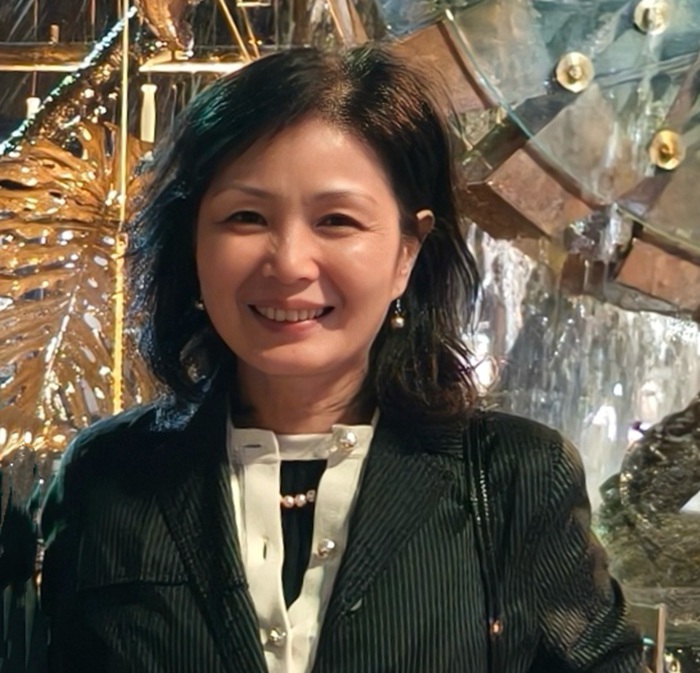
Cathy Xinman: Oh, Mother

Cathy Xinman
Cathy Xinman writes poems and screenplays in English and Chinese.

In this poem, storms, leaves, and the changing seasons are not merely landscapes of nature, but metaphors for a mother’s life. It speaks of how time leaves its traces upon a person, and how love, through those very marks, grows deeper, gentler, and more luminous.

Reading this poem is like gently touching a mother’s face in the wind—fragility and resilience emerge side by side; the weight of passing years becomes quietly visible, along with the understanding that some kinds of love, precisely because they have endured storms, become even more precious.

Oh, Mother

by Cathy Xinman

Storms
have been arriving all day long—
arriving at the shore,
arriving farther and deeper,
bearing their own weight,
sweeping across everything,
as if destruction
were inevitable.

Oh, and yet the leaves remain steadfast,
facing burial,
facing the fall.
If I were to tell you
that in the next moment
the world would lose its light,
would you still choose
to be a leaf?

Oh, Mother,
what April has done to you
will surely let summer ripen.
In all the places
where storms have passed,
I cannot help but love you.

Autumn will inevitably arrive.
I love the beautiful remnants of your face,
love what time
has written upon you.
Now, the hollow sky
has reached your resilience and grace.
And I confess—
my trembling heart.

Cathy Xinman writes poetry in English and Chinese. Find her English-language collection, Where You Love Yourself, on Amazon. You can also hear her poetry on her TikTok page. 

Follow Pancouver on X @PancouverMedia and Instagram @PancouverMedia.

Take Action Now

Pancouver fuels creativity and promotes a more inclusive society. You can contribute to support our mission of shining a spotlight on diverse artists. Donations from within Canada qualify for a tax receipt.

Share this article

Picture of Cathy Xinman

Cathy Xinman

Cathy Xinman is a B.C. resident who writes poems in English and Chinese.

Subscribe

Tags

cover story

Related Articles

The Society of We Are Canadians Too created Pancouver to foster greater appreciation for underrepresented artistic communities. A rising tide of understanding lifts all of us.

We would like to acknowledge that we are gathered on the traditional and unceded territories of the Coast Salish peoples of the xʷməθkwəy̓əm (Musqueam Indian Band), Skwxwú7mesh (Squamish Nation), and Səl̓ílwətaɬ (Tsleil-Waututh Nation). With this acknowledgement, we thank the Indigenous peoples who still live on and care for this land.

This project is funded in part by the Government of Canada.

The Society of We Are Canadians Too created Pancouver to foster greater appreciation for underrepresented artistic communities. A rising tide of understanding lifts all of us.

We would like to acknowledge that we are gathered on the traditional and unceded territories of the Coast Salish peoples of the xʷməθkwəy̓əm (Musqueam), Skwxwú7mesh (Squamish), and Səl̓ílwətaɬ (Tsleil-Waututh) Nations. With this acknowledgement, we thank the Indigenous peoples who still live on and care for this land.

Enjoying Pancouver?

Independent arts journalism needs readers like you!

If you value stories like this, please consider supporting Pancouver.