This is not a “beautiful” poem in the traditional sense. Rather, “Who Extinguished the Stars at Night” is marked by a strong contemporary consciousness, technological reflection, and an absurdist spirit. It does not simply focus on “anxiety in the age of AI”; instead, it weaves together seemingly unrelated images—morning, sky, stars, robots, toilets, and nightfall—into a spiritual thread concerning the human condition.
The “morning” at the beginning of the poem is not merely a measure of time. It gradually becomes a symbol of a world that is ancient, natural, and untouched by technological transformation, creating a structural echo with the “night” that appears later in the poem.
The first half of the poem maintains a lyrical engagement with nature and life. Then “intelligent machines” suddenly intrude, marking the poem’s greatest turning point and disrupting its internal order. What the poem truly conveys is the sense that human subjectivity is suddenly being re-ordered by technology.
The openness of the ending preserves a childlike, defamiliarized question: Who, after all, extinguished the stars? On the surface, it asks about the disappearance of starlight; beneath the surface, however, it poses a deeper civilizational and ethical dilemma: as humanity continues to create new forms of intelligence and power, are we also losing our ability to look up at the stars?
Who Extinguished the Stars at Night
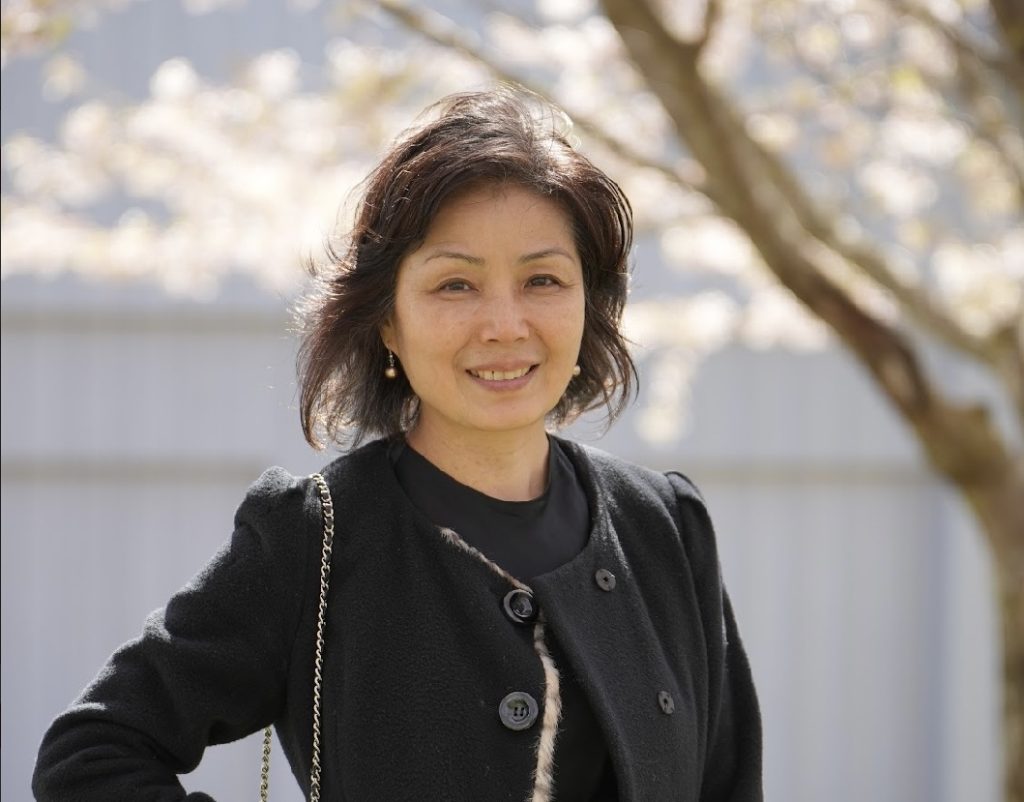
By Cathy Xinman
In the morning, the sun is already out.
I thought it was right outside the window,
or among the branches,
reporting to me.
Apparently, my eyes have awakened.
If there were no clouds,
how could I see
you watching me from within them,
as though the saints were there,
so beautiful.
Your gaze seems to like me very much.
The gloom gathered by the night
seems to have been driven away.
How could I pretend to be in pain?
There is an impulse to fly in my blood.
My ears, come,
let us share a morning.
It is wiser than I am.
For years I have loved watching the morning,
watching a wiser sky,
watching the branches sway in the wind,
looking as though
they have never read a book,
yet living beside me,
bringing me small happiness.
But the bright intuition of pessimism
has always told me
that something is wrong.
Intelligent machines
have forced me onto a sharply turning track.
Morning is ancient.
I am what has changed.
Multicoloured robots are smarter than I am.
They can attack directly
without having to be wounded.
War robots
can successfully fight
from morning until night.
Come, overwhelming age,
send us to the toilet.
There are no robots there yet.
Simple chaos.
Think of it:
our backs toward the blue sky,
our bottoms toward the pit,
a concrete stall
like a curtain of modesty.
Listen.
Silence is there,
at the door.
It is still after four in the afternoon,
yet night has already begun.
On a winter afternoon,
everything has been painted over by night.
Time has brought us so much.
I can no longer find
the crowded sky,
the flashes that once were,
the dense multitude that once was,
the starlight that once was,
so much like missing gold.
It is no longer mine to enjoy.
Who stopped looking at the stars long ago?
Who extinguished the stars at night?
Cathy Xinman writes poetry in English and Chinese. Find her English-language collection, Where You Love Yourself, on Amazon. You can also hear her poetry on her TikTok page.
Follow Pancouver on Instagram @PancouverMedia, on X @PancouverMedia, and on Bluesky @pancouver.bsky.social.