Susanna Ng is a natural storyteller. She demonstrated this as a journalist in Hong Kong in the early ‘90s. Then after returning to Vancouver in 1995, she continued telling stories as a reporter and editor of Ming Pao Daily until early 2019. Ng earned a Jack Webster Foundation journalism prize for her last major feature for the paper, which was a seven-part feature on the history of Hong Kong immigrants to Vancouver.
“I looked at every aspect of the migration story,” Ng tells Pancouver over Zoom. “How they came, how they settled, what kind of food they brought to Vancouver.”
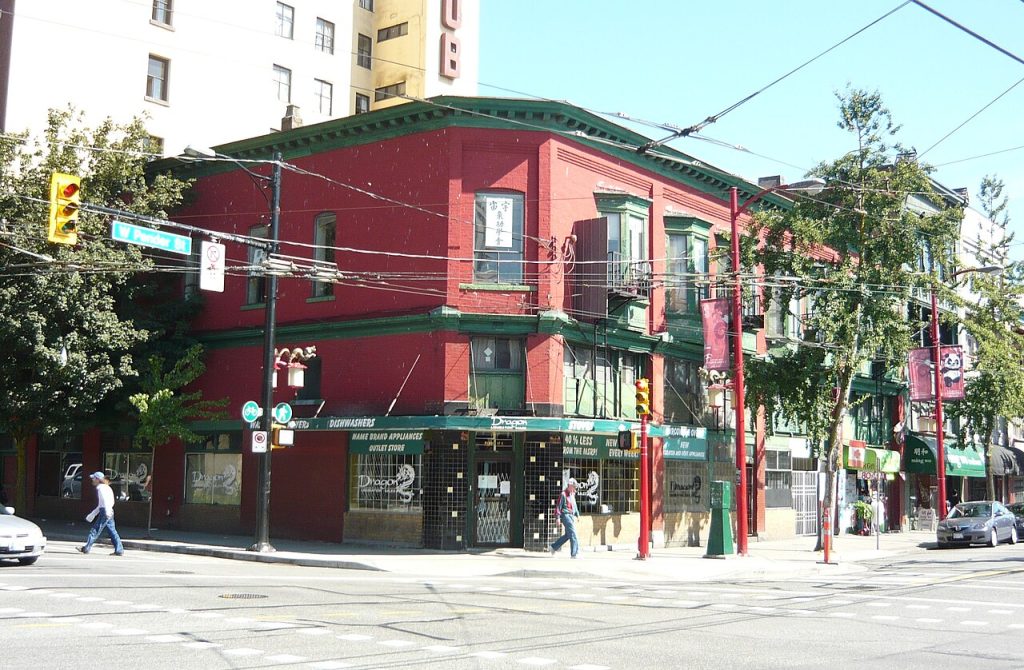
Nowadays, Ng continues embracing that narrative tradition as the head of interpretation and content at the Chinatown Storytelling Centre. It’s housed in a red brick building at 168 East Pender Street in the heart of the historic neighbourhood.
She works with former Canadian Broadcasting Corporation journalist Ramona Mar. They focus on stories or histories of people “who have lived, worked, and entertained in Vancouver Chinatown”.
“We believe this approach provides an authentic reflection of the community, which is the voices of the people,” Ng says. “We interview people with great achievements, but we also interview families of store and restaurant owners, veterans, butchers, barbers, taxi drivers, even gambling house operators.”
The Chinatown Storytelling Centre also focuses on the stories of youths.
Ng seeks little-known stories
Ng and Mar maintain that the best way to understand the history of Chinatown is through many individual stories that create a bigger picture. The Vancouver Chinatown Foundation for Community Revitalization funds this work.
The foundation has a mandate is to revitalize Chinatown through three pillars: economic, cultural, and physical, which includes social housing. The Chinatown Storytelling Centre is the cultural arm. It brings more foot traffic to the neighbourhood, which helps local businesses.
“It’s not just about collecting stories, but also saving and preserving archival materials and artifacts,” Ng says.
Ng emphasizes that the history of Chinatown is part of Canadian history. She acknowledges that a great deal of academic literature on Chinese Canadian history is based on primary sources in English. However, Ng notes that there was a daily Chinese-language newspaper, the Chinese Times, which was published in Vancouver from 1914 to 1992.
She describes the Chinese Times as an “immensely valuable” source to determine how people of Chinese ancestry viewed various events. Much to her delight, it has been completely scanned and uploaded.
Won Alexander Cumyow recognized
In her current work, Ng is drawn to little known or unknown stories. She employed the same approach when she worked at Ming Pao Daily.
For example, Ng says that the Chinatown Storytelling Centre revealed that the first woman to fly a plane in Canada, Annie Lee Chong, was of Chinese ancestry. Ng’s team also discovered the identity of the first Chinese woman born in Canada.
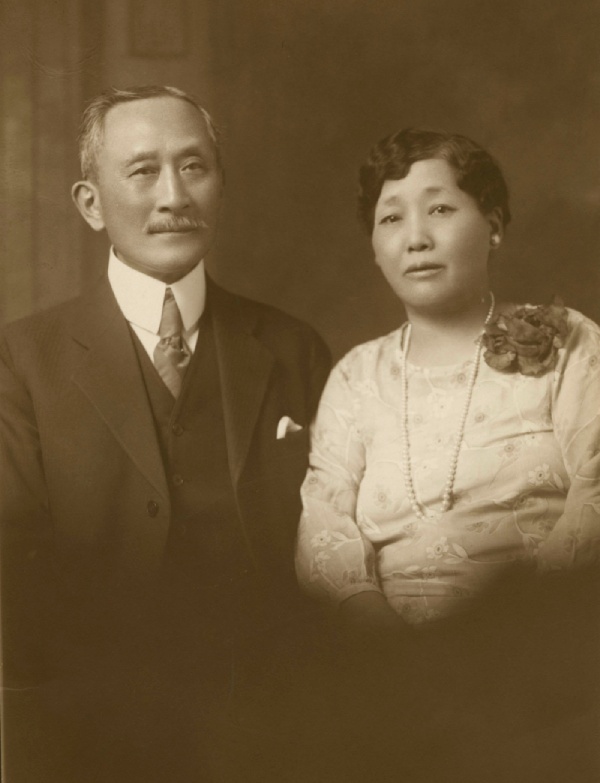
“Her name is Elizabeth Won, who was the younger sister of Won Alexander Cumyow,” Ng says.
Multilingual Won Alexander Cumyow was the first Chinese Canadian born in North America. He trained in law and worked as a Chinese and Chinook translator for the Vancouver Police Department while running his own businesses. He also championed the rights of Chinese Canadians and opposed restrictive immigration policies, including the Chinese head tax.
“We recently nominated him to be a national figure of Parks Canada,” Ng says. “And we successfully pitched that.”
As a result, Parks Canada designated Won Alexander Cumyow as a national historic person this year. In recognition of this, a commemorative plaque will be installed in a location closely related to his life.
We are not hyphenated Canadians
Ng and many others with Chinese ancestry don’t like to see the term Chinese Canadian hyphenated.
“We’re first and foremost Canadian,” she says. “To us, ‘Chinese’ in Chinese Canadian is an adjective, which is like a ‘happy’ Canadian, ‘chubby’ Canadian, ‘laughing’ Canadian, or ‘tall’ Canadian.”
Ng adds that it doesn’t matter if one of the subjects of the centre’s stories listens to Cantopop, Mandopop, or English songs. Regardless, she will focus on the Canadian aspect of their story.
Her colleague, Ramona Mar, was born in Fort Smith in the Northwest Territories before moving to Prince Rupert and then to the Lower Mainland. According to Ng, they found common ground in embracing the identity of Chinese Canadians in the stories that they are producing.
Then, Ng passes along a message from Mar: “We are Chinese Canadian. It does not mean that we are all Chinese from China.”
They refuse to refer to the Chinatown Storytelling Centre as a museum because they don’t want to be bound by the trappings and stereotypes associated with that word.
“We hold events here,” Ng says. “We want to have a very welcoming space for everyone in the community.”
Last year, the Chinatown Storytelling Centre hired a professional archivist. By doing this, the foundation aims to make it easier for scholars to have access to what Ng and Mar have discovered, as well as artifacts from Chinatown.
“Hopefully, by creating a repository of Chinese primary sources, the next generation of historians and researchers could produce more informed academic work,” Ng says. “That’s my dream.”
For more information on the Chinatown Storytelling Centre, visit the website. Follow Pancouver on X (formerly Twitter) @PancouverMedia and on Instagram @PancouverMedia.
This article is part of “Beyond Chinese”, a joint initiative of Pancouver and the Asian-Canadian Special Events Association. Through interviews with artists and cultural workers, Beyond Chinese offers a nuanced view of people with Chinese ancestry. Pancouver and the Asian-Canadian Special Events Association gratefully acknowledge the support of Canadian Heritage.