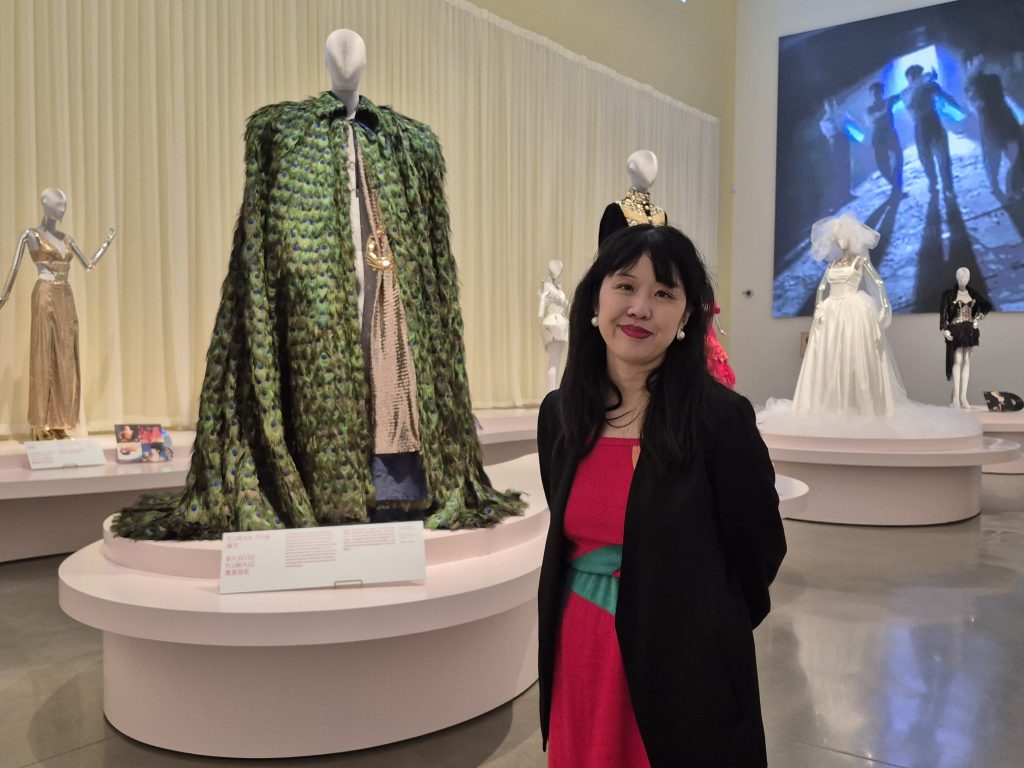
A celebration of sound, style, and diasporic imagination in Chinatown has wowed a Canadian Museums Association jury. The Chinese Canadian Museum’s Dream Factory: Cantopop, Mandopop 1980s – 2000 captured the CMA Award for Outstanding Achievement in Exhibitions. It came for how this exhibition “fused scholarship, design, and community memory to illuminate how popular music shapes diasporic identity”.
Chinese Canadian Museum CEO Melissa Karmen Lee curated Dream Factory with Yilin Chen and Bofei Zhang. The exhibition includes a listening lounge and karaoke stage designed by Ming Wong and Liam Morgan. In addition, there are eight music listening stations with headphones in a swanky nightclub atmosphere.
The exhibition also highlights how some Vancouver residents contributed enormously to the rise of Cantopop and Mandopop in the latter part of the 20th century.
“Dream Factory brings to light a largely overlooked chapter of Canadian popular culture—one shaped by Cantopop and Mandopop and woven into the everyday lives of Chinese Canadian communities,” Karmen Lee said in a news release following announcement of the award. “These musical worlds are part of Canada’s cultural fabric, even if they have often existed outside the mainstream record.
“This recognition affirms the importance of uncovering, preserving, and reintroducing these cultural references before they disappear, allowing museums to tell fuller, more nuanced stories of Canada—where popular culture, memory, and migration intersect to create a richer national history.”

She emphasized that the Dream Factory exhibition “honours the parents who listened to this music while raising children who grew up with the voices of Sally Yeh, Leslie Cheung, and Roman Tam”. It also offers up plenty of fashion. Charlotte Chang, Bev Huynh, Modernize Tailors, Stephanie Kong, Tina Tam, and Ric Yuenn re-imagined famous style choices by Cantopop and Mandopop stars.
“The Chinese Canadian Museum created a very innovative exhibition that was participatory and engaging,” the CMA Awards jury stated. “The narrative of the exhibition felt incredibly integrated with the community and wove together the present, past and future, telling living stories pulled from their deep relationships.”
The Chinese Canadian Museum has extended Dream Factory’s run until July 19.

Museum of Vancouver champions sustainability
Another big winner was the Museum of Vancouver. It received the CMA Award of Outstanding Achievement in Research for its SAGE (Sustainable Arts and Green Ecosystems) initiative.
“At its core, SAGE is a living community of practice dedicated to circular design,” the CMA stated on its website. “Through collaborative research, fieldwork, and design experiments, participants co-developed methods to rethink, refuse, reduce, reuse, and recirculate materials used in exhibitions and staged environments.”
Pancouver has previously reported on the Museum of Vancouver bringing together arts administrators, environmental advocates, academic sustainability experts, and Vancouver Civic Theatres staff to focus on decarbonizing the arts and culture sector. There is even a SAGE toolkit to show museums and arts organizations how to design and produce sustainable exhibitions and theatre sets.
The SAGE initiative also connects Indigenous knowledge repatriation and engagement with existing belongings. That was on display in The Work of Repair: Redress & Repatriation at the Museum of Vancouver exhibition. Moreover, the Museum of Vancouver has embedded sustainability into all of its exhibitions in recent years, including Future Makers: Chairs by New Designers, Deep-Seated Histories: Chairs from the Collection, and Mirage: Disused Public Property in Taiwan.
“Receiving this award is a powerful affirmation that practice-based, collective research can drive meaningful change,” Viviane Gosselin, MOV director of collections and exhibitions and SAGE project lead, said on the CMA website. “SAGE was built by a community of cultural workers who chose to rethink how we make and unmake things. This recognition honours their ingenuity, persistence, and belief that sustainability is both a creative and ethical act.”

MOA at UBC honoured for Nuxalk Strong
Meanwhile, the Museum of Anthropology at UBC received Honourable Mention for Outstanding Achievement in Exhibitions for Nuxalk Strong: Dancing Down the Eyelashes of the Sun. It was the world’s first museum exhibition solely devoted to the Nuxalk Nation. Co-curated by Dr. Snxakila-Clyde Tallio and Dr. Jennifer Kramer, Nuxalk Strong included belongings from the MOA, private collections, Royal British Columbia Museum (Victoria), Burke Museum (Seattle), Glenbow Museum (Calgary), Manitoba Museum (Winnipeg), and Museum of Vancouver.
“Nuxalk Strong demonstrates the foresight of our Elders who strategically placed our treasures in museums for safekeeping at a time when our culture and language were being oppressed and we were forced to confine to colonial ways,” Dr. Tallio said on the CMA website. “In Nuxalk, this is known as putl’altnicik—thinking and planning for those not yet born.”
The Nuxalk Nation is part of the Wuikinuxv-Kitasoo-Nuxalk Tribal Council on B.C.’s Central Coast.
“Depicting the distinct and unique Nuxalk aesthetic and style, these treasures continue to inspire contemporary Nuxalk carpenters, artists and weavers to create ceremonial regalia, masks, rattles and other cherished items to once again tell the Smayusta—ancestral family origin stories,” the MOA website states.
The other Honourable Mention in this category went to Arts Windsor Essex for Waawiiatanong Forever, which displays the diversity of Indigenous communities and their relationship with the land. The name of the exhibition is derived from the Anishinaabemowin name for the Windsor-Detroit region.
Follow Pancouver on Bluesky @pancouver.bsky.social and Instagram @PancouverMedia.