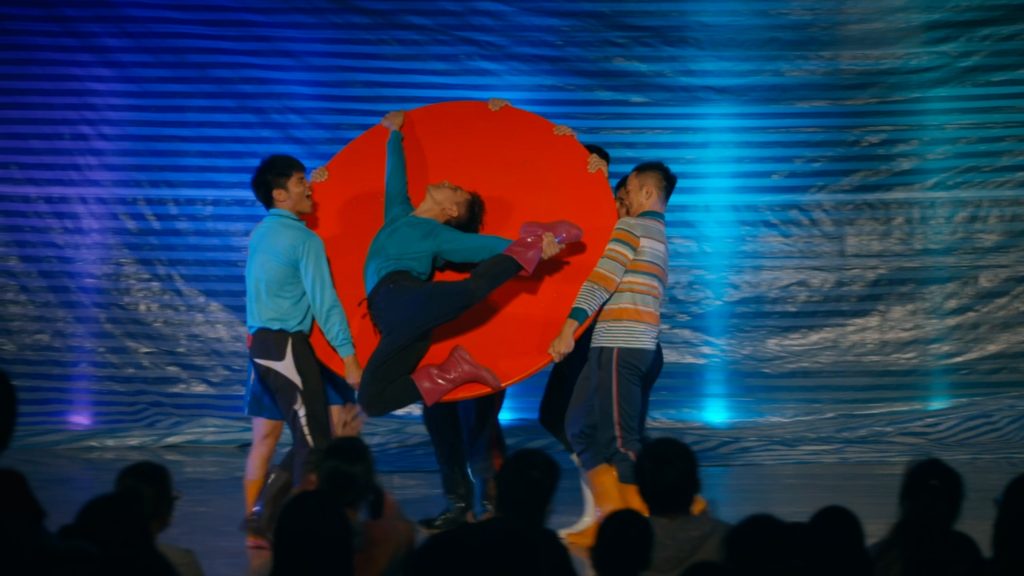
Before internationally respected cultural arts strategist Nina Buddhdev immigrated to Canada, she was immersed in London’s cultural life. She curated at the Southbank Centre, which operates venues for everything from music to visual arts, and from comedy and dance to literature and poetry.
“What was really strange for me when I moved here is that people follow the presenter, not the art form,” Buddhdev, also a visual artist and heritage arts advocate, tells Pancouver over Zoom. “Since living in B.C. for the past 20 years, I see so much segmentation in the arts world.”
The prevalence of artistic silos in B.C. has long troubled her. That’s because the bandwidth for audiences here is already quite small in comparison to London.
So back in 2009, Buddhdev set out to dismantle systemic barriers by founding the Bandish Network as a “call to connection”. It later became a not-for-profit organization—expanding to 7,000 intercultural artists, presenter groups, and collectives—before returning to its original form.
“Obviously, we are a silent majority in many ways, because we are creatives,” Buddhdev explains. “The Bandish Network is responsible for so many groups getting grants, because I’ve actually shared the grant information. Otherwise, they won’t even know about it.”
The network’s Facebook page is repeatedly updated with new events involving the pan-Indus Valley community of presenters, artists, cultural workers and organizations. Often, these events occur across Metro Vancouver, but there are also announcements for performances in other North American cities.
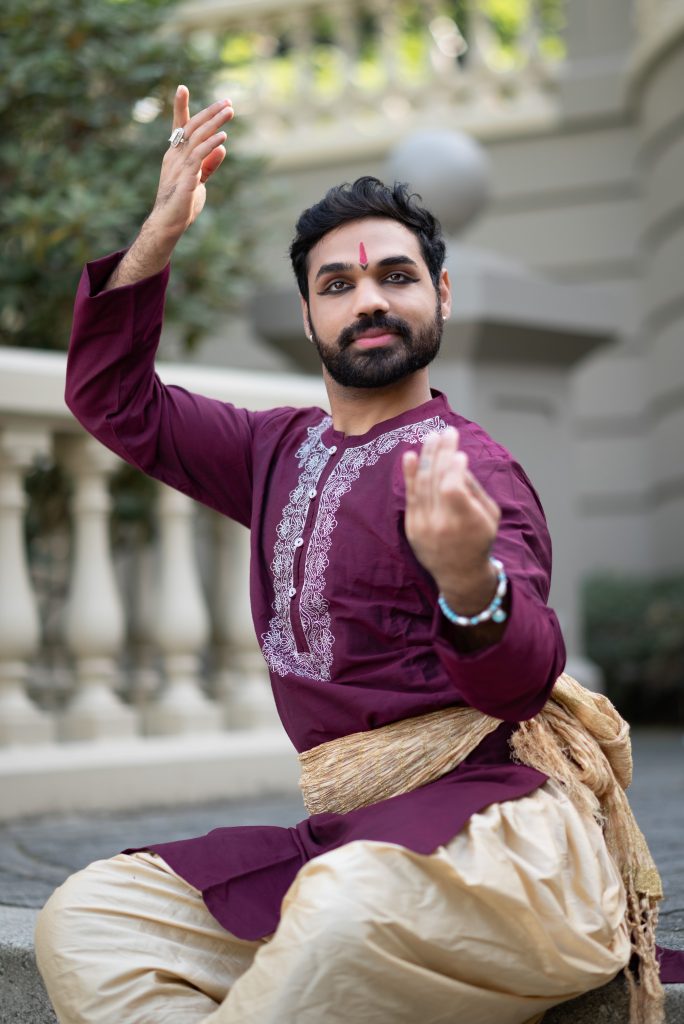
Buddhdev revives Traditional India Series
This spring, the Bandish Network is inviting culture lovers to experience the “Soul of Kathak” as part of its Traditional India Series. In partnership with the Dance Centre, Tatkaar – A Kathak Showcase began on May 1 with a workshop, lecture demonstration, and networking. Celebrated Kathak artist Puneet Singh shared his insights at the Scotiabank Dance Centre into Tatkaar footwork and expressive storytelling associated with the Lucknow Gharana.
Singh will offer live performances at 5 p.m. on May 24 and June 15. The first, Tatkaar – Celebrating Next Gen Canadian Artists, will be in partnership with Vancouver Asian Heritage Month Society at the Evergreen Cultural Centre in Coquitlam. The second, Tatkaar – Classical Kathak Dance & Music, will be in partnership with the Dance Centre at the Scotiabank Dance Centre. Singh will be accompanied by Gurjit Sikri on sitar and Buddhdev’s son, Hriday, on tabla and pakhawaj.
“The Traditional India Series was conceived in 2015 when I was the Culture Days ambassador for B.C.,” Buddhdev says. “I curated a number of nationwide events.”
Back then, she aimed bring presenters of different art forms together to create a more unified approach. She eventually gave this initiative a rest for a few years after moving on to other things, including an India trade mission and creating the first Indian classical music residency at Place Des Arts in Coquitlam. But Buddhdev chose to bring back the Traditional India Series this year when she meet Puneet Singh, who’s originally from Punjab and who moved to B.C. from Ontario.
“I enjoyed his collaborative spirit so much that he inspired me to revive the series,” Buddhdev says. “So, here we are. I know how lonely one can be when we come to a province and everything is so segmented.”
CHAI offers virtual mentorship
The Bandish Network is exploring more partnerships in the Fraser Valley. Meanwhile, as a practising visual artist trained in fine arts and ceramic sculpture (De Montfort University and Royal College of Art, U.K.), she explores energy, spirituality, and healing through large-scale mixed-media installations.
In addition, Buddhdev serves as a consultant with the Arts BC Insight Team and is a council member of the BC Museums Association (BCMA). As a cultural arts strategist, she is particularly concerned about the “scarcity mindset” in the sector, which leads some artists and organizations to interpret their peers as a threat.
Buddhdev emphasizes that she is not a threat because she prefers helping others present events; she only occasionally does this on her own. Moreover, the Bandish Network is no longer a nonprofit organization. Through a regular segment on Spice Radio called “Bandish on Spice”, Buddhdev features other artists.
Buddhdev also wants people to know about the Bandish Network’s monthly CHAI sessions, which she developed in partnership with the Canadian Association for the Performing Arts (CAPACOA) to further support cross-cultural artists and presenters.
It’s called the Cultural Heritage Arts Initiative—CHAI is the acronym. It is a discussion series that brings culture-specific, Canada-wide presenters together to explore, plan, and pursue development opportunities. This is one of several Bandish Network initiatives over the years. Since its inception, it has also launched Naari (Women in the Arts), Young Canadian Heritage Art Practitioners, and the International Elders Collective.
“I see this as a game of pass the parcel, so to speak,” Buddhdev says. “I was mentored by wonderful people back in the U.K., where we produced the BBC Asian Proms.”

Highlighting urgent issues for artists and presenters
Buddhdev maintains that young, emerging leaders in the arts have many skills. They often understand marketing, artificial intelligence, and how to write grant applications. But she worries that they can lack relationship-building techniques, which are another essential component arts management.
“Those skill sets are so much on the decline,” Buddhdev notes. “We call that Sanskar—the very basic Sanskar of being truly inclusive, and not inclusive for an agenda.”
In a Bandish Network article, Buddhdev identified 10 urgent issues facing cultural leaders, including “cultural taxation”.
“Artists, cultural leaders, and racialized communities are expected to educate institutions, correct systemic blind spots, and advocate for representation—all without fair compensation,” she states. “Institutions claim to support diversity yet rarely allocate budgets to the very communities they seek guidance from. Cultural leaders should not have to repeatedly donate their time, knowledge, and emotional labor while institutions benefit from their expertise without reciprocating investment.”
In that same article, she also raised concerns about representation imbalance, equity optics versus equity practice, gatekeeping, funding cycles, extractive partnerships, and how cultural labour is viewed. In addition, Buddhdev notes that racialized professionals “are frequently overqualified yet undervalued”, yet when they advocate for fair pay, they are labelled as “difficult”.
“If we are to build an equitable cultural landscape, we must invest in cultural leaders, compensate expertise fairly, and foster long-term, reciprocal partnerships—not just when it’s convenient, but as a fundamental principle of engagement,” she declares.

Event details
To connect with Nina via the Arts BC Insight Team, please visit: https://artsbc.org/insight-
Follow Pancouver on X @PancouverMedia. Find Pancouver on Bluesky @pancouver.bsky.social and Instagram @PancouverMedia. Also follow Charlie Smith on Bluesky @charliesmithvcr.bsky.social.