
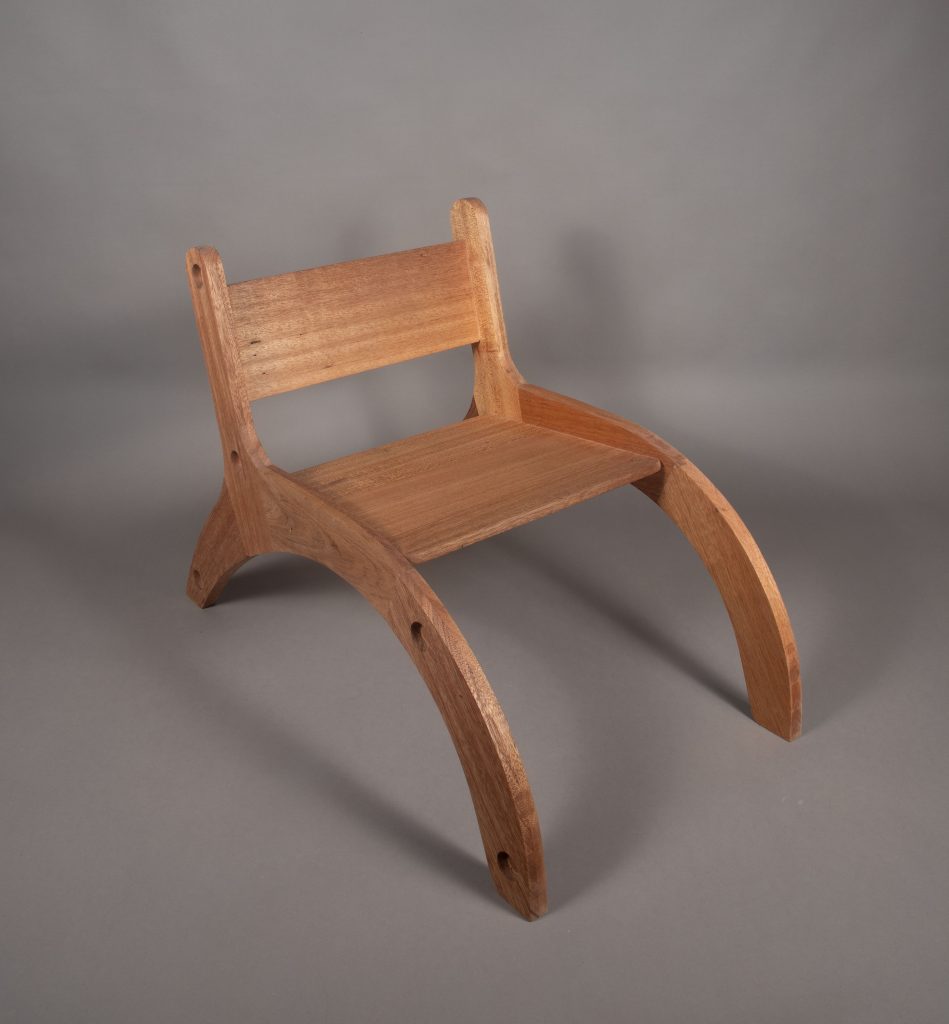
There’s a mahogany chair in a new Museum of Vancouver exhibition that says a so much about the city’s oldest cultural institution. Masenity is one of 15 original mahogany chair prototypes created by Kwantlen Polytechnic University design students. It’s on display as part of Future Makers: Chairs by New Designers.
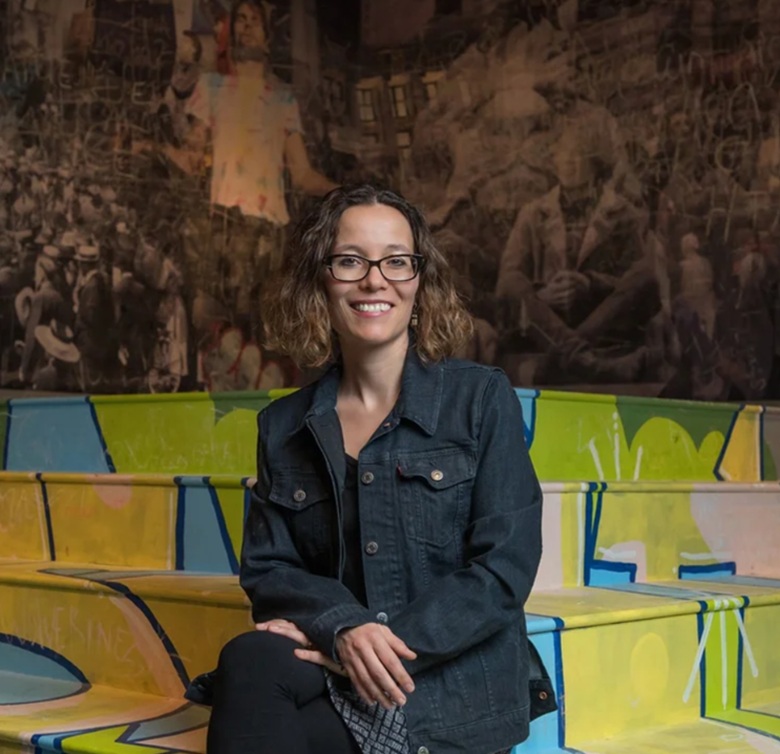
“It’s low to the ground, an invitation to feel more connected to the land,” Museum of Vancouver curatorial lead Viviane Gosselin tells Pancouver. “Also, I saw those students making mistakes underneath—and they way they fixed it was beautiful.
“We’re always going to make mistakes,” she continues. “It’s how you fix those mistakes that is of value.”
This chair is an apt symbol for what Gosselin is trying to accomplish in the cultural sector. For too many years, museums, galleries, and theatrical productions would toss their materials into the trash bin at the end of an exhibition or show. These cultural institutions made the mistake of ignoring their own carbon footprints, even with displays or shows promoting sound environmental practices. In contrast, the Museum of Vancouver has embedded sustainability into every aspect of Future Makers: Chairs by New Designers.
“This project started with a gift of mahogany wood,” Gosselin explains. “It was used to make boating equipment. It had sat untouched for decades before it came to the museum—and this is gorgeous wood.”
Gosselin raises awareness about online auction
The mahogany, which was harvested from forests in Nicaragua and Guatemala, is no longer accessible. It’s not for sale. The Museum of Vancouver decided to turn it over to KPU’s Wilson School of Design with one requirement—students had to use it to build chairs, which would be at the centre of an exhibition. The chair of product design at KPU, Iryna Karaush, created an entire course around this.
“The idea was that accepting this gift meant we would take responsibility for and find ways to help restore where this wood came from because the trade of mahogany is associated with deforestation of mahogany forests,” Gosselin says.
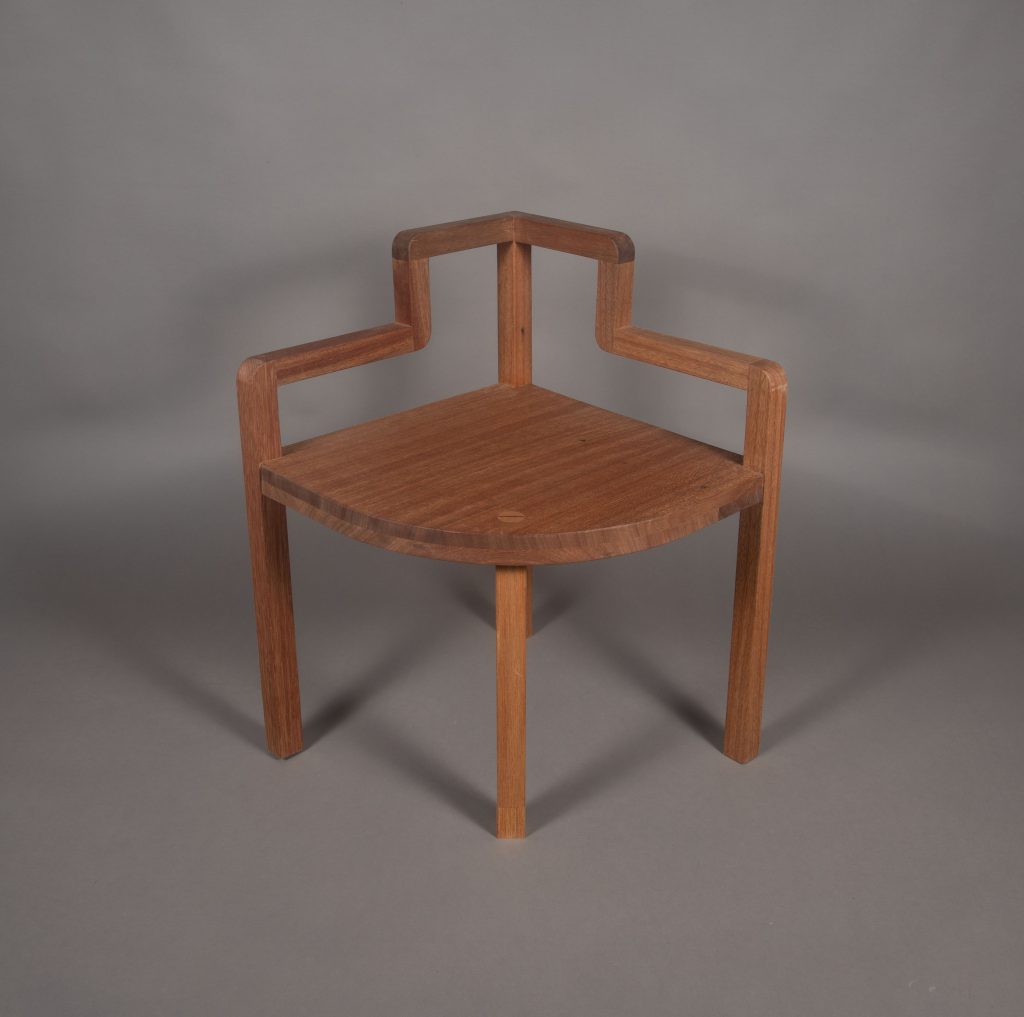
To achieve this goal, the Museum of Vancouver is holding on online auction for each of the chairs in the exhibition. The only exception is Masenity, which will become part of the permanent collection. Proceeds from the auction will go to Indigenous-led reforestation efforts in Guatemala; the starting bid for each one-of-a-kind design is $250.
Online bidding will continue until the deadline of 5 p.m. on September 17. The exhibition will conclude in January 2026, after which chairs will be delivered to their owners.
“We’ve worked closely with the consulate of Guatemala on this,” Gosselin emphasizes. “That, to us, was very important.”
KPU and other post-secondary institutions are partners in a Museum of Vancouver–led initiative called SAGE: Sustainable Arts and Green Ecosystems. It includes a toolkit for the museum, gallery, and theatre sectors on creating exhibitions in ways that reduce waste and environmental impacts, including for travelling shows.
Gosselin is the Museum of Vancouver’s director of collections and exhibitions and curator of contemporary culture, as well as its SAGE lead. Other SAGE partners and allies include Vancouver Civic Theatres, Vancouver Art Gallery, Vancouver Maritime Museum, and Museum of Anthropology at UBC.
Systemic change involves next generation
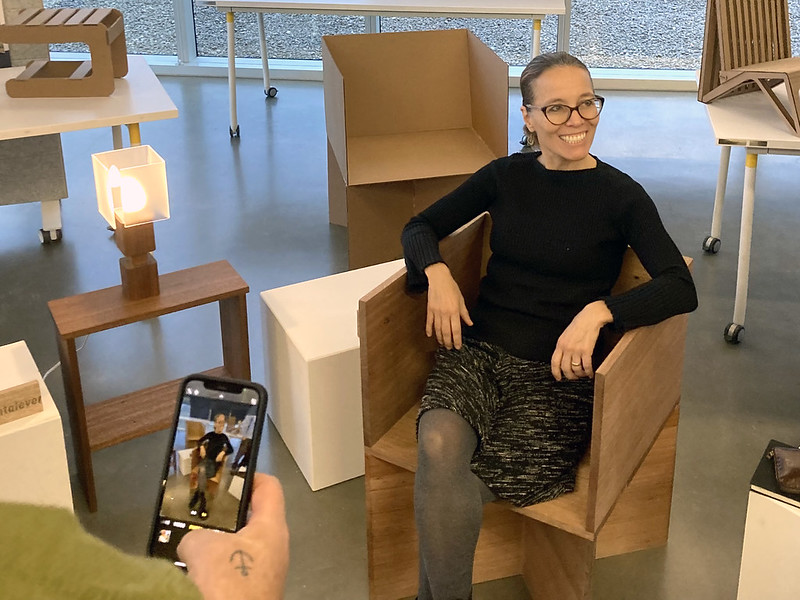
Meanwhile, visitors to Future Makers: Chairs by New Designers can create their own chairs from cardboard.
“The [goal] is to frame the idea that repairing objects and extending the life of material is good for the soul and good for the planet,” Gosselin says.
She points out that the Museum of Vancouver embeds sustainability in other ways. For example, it reduces the exhibition’s carbon emissions by reconfiguring risers, repurposing materials, and using recycled paper. In Future Makers: Chairs by New Designers, only the paint is new.
“You cannot make these systemic changes without involving the next generation,” Gosselin declares.
In effect, she’s advancing the circular economy by elevating awareness on connections between resource extraction, consumer behaviour, and the displacement of Indigenous communities. It’s something she spoke eloquently about in an interview last year with Tired Earth.
“The cultural and structural forces that gave us colonialism, white supremacy, racism and social disparity are the same structures that have made us forget our connection and responsibility to the land and caused today’s climate crisis,” Gosselin told Tired Earth. “As a cultural institution designed to perpetuate Western social values, museums have wittingly or unwittingly helped normalize racist and colonial attitudes, inequality, environmental disconnect and excessive consumption.”
Gosselin turns thoughts into action
Gosselin earned a PhD from UBC in 2011 after writing a thesis entitled “Open to interpretation: mobilizing historical thinking in the museum”.
“I hypothesized that a greater understanding of visitors’ and exhibition makers’ historical thinking could help museum practitioners create new forms of public engagement with the past that resonate more significantly with contemporary audiences,” Gosselin wrote in the abstract.
But it wasn’t until after the Museum of Vancouver’s 2014 exhibition, Rewilding Vancouver, that she turned her thoughts about sustainable displays into action. Guest curated by writer J.B. MacKinnon, this exhibition invited visitors to reconnect with how nature existed in Vancouver’s past and what it could look like in the future.
“It was a very intricate, beautifully designed exhibition,” Gosselin recalls. “At the end of the exhibition, we dismantled it and put everything in a big bin. It was total cognitive dissonance. We were talking about the increasing climate literacy of the public.”
She knew that designers are creative people. So she started setting parameters to encourage them to incorporate re-usable materials in exhibitions. Since then, the Museum of Vancouver has launched a series of sustainable initiatives, ranging from the Unity Indigenous Plant Garden to the 2023-24 Reclaim + Repair: The Mahogany Project exhibition.
From Catastrophe to Community
According to her, the ethical “next move” for museums is “to address the climate crisis head on and promote alternative social values such as well-being, inclusive and regenerative growth”.
It’s a good summation of the Future Makers: Chairs by New Designers exhibition—and pretty much everything else that takes place at Canada’s largest civic museum.
The Social Sciences and Humanities Research Council has recognized the importance of sustainability in the cultural sector with a $2.5-million partnership grant for From Catastrophe to Community: A People’s History of Climate Change. University of Victoria writing professor Sean Holman is project director of this collaboration between his university, the Museum of Vancouver, and other institutional partners in Canada and other countries. It will enlist 500 post-secondary students and professional journalists to share experiences and wisdom of 1,000 survivors of the climate crisis.
Holman is the Wayne Crookes Professor of Environmental and Climate Journalism. As part of the project, the Museum of Vancouver will co-produce an exhibition with the Canadian Museum for Human Rights.
“Together, we’re redefining what it means for museums to act as cultural first responders to climate change—spaces for healing, knowledge-sharing, and collective action rooted in lived experience,” Gosselin declared in a news release. “As co-director of this ambitious and timely research initiative, I’m looking forward to working closely with Dr. Jennifer Carter (UQAM) to elevate climate disaster survivor stories in and through museums in ways that inspire meaningful change.”
Exhibition details
The Museum of Vancouver is presenting Future Makers: Chairs by New Designers until January 2026. The Future Makers Auction closes at 5 p.m. on September 17. For more information on the exhibition or to bid on any of the pieces, visit the Museum of Vancouver website. Follow Pancouver on X @PancouverMedia and Bluesky @pancouver.bsky.social. Pancouver is also on Instagram @PancouverMedia.




