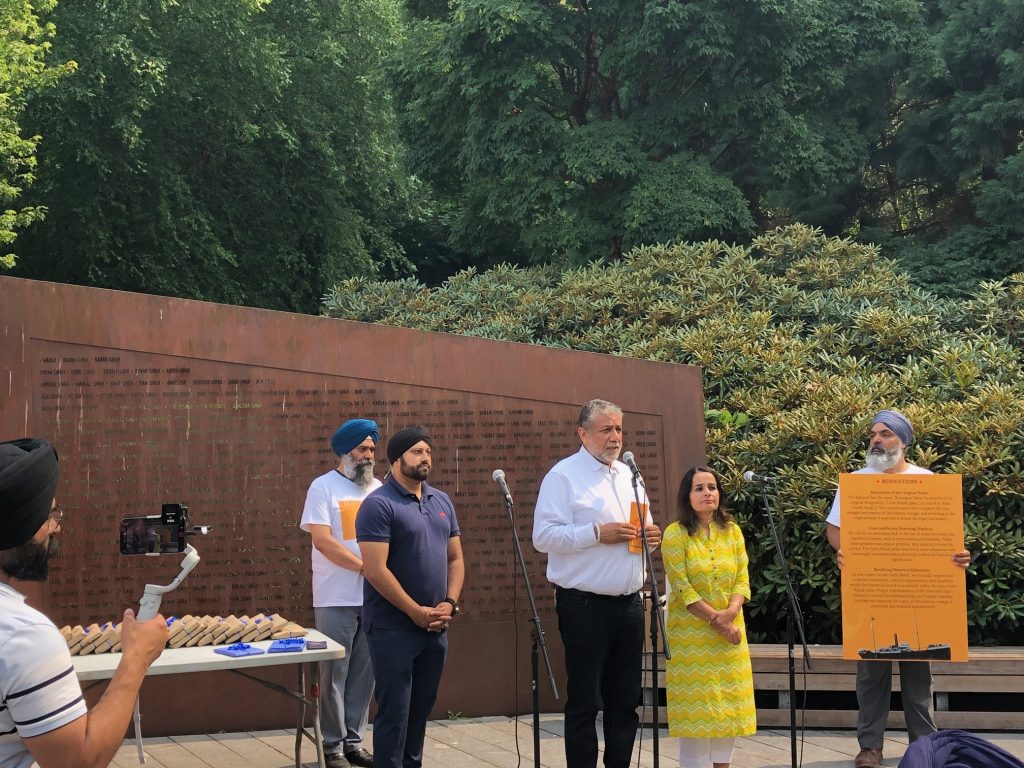
Some high-profile B.C. Sikhs gathered in Harbour Green Park on Sunday (July 21) to demand the renaming of the Komagata Maru in official documents.
It came two days before the 110th anniversary of the forcible return of a Japanese vessel carrying more than 350 Indian passengers from Vancouver’s harbour.
Widely known as the Komagata Maru, the ship was chartered by Gurdit Singh under the name Guru Nanak Jahaz. Being a practising Sikh, Singh chose to name the ship after the founder of the Sikh religion.
Even otherwise, Guru Nanak himself was a great traveller.
Those who came on the ship to Vancouver were turned back under racist immigration laws for which the Canadian government has already apologized in Parliament. Those passengers came to this part of the world as British subjects.
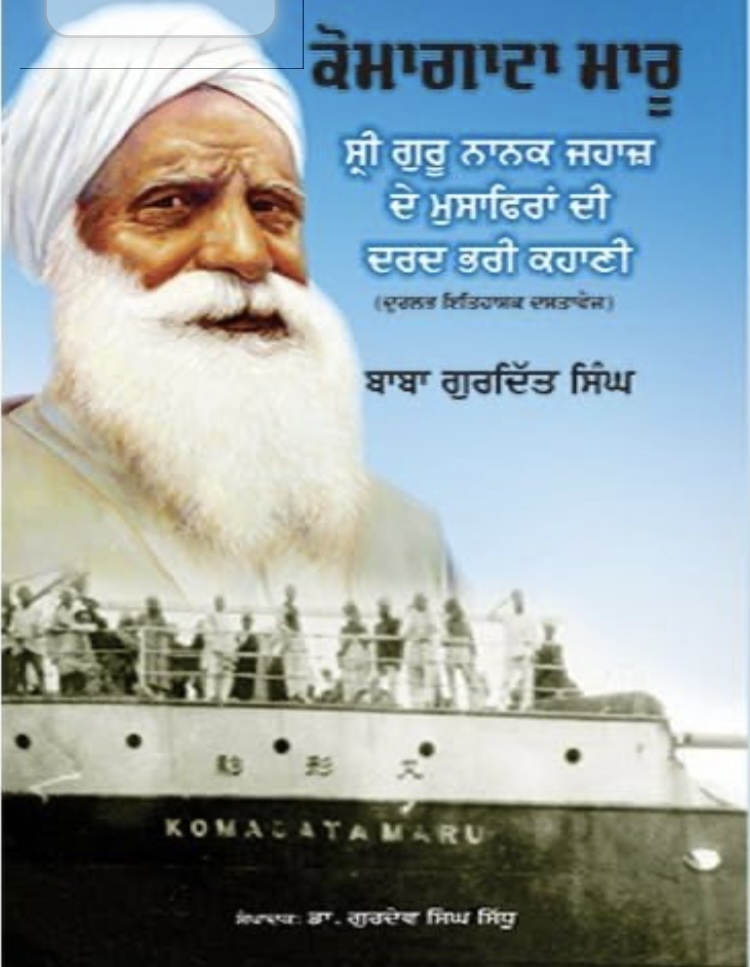
The entire episode is largely known as the “Komagata Maru incident”. So much so, the memorial carrying names of the passengers and their huge picture is named as such at Harbour Green Park where the Sunday event was held. The organizers read out resolutions asking for the amendment to the name of the vessel. They also released an autobiography authored by Gurdit Singh, which identifies the ship as Guru Nanak Jahaaz.
The book’s editor, Gurdev Singh Sidhu, was in attendance. He acknowledged that Sikhs need to reclaim their history.
The resolutions were read out in English, French and Punjabi. While famous author and veteran Sikh activist Gian Singh Sandhu read out the resolutions in English, Sahib Kaur Dhaliwal and Bhupinder Singh Malih read them out in French and Punjabi, respectively.

Gurdwaras endorse Komagata Maru demand
An Indigenous activist from Musqueam band Cecilia Point, opened the event with a traditional song. Among the elected officials who spoke were the member of Parliament from Surrey-Newton, Sukh Dhaliwal, Education Minister Rachna Singh, and Comm. Jas Virdi of the Vancouver park board. A well-known Punjabi-language media personality, Gurvinder Singh Dhaliwal, was the master of ceremony.
Representatives of different gurdwaras in Metro Vancouver were also present and endorsed the demand. In an era of reconciliation and decolonization, the Canadian government needs to look into the issue deeply and address it. Especially considering that Guru Nanak was a symbol of inclusion and social justice who challenged power and stood up for the underdog.
Gurpreet Singh is a B.C. author and co-founder of Radical Desi. He’s married to Education Minister Rachna Singh. Follow him on Twitter @gurpreetonair. Follow Pancouver on Twitter @PancouverMedia and on Instagram @PancouverMedia.