Vancouver dance artist Jennifer Toshiko Aoki has been keenly interested in Japanese Canadian history for many years. It was triggered by her family history. In 1942, her grandmother’s family was rounded up along with 22,000 other Japanese Canadians in response to Japan’s attack on Pearl Harbor. Detainees’ possessions were seized and most were taken to Hastings Park before being sent to live out the war in B.C. internment camps or as farm labourers on the Prairies.
“I was just curious about learning about my family story and understanding the history that was never spoken about,” Aoki tells Pancouver over Zoom.
That led her to the Landscapes of Injustice archive housed at the University of Victoria. The Centre for Asia-Pacific Initiatives created this in partnership with the Nikkei National Museum and Cultural Centre.
In 2021, Aoki emailed the project manager, Michael Abe.
“He said, ‘Let’s schedule a Zoom meeting.’ And during our chat, he was telling me about this fantastic story,” Aoki recalls.
It concerned the return of an antique piano to a Japanese Canadian family. This came nearly 80 years after they had given it up prior to their incarceration. Writer Jolene Rudisuela shared the details in a heartwarming article in the Capital Daily.
The Takata family stored the piano with another family shortly before the government forced them to leave their home on Vancouver Island. Toshie Takata wanted to retrieve the piano after the Second World War, according to one of her letters in the archive. But because Takata couldn’t afford the shipping costs, she reluctantly agreed to sell it to the family for $100.
Aoki learns of piano’s fate
Decades later, one of the descendants, Steven Lennon, paid $11,000 to restore the piano. Then, in an act of reconciliation, Lennon returned it to the Takata family.
“I was really moved by that story and the idea of something being lost—or taken away—and how it can be rediscovered and given back,” Aoki says.
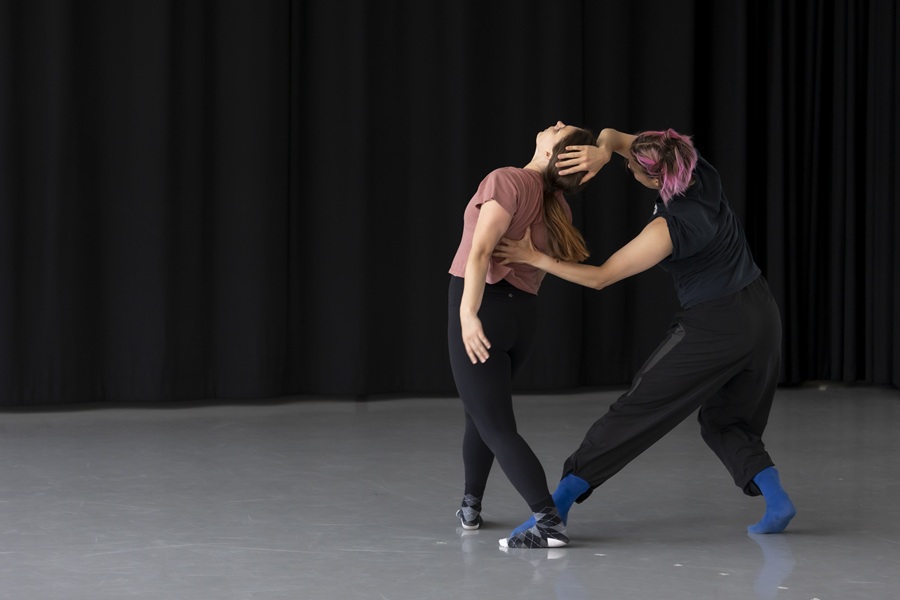
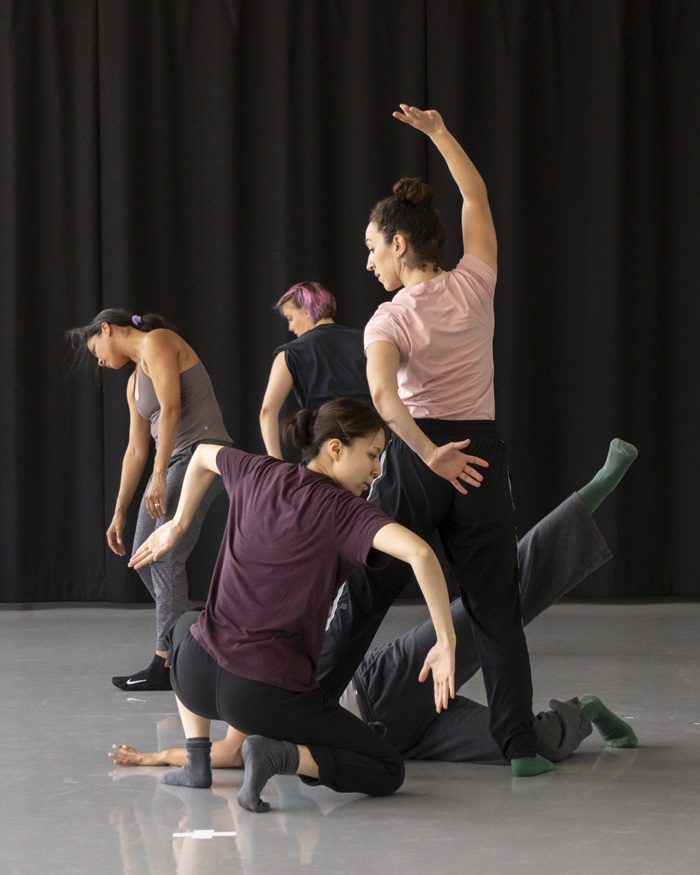
This inspired Aoki to choreograph a solo dance piece called The Takata Piano Project during a residency with Dance Victoria. Over time, she dug deeper into the story with composer Cait Nishimura. Then in 2024, Aoki expanded her choreography to include six dancers and gave it a new name: Eighty Years.
As part of their research, Aoki and Nishimura spoke to Dillon Takata and learned about his family’s experiences of dispossession and healing. The Victoria resident is photographed in front of the piano with his wife Lisa and daughter Kana in the Capital Daily article. Toshie Takata was Dillon’s great aunt.
“This is not my family’s story—it’s his family’s story,” Aoki emphasizes. “We were able to have a conversation, learn about it, and then also seek permission to create work about another family story.”
The 38th annual Dancing on the Edge Festival will present Eighty Years as a work-in-progress as part of its Edge 2 series on Friday (June 5) and Sunday (June 7).
“This is the first time it’s going to be shared with an audience, which is really exciting,” Aoki says.
“When I was earlier in the processes, it was more about the movement generation and the exploration of the ideas,” she adds. “But now, I’m taking this bigger picture [viewpoint] of ‘How can I take the audience through this journey?’ ”
Collaboration impresses Landscapes project director
The choreographer discloses that both she and Nishimura were curious about what stories the piano holds.
“Who has played the piano?” Aoki asks. “Did the piano feel like it was abandoned? It’s almost like a personification of the piano.”
Aoki will perform the 18-minute piece along with Jenn Edwards, Kira Radosevic, Silene Razo, and Tomoyo Yamada. They will dance to music excerpts by Nishimura, with Mary Jane Coomber serving as sound designer. Ultimately, Aoki dreams of developing Eighty Years into a full-length production. However, that will depend on securing sufficient funding.
It’s noteworthy that Abe connected Aoki with Nishimura in 2021. At the time, Nishimura was also exploring her cultural identity through art. Their first in-person meeting came at the GEI: Art Symposium in Victoria of Japanese Canadian and Japanese artists living in Canada.
The project director of Landscapes of Injustice describes their partnership as “an outstanding example of how our research can be used”.
“Their collaboration in response to the piano has already inspired us to understand the essential role of the arts in engaging with past injustices,” Abe says on Nishimura’s website.
Dancing on the Edge will present Eighty Years as a work-in-progress at Edge 2. These performances will take place at 8:30 p.m. on Friday (June 5) and 3 p.m. June 7 in Studio T at SFU Woodward’s. For tickets and more information, visit the Dancing on the Edge website.
Dancing on the Edge will present more than 30 performances from June 4 to 13. Single tickets start at $25 and four-packs cost $95. Follow Pancouver on Instagram @PancouverMedia, on X @PancouverMedia, and on Bluesky @pancouver.bsky.social.