By Hande Gürses
In 1963 the philosopher Hannah Arendt, covering the Adolf Eichmann trials, wrote about the “banality of evil” in her attempt to understand the irreconcilable chasm between the ordinariness of the man on trial and the magnitude of his evil actions. Sixty-two years later, Iranian director Jafar Panahi offers a new insight into the “banality of evil” with his latest film It Was Just an Accident and asks “What happens when there is no end to evil?”
Panahi’s first film after his release from prison, It Was Just an Accident brought the director numerous accolades. It won the Palme d’Or at the 78th Cannes Film Festival where it premiered on May 20, 2025. It was also selected as the French entry for Best International Feature Film at the 98th Academy Awards.
Glorious with all the recognition, it was one of the highly anticipated screenings at the VIFF, evidenced by the long lineup in front of the Vancouver Playhouse during its first screening.
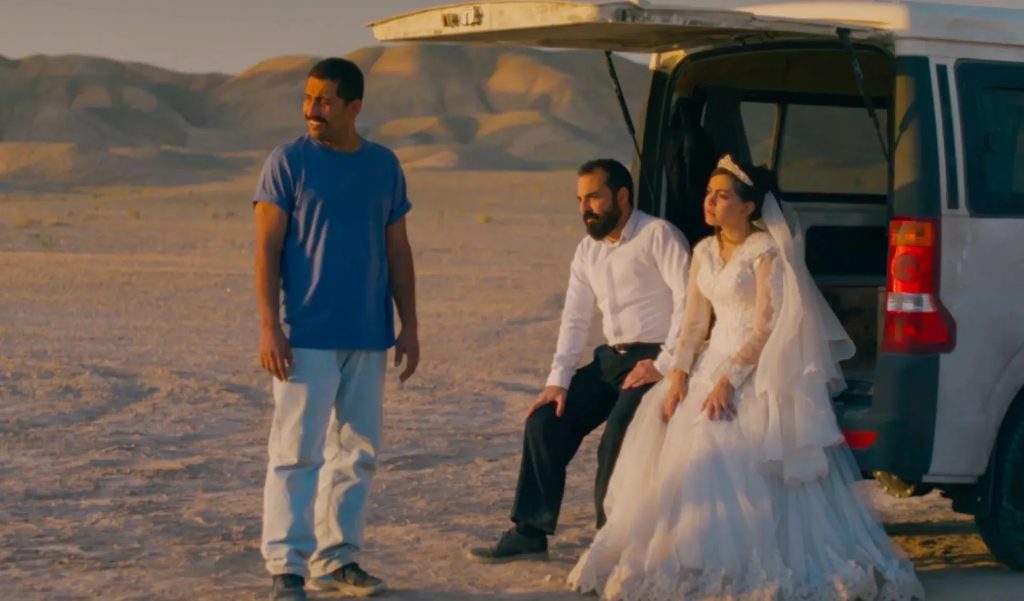
The film follows Vahid, a former political prisoner now working as a mechanic, who during a chance encounter recognizes Eghbal as his torturer and decides to restore justice by taking revenge. Joined by four people who have also been unjustly imprisoned and tortured at the hands of Eghbal, the film becomes a journey into the haunting memories of the past, grief for a lost future, and an endless consideration of the moral implications of their revenge.
The film opens inside a car as Eghbal is driving with his pregnant wife and young daughter at night on a quiet road, when their journey is interrupted with a tragic accident. The opening scene of the film set inside the claustrophobic setting of the car, is evocative of Nuri Bilge Ceylan’s Once Upon a Time in Anatolia (2011) as it not only foreshadows other violent and claustrophobic journeys but also functions as a magnifying glass drawing attention to the mundane.
In the absence of a clarifying context and with very little dialogue, the viewer is invited to interpret the signs presented in this scene very carefully in order to understand who this seemingly ordinary man is. This brilliantly curated and wonderfully acted scene—special kudos to the child actor Delmaz Najafi, playing Eghbal’s daughter—holds the key to many questions that the film raises later as Eghbal’s initial ordinariness as a family man, gradually fades.
The film’s settings function as reflections of the characters’ inner worlds. As we move between the freedom offered in expansive landscapes and the constricting space of Vahid’s van, the characters are also navigating the burden of their traumatic memories and the potential liberation that the revenge holds. Vahid’s van operates like a pressure cooker, and as the tensions rise between the victims and the perpetrator, it allows for a microcosm of an alternative justice system to flourish where what is right may also become just.
As the tension gradually builds, the film occasionally offers comic relief in the form of encounters with different representatives of authority. These brief yet sharp moments offer very little respite to the viewer who remains captivated by the ongoing, overwhelming pain and suffering of the survivors.
While it could be categorized as a revenge drama, It Was Just an Accident shares very little with other films in the same genre such as Kill Bill or Old Boy. Revenge appears as a driving force throughout the film that motivates the characters, but the violence around revenge is never made visible. Throughout the film all instances of violence, whether in the present, present, or the future, take place off camera.
This implied depiction of violence while inviting the viewer to pay close attention to the subtle signs, also augments the seeping impact of evil. As Vahid and others share their stories, hopes, and regrets, it becomes evident that there is no end to the violence that took away any possibility of a “banal” life for everyone involved. Eventually, revenge, just like justice, remains a distant idea.
Arendt’s phrase did not aim to undermine the scope of the monstrous actions. Arendt described “the banality of evil” to indicate the absence of thinking on the part of those who commit the horrific acts. What makes evil banal according to Arendt, is the lack of thinking about the impact of the evil acts.
In Panahi’s film, it is difficult to identify the “banality of evil” since there is no absence of thinking. On the contrary, evil is portrayed as carefully reflecting on the motivation and implication of his actions. What Panahi is interested in is not the banality but the persistence of evil.
Regardless of the causes, beliefs, and moral considerations, It Was Just an Accident shows that when it comes to evil, nothing happens by accident. All who are touched by it, must live with it whether through regret, revenge, or restitution. It Was Just an Accident is an extremely potent reflection on the insidiousness of evil. A reminder for those of us who have been touched by it, a cautionary tale for others who are lucky to be unaffected.
The Vancouver International Film Festival will present It Was Just an Accident at 2:45 p.m. on Thursday (October 9) at the Vancouver Playhouse. For tickets and more information, visit the festival website.
Hande Gürses is a scholar of literature and the author of Displacing Fictions of Orhan Pamuk: Beyond the Bridge. She teaches at Capilano University. Follow Pancouver on X @PancouverMedia, Bluesky @pancouver.bsky.social, and Instagram @PancouverMedia.