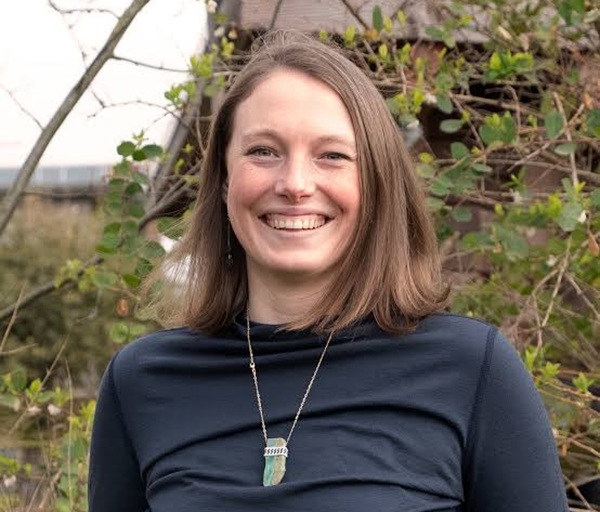
When multimedia artist, ethnobotanist, and educator T’uy’t’tanat Cease Wyss was in her late 20s, she struggled to find local Indigenous people represented in Vancouver’s cultural landscape. She is a Skwxwú7mesh (Squamish), Stó꞉lō, Kānaka Maoli (Hawaiian), Irish-Métis, and Swiss curator. In addition, she is a wool and cedar root weaver, beekeeper, and new media artist.
“I would hear people say, ‘Oh, is your art Haida?’ ” Wyss recalls in a phone interview with Pancouver.
She would respond that her people are Salish. Then, some would mention that they like Haida art.
In response, Wyss would ask, “Have you seen Salish art?”
They would say “no”. So, she would ask: “How do you know you don’t like it?”
Wyss shares this anecdote to illustrate Coast Salish artists’ long journey to gain recognition for their works.
“Settlers are still learning that there are literally over 600 nations across the country of Indigenous people,” Wyss says. “Close to half of them live in this province—274 nations exist in so-called British Columbia. From those nations, 54 are Coast Salish nations. Some of them are south of the enforced border.”
But this week, Wyss herself is being honoured for her artistic works and contributions to growing awareness of Coast Salish cultural practices. At 6 p.m. on Wednesday (March 26), the Jack and Dorothy Shadbolt Foundation for the Visual Arts will celebrate her and artist Gabrielle L’Hirondelle Hill as winners of its 2024 VIVA Awards at a ceremony at Emily Carr University of Art + Design. It comes with a $15,000 cash prize.
“I feel very humbled and grateful to be recognized and to know that my practice caught the attention of people enough to want to share this award with me,” Wyss says.
Wyss creates Indigenous gardens
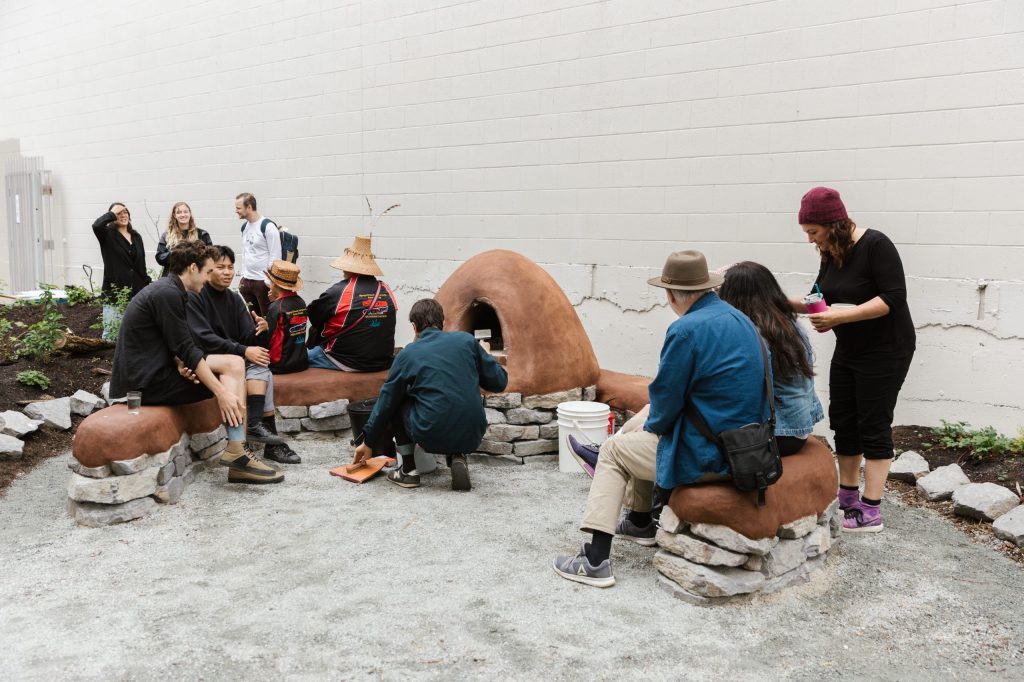
One of her best known works is x̱aw̓s shew̓áy̓ New Growth «新生林» with the artist-run centre 221A. Over more than a year, Wyss worked with urban Indigenous youths to transform an empty lot at 271 Union Street into a Pacific Northwest Coast rainforest garden. Throughout the project, Wyss taught youths about various medicinal plants going into the soil.
“One of the mounds had red huckleberries, so we had to plant it in a specific way because red huckleberry requires cedar,” Wyss recalls.
But they couldn’t plant a cedar tree to provide red huckleberries with nutrients. However, through a permaculture technique known as Hugelkultur, these gardeners created mounds of soil with cedar bark mulch and branches in the base. These earthen mounds stand on a bed of crushed gravel, providing drainage.
“It has been a very successful project in that it creates a small forest in a site where there was originally a forest,” Wyss states.
Wyss also oversaw design of the Museum of Vancouver’s Indigenous Plant Garden. Many years earlier, she was featured in Kamala Todd’s short documentary “Indigenous Plant Diva”.
In addition, Wyss co-authored Journey to Kahoʻolawe. The grunt gallery released this series of essays in 2017 to mark a week of events celebrating historical connections between Indigenous Hawaiian and Coast Salish people.
Wyss reveals that she learned everything about her Hawaiian bloodline from her mom, Kultsia-t Barbara Wyss. Her late mother spent decades researching genealogy and writing a book. Wyss is seeking funding to publish it later this year.
“It brought forth so many stories and it’s informing my next big project that will be in a show later this year,” Wyss says. “It brings the stories of my Hawaiian and Squamish ancestors together.”
Learn about the Museum of Vancouver project in this video.
A compelling family history
Journey to Kaho’olawe notes that some Native Hawaiians, referred to as Kanaka in previous centuries, had been migrating to B.C. since the late 1700s. The Hudson’s Bay Company brought them in as labourers and some married Coast Salish women. One of Wyss’s great-grandmothers, Mary See-em-ia, was a Squamish matriarch from the Khatsahlano family line who had two Indigenous Hawaiian husbands.
See-em-ia met the first, William Eihu, at a Kwantlen village in what is now Fort Langley.
“They travelled down river to what became known as New Westminster—and there was a small Squamish fishing village located in that zone,” Wyss says. “Our people would go and do our fishing there for the river foods that we receive. And they didn’t stay there long because they heard about Hastings Mill being created.”
The sawmill was founded in 1865 on the south shore of Burrard Inlet. Wyss’s great-grandmother collected farm animals. This irritated the mill’s owner, who asked her to leave.
“They hopped in their canoe and went west to what was just a forest at the edge of what became Stanley Park,” Wyss continues. “At the time, it was just Indigenous villages.”
They built their own site, which became known as Kanaka Ranch. The men continued working at the Hastings Mill site where Eihu was invited to stay. See-em-ia met and married a second man of Indigenous Hawaiian ancestry, Joe Nahanee.
“So, my [great-] grandmother maintained two husbands and two households at Kanaka Ranch,” Wyss says. “It’s quite an incredible story.”
Watch the Indigenous Plant Diva’s TedxTalk in 2017.
Wyss revives family tradition
The federal government’s draconian residential school system shredded the family’s cultural traditions. Wyss’s mother was forced to attend one of these church-operated schools until the age of 14, where students were forbidden to speak Indigenous languages. Then her mom went to day school from the ages of 14 to 18.
“She grew up being erased—her language erased, her family ties erased, her cultural ties erased,” Wyss says. “Her mother was a great cedar root basket weaver who started at the age of five and wove until she passed when she was 64. And my mother could never spend the time learning that craft.
“None of her children could,” she continues. “My grandmother had 10 children and none of them were able to learn how to cedar root weave because they were stolen.”
Wyss has worked exceptionally hard to revive the family tradition by becoming a cedar root weaver. She periodically goes into the forest to sustainably harvest cedar bark. Wyss ensures that when she does this, the trees remain standing so they can thrive well into the future.
She credits Tsawayia Spukwus (Alice Guss), who’s from the Harry family in Squamish, for mentoring her in this ancient art. Wyss also cites Squamish master weaver Ed Carriere as an important influence.
“He says it takes 25 years to become a master weaver,” Wyss says. “To put it in context, for carvers it takes three years.”
Why does it take so much longer to learn cedar root weaving than carving, given that both are high art forms? According to Wyss, it’s linked to all the other things that a cedar root weaver must learn, including grasses and ferns used as corrugated elements.
“It’s a much bigger challenge to bring that back.”
Inspiring future generations
She credits her mother, a former government employee, for supporting Musqueam people when they chose to revive their connection to their weaving history.
“They have many weavers now,” Wyss adds. “They inspired other nations… So again, my mother was torn away from that weaving culture yet she dedicated her life to bringing resources to communities to help bring that back, which is very inspiring for me.”
Wyss bluntly states that she doesn’t know if she will live long enough to become a master cedar root weaver. There’s a lack of available cedar because logging companies eagerly chopped down these valuable trees.
“The big thing for me is my children and grandchildren will be learning it,” Wyss says. “It really goes to the theme of most of my work in every element I’ve worked in. I’ve always really dedicated myself to teaching the next generation so they can speak confidently from their heart about what they’re doing.”
She likens her artistic practice to “remediation”. It’s not just with plant life and soils. There’s also an aspect of remediation in encouraging young Indigenous folks to form new bonds with the land and the elements.
“It’s very uplifting and it’s very inspiring when I see people I’ve worked with going further than me,” Wyss concludes. “I know that I’ve helped them get on their journey and reconnect to their cultural ties.”
The Jack and Dorothy Shadbolt Foundation for the Visual Arts will recognize Gabrielle L’Hirondelle Hill and T’uy’t’tanat Cease Wyss as the two winners of the 2024 VIVA Awards at a ceremony at 6 p.m. on Wednesday (March 26) at Emily Carr University of Art + Design (520 East 1st Avenue).
Follow Pancouver on X @PancouverMedia, Bluesky @pancouver.bsky.social, and Instagram @PancouverMedia. Also follow Charlie Smith on Bluesky @charliesmithvcr.bsky.social.