

The Government of Canada will invest more than $113 million over four years to help B.C. students learn in French and speak better French.
According to a federal government, this funding “will help the province offer quality French as a minority language and French as a second language education, from preschool to the post-secondary level”.
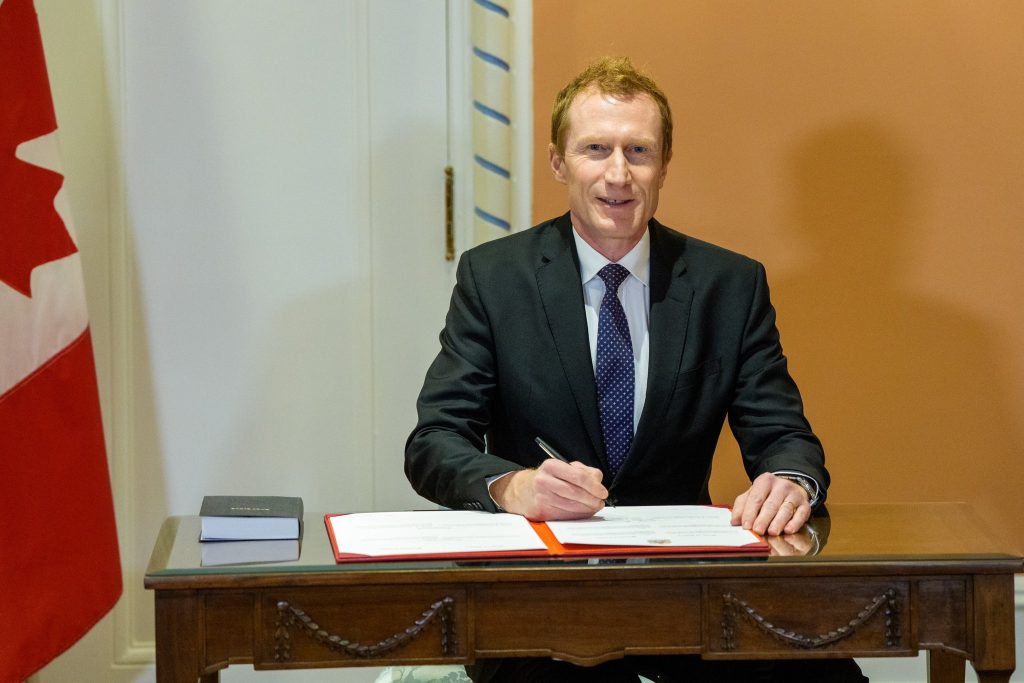
“As the new Minister responsible for Official Languages—a role that is particularly important to me—I am happy to announce that our government has completed an important agreement with British Columbia to promote bilingualism in schools and post-secondary institutions in the province,” Canadian Identity and Culture Minister Marc Miller said a news release. “Collaboration between our two governments is important in supporting learning in French, as well as bolstering linguistic, cultural, and economic vitality.”
The B.C. government plans its own investment to support the aims of the agreement, according to Miller’s ministry.
“I take pride in our government’s dedication to supporting Francophone and French-speaking communities throughout British Columbia,” Education Minister Lisa Beare said in the release. “This agreement reflects our ongoing commitment to providing students with access to high-quality French-language education in both minority language and French immersion settings.”
The Ottawa-Victoria accord stems from a federal-provincial-territorial protocol for agreements for minority-language education and second-language instruction in French. The protocol covers the school years 2024-2025 to 2027-2028.
Section 23 of the Canadian Charter of Rights and Freedoms gives citizens the right “to have their children receive primary and secondary school instruction in the language of the English or French linguistic minority population of a province”.
Court rulings clarify governments’ constitutional obligations
The Supreme Court of Canada has fleshed out that this means on the ground.
For example, in the 1990 Mahe v Alberta decision, Canada’s highest court ruled that Section 23 “encompasses a ‘sliding scale’ of requirements”.
“So, where the number of s. 23 students does not warrant granting an independent school board (the maximum level of management and control), but is significant enough to warrant moving towards the upper level of the sliding scale, it may be sufficient to require linguistic minority representation on an existing school board,” wrote then chief justice Brian Dickson.
Moreover, he noted that Section 23 “may not require that anything be done in situations where there are a small number of minority language students”.
Then in 2000, the Supreme Court of Canada issued the Arsenault-Cameron v Prince Edward Island ruling, which guidance on demand for French-language education in the Summerside area.
“In this case, the relevant number in the Summerside area was between 49 and 155,” wrote two justices, Michel Bastarache and John Major.
Follow Pancouver on X @PancouverMedia and Instagram @PancouverMedia.




