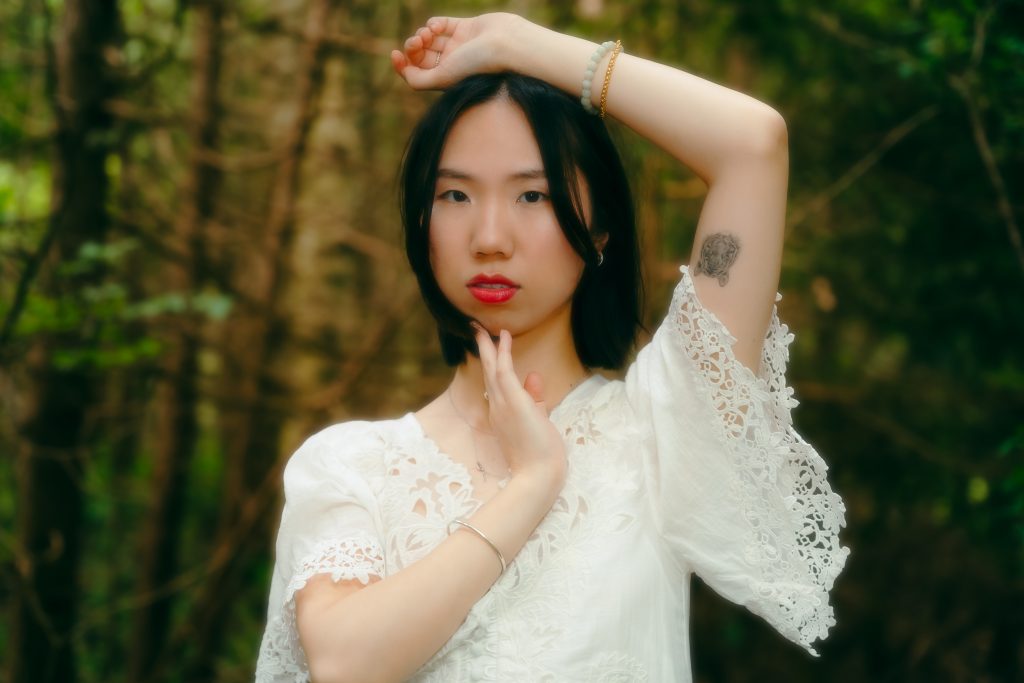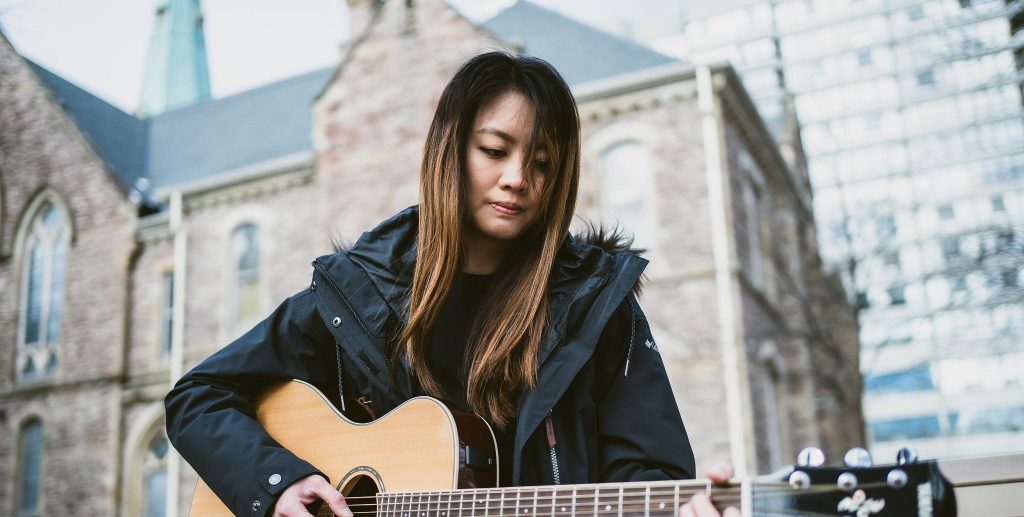
Toronto singer-songwriter Chinyi C likes to describe her music as “soothing, borderless folk-pop”. Born and raised in Singapore, she has certainly crossed many borders. That has included stops in the U.S., China, South Korea, Morocco, and Guatemala, offering Chinyi a more global perspective.
She paid homage to the many communities that she has called home in her 2024 single “Human”.
“That song is about how people make up bits and pieces of our lives—and how they shape us,” Chinyi tells Pancouver over Zoom. “When I wrote that song, I was thinking about all the people [who] had touched my life in some way.”
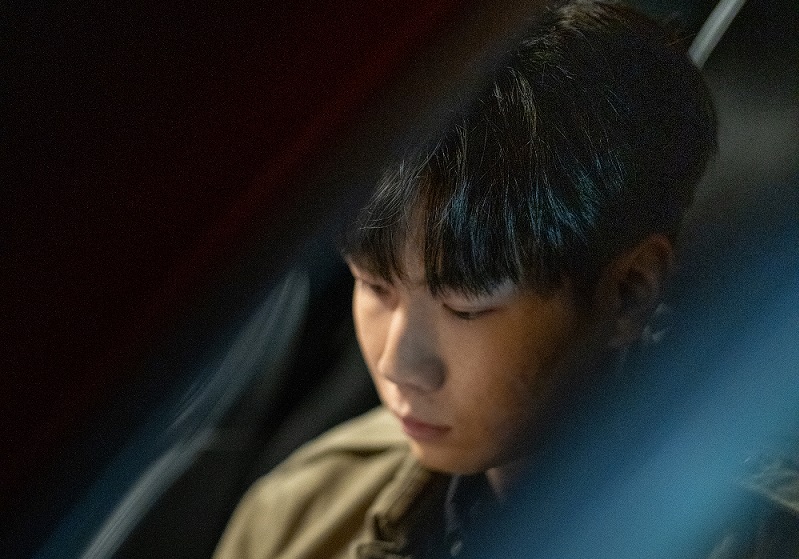
Co-produced by Chinyi and Jay Pollock, “Human” provides room for Chinyi’s expressive voice to take flight over J.E. Lopez’s polished lead guitar and Zoe Thiessen’s soulful strings. Mekeli Villamor filmed and edited the heartfelt music video. It includes more than two dozen people who appear deep in thought at separate times with their eyes closed. They later appear with their eyes open, revealing a gamut of emotions.
In her interview with Pancouver, Chinyi mentions that she devised a bunch of questions and requested that participants sit in front of a camera with their eyes closed. She then asked an introspective or reflective question of each person, touching on anything from a memory of their favorite person to moments that were very personal to them.
Watch the official music video for “Human”.
Chinyi remembers filming the video in a little warehouse in Toronto in the midst of a snowstorm in January 2024. None of the participants had any advance warning of what they would do on video.
“All they needed to do was open their eyes and look straight into the camera,” Chinyi explains. “But they didn’t need to tell me their answer.”
Chinyi records music with Gandhaar Amin
Meanwhile, her 2025 single, “Everything Is Changing”, is a musical response to a situation that will feel familiar to many of us. She wrote the song after elections in several countries, including the United States, had reflected deep societal divisions.
“I found myself in a disagreement with somebody that I cared about very deeply,” Chinyi says. “But we didn’t share the same opinion on certain things.”
To her, “Everything Is Changing” offers a reminder to hold on to things and people that matter in life. It was co-produced, mixed, and mastered by Gandhaar Amin, who specializes in fusing Indian classical music with electronic soundscapes. Chinyi’s acoustic guitar supplies the main melodic line, with Lopez’s electric guitar adding texture.
“I always pictured that song to sound like deep water,” Chinyi remarks.
Singapore-based artist Grace Ho illustrated a whale for the cover art for “Everything Is Changing”. Moreover, Ho worked with Chinyi to create the landscape collage.
“The cover art collage is made up of photographs I took in different places around the world over the years, during moments when I was experiencing change in my own life,” Chinyi says.
Listen to “Everything Is Changing”.
Perhaps it shouldn’t come as a surprise that Chinyi grew up in a household filled with the sounds of smooth soft rock and folk-rock from the 1970s and ’80s. One of those bands was Bread, which had several lyrically introspective hits. Her mother also played a lot of soothing New Age contemporary piano and guitar music in the home.
Chinyi was also influenced by Mandopop artists such as Stefanie Sun and Tanya Chua from Singapore and western artists like Eva Cassidy.
“I’ve tried in recent times to incorporate more Mandarin into some of my songs,” Chinyi acknowledges.
In Singapore, English is the primary language for instruction but mother-tongue languages—whether they are Chinese or Malay—are also taught. Chinyi’s parents made a conscious choice to speak English with her at home, though the family also communicated in Mandarin with relatives.
“My mom’s side speaks Cantonese; my dad’s side speaks Hokkien,” she notes.
Keen interest in acculturation
This multilingual heritage offers Singaporeans insights into both East and West. And it helped Chinyi when she moved as an international student to a predominantly white city in Ohio, where she stayed for six years.
She studied piano in Singapore and taught herself guitar after moving to the United States.
“I think my first experience of racism was probably in Ohio—and it happened in school,” Chinyi recalls. “It was then that I realized I was Asian and a certain race and…I tried not to stick out too much in a way that would make me a target.”
However, as she continued with her education, she became increasingly interested in international student adjustment and acculturation. As she researched this topic, it led her to visit other countries.
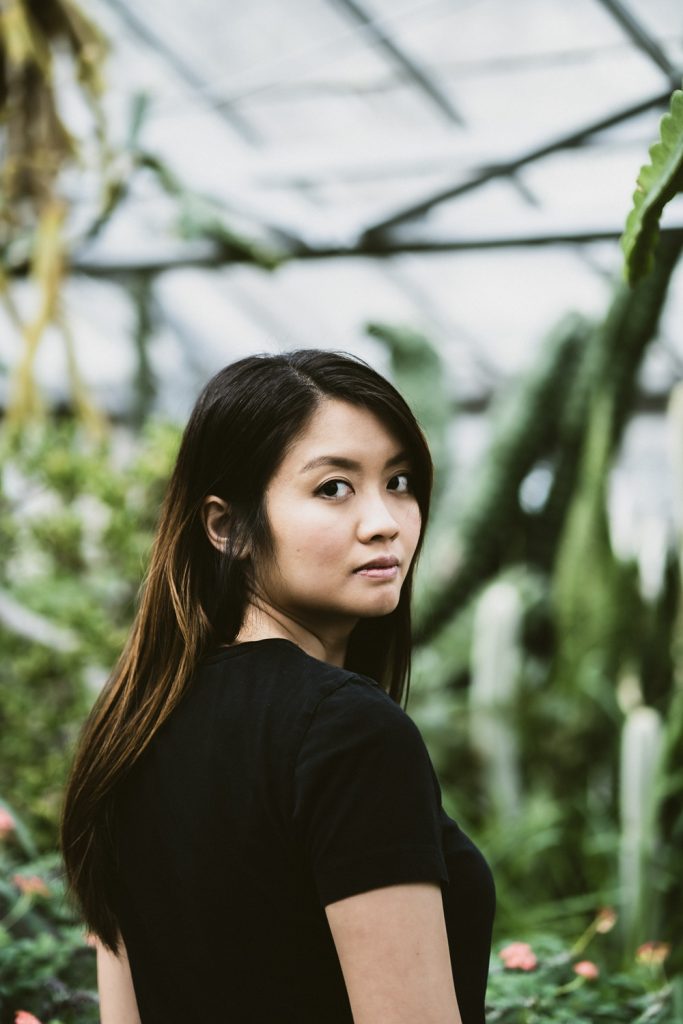
Chinyi also spent four years in Eugene, Oregon, which is another predominantly white community. That’s when she began working on her first EP, “All We Are”.
The video for the title track was filmed by James Holechek and Damian Foley, and includes shots from the Oregon coastline and other Pacific Northwest landscapes.
“I wrote ‘All We Are’ in the time after my mother passed away in 2013,” Chinyi states. “She was sick when I was abroad. And she passed away when I was in Morocco.”
She never made it back to Singapore in time to say goodbye and waited until 2020 to record “All We Are”.
“That song is a musing on how fleeting life is and how quickly it can disappear.”
Chinyi returned to Singapore after the outbreak of the pandemic in the midst of recording the EP.
That was another point in her life where it appeared that everything was changing. And leaving her Oregon communities behind provided some of the impetus behind “Human” after she moved to Toronto.
Last November, Chinyi performed at the Jade Music Fest in Vancouver, where she met many other musicians with Chinese ancestry. One of them was the Taiwanese folk-rock musician Cliff, with whom she has connected with musically.
“I don’t know if I ever actively chose to do music,” Chinyi says. “I feel like music chose me. I’ve always been surrounded by music—and it’s shaped a lot of memory and healing for me.”
Watch the official music video for “All We Are”.
As part of Wintersong Festival 2026, Chinyi C will perform at 3 p.m. on January 24 at the Fickle Pickle Restaurant and Bar in Stouffville, Ontario. She will also perform at the Jade Music Fest in Asia, which will be held from April 24 to 26 at Huashan 1914 Creative Park in Taipei. Learn more about Chinyi C by visiting her website, following her on Instagram @chinyicmusic or checking out her YouTube channel. Chinyi C is also on Spotify. Follow Pancouver on X @PancouverMedia and Bluesky @pancouver.bsky.social. The publication is also on Instagram @PancouverMedia.