Vancouver composer and new media artist Remy Siu 蕭逸南 found himself in a quandary when the pandemic struck. By that time, the Simon Fraser University fine arts grad had been deeply engaged in performing arts for a decade as co-artistic director of Hong Kong Exile. He co-founded the interdisciplinary arts company—which augments devised performance with digital technologies—with contemporary dance artist Natalie Tin Yin Gan and experimental theatre artist Milton Lim.
In 2018, Siu was project lead on Foxconn Frequency (no. 3): For three visible Chinese performers at the PuSh International Performing Arts Festival. This production reflected Hong Kong Exile’s signature approach of creating diasporic narratives in unconventional ways.
“We largely made a living making projects and then touring those projects,” Siu tells Pancouver over Zoom. “And, of course, in the performing arts, we needed to be present to do that.”
In the spring of 2018, Siu was selected for the first Carrefour Composers Residency from the Canada Council for the Arts and the National Arts Centre. Later that year, he became curator in residence with Contemporary Musiking Hong Kong. His career was taking off for ways in which brought together light, sound, software, and the body.
However, the spread of COVID-19 in the spring of 2020 shuttered arts venues around the world. Siu didn’t know if Hong Kong Exile would ever mount another live show.
“I was thinking, ‘Well now what? How am I going to practise? How am I going to do things?’ ” Siu recalls. “I do like making things. And if I can’t make things, it makes me sad.”
Watch the trailer for 1000xRESIST.
Siu founds sunset visitor 斜陽過客 studio
This was the impetus for Siu’s career to take a dramatic turn. In 2021, he launched a video game studio, sunset visitor 斜陽過客, hoping to apply his innovative on-stage techniques to this new medium. On-stage, Siu had already been employing real-time algorithmic systems.
“It made sense for me to start to think like that if I was ever going to do a proper video game,” Siu says.
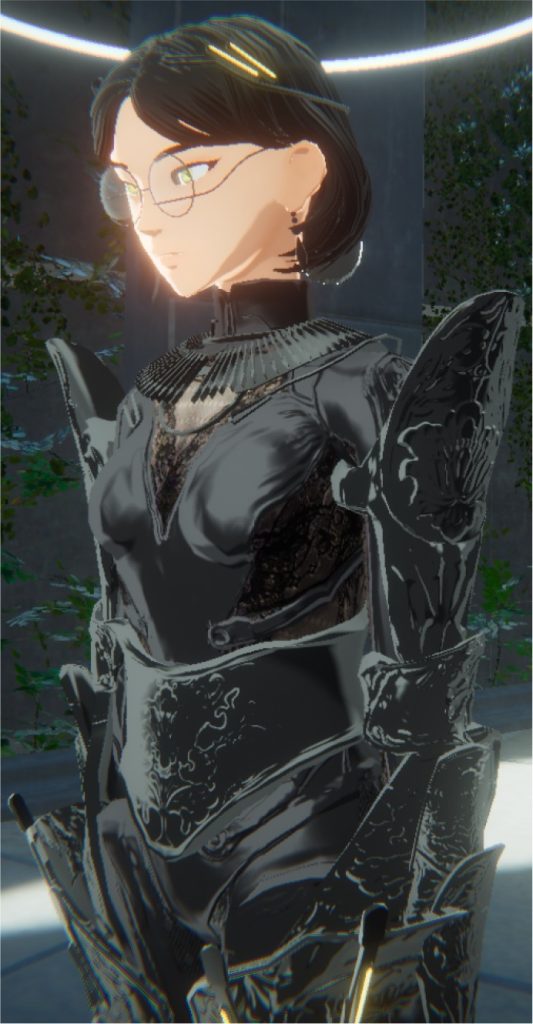
His team embarked on a multi-year journey that led to this year’s release of sunset visitor’s cinematic-narrative video game, 1000xRESIST. Described as a “thrilling sci-fi adventure” by the studio, it takes place at an unknown time in the future when humans must remain underground. That’s because of a disease spread by an alien invasion.
1000xRESIST was an immediate hit, earning a nomination for the Seumas McNally Grand Prize at the 2024 Independent Games Festival. It was also a finalist for the festival’s Excellence in Narrative Award and the Nuovo Award. More recently, 1000xRESIST captured the Best International Game prize at SXSW Sydney. It’s available on Steam, Nintendo Switch, and PC.
Siu tells Pancouver that the positive response came as a relief.
“It’s one of those things where you bet the farm on something and it also took a relatively large chunk of my life to make,” Siu says. “Long story short—it does feel reassuring.”
Last week we found out we were nominated for not one but three IGF awards. Our Creative Director @RemySiu had a few words to say. #1000XRESIST #IGF2024 #IndieGameDev #ShowcaseThursday #ThrowbackThursday pic.twitter.com/iQTPmGWuRl
— 1000xRESIST | Available Now (@1000xResist) January 18, 2024
A game made for Asian diaspora
He’s particularly pleased 1000xRESIST achieved his goal of reflecting Vancouver’s thriving experimental performing arts scene through the first two decades of the 21st century. Vancouverites at the forefront of this movement—including PuSh Festival co-founder Norman Armour, Theatre Replacement cofounders Maiko Yamamoto and James Long, and Theatre Conspiracy’s artistic team—had a profound impact on Siu and his collaborators.
“A large event [a pandemic] changed many things,” Siu says. “But in spirit, we were really taking that very local version of experimental performing arts built over many decades here in Vancouver—with very specific expressions and practices and processes—and taking it into video games.”
Siu felt that it was important to offer performers meaty and sophisticated roles. Yamamoto provided the voice for the Principal character; Nhi Do voiced Watcher and Blue; and Jasmine Chen voiced Knower. Aliyah Rayner voiced the central character Iris / ALLMOTHER, a Hong Kong-born teenager in Canada whose immunity keeps her alive.
“It’s very much a game made for Asian diaspora—and then, of course, even more specifically, Hong Kong immigrants,” Siu states. “In general, the experience of immigration, the experience of migration, the experience of being an ‘other’—all of that is hugely embedded in all the work we do.”
Bypassing Canadian broadcasting system
According to Siu, critics abroad have lavishly praised local actors’ voice-over performances. One of those actors was Armour.
“He passed away recently and we were so lucky to record his voice for the game in the last few weeks of his life,” Siu declared after the game was released. “His mentorship and artistic influence helped a whole generation of artists in Vancouver including me and many of the people working on this game.”
Back in 2014, Armour invited Siu, Lim, and Gan to be part of the PuSh festival Youth Academy. In addition, Siu cites SFU instructors Janet Danielson, David MacIntyre, Owen Underhill, and Barry Truax, as well as Rodney Sharman, as important musical mentors.
Siu says that he was motivated to create 1000xRESIST in part because there were few video games about immigrants in diasporic communities. However, he notes that this is changing with some recent releases, such as Venba. In this this narrative cooking game, players adopt the role of an Indian mom who immigrates to Canada in the 1980s.
It doesn’t surprise Siu that some racialized creatives are making video games rather than trying to produce works through the Canadian broadcasting system. In broadcasting, he notes, there very specific requirements to secure funding, which may include partnering with a network.
“Navigating that maze was something that I was completely uninterested in,” Siu says. “This is why I went to make video games. You just bypass it completely.”

Siu happily overturns conventions
1000xRESIST raises intriguing questions about the lived experience of members of diasporas.
“Why are you nostalgic for a home you’ve never experienced?” Siu asks. “Why are you attached to things that you know could be said as not yours?”
Siu believes that being in a diaspora not only influences what he makes, but how he makes it. He admits to a certain “flippantness towards any kind of tradition”. That, plus his experience at an experimental art school, gives him little reverence for how things used to be done, especially if there’s no reason to continue in that vein. Siu is happy overturning conventions.
One example is in Hong Kong Exile’s multimedia dance-theatre work Room 2048 (2048號房), led by Gan. Siu says that the team employed digital-projection lighting, which allowed them to make changes very quickly, including to sonography.
“That introduced a kind of cutting technique on-stage,” he explains. “That was a little bit more difficult to achieve with analog lights.”
This is because the brightness of analog lights dissipates more slowly when turned off in comparison to digital lights.
“You see in that work a lot of cutting between scenes, trying to experiment with how we can slice the space, so to speak—and be able to cut back and forth between it, almost like film, but on stage and in a space.”
Watch the trailer for Room 2048 (2048號房).
Challenging the status quo
The word “Chinese” can mean many things to people in the diaspora. Pancouver asks Siu for his thoughts, given that all three founders of Hong Kong Exile trace their roots back to the Asian city. Does he think of “Chinese” as a language, a race, a term of national origin, or ethnicity?
“It’s complicated,” Siu replies. “Especially for people who have a background in Hong Kong or in Taiwan and in other places.”
Then he adds: “I just think of so many different things when it’s brought up. And you know, honestly, I don’t even know how to answer that question.”
Siu is more comfortable discussing stereotypes. In leading Foxconn Frequency, he sought to address the perception that Chinese musicians were “unfeeling in their performance”.
“I really wanted to create a kind of system or apparatus that both confronted the types of pressures that these musicians face, but also, conversely, make a space for them to fail openly in public.”
Siu aimed to show how a musician may work through a problem, thereby demonstrating humanity.
It’s not the only way Hong Kong Exile challenges the status quo. The three co-founders try to “subtract from our own artistic disciplines”, he explains. This contrasts with creation through an “additive process” in which each discipline is stacked on top of one another.
Their goal, according to Siu, is to more readily co-exist by being willing to make sacrifices.
“It was a little bit more difficult when we started,” the composer and new media artist acknowledges. “But that was just something that we learned over time. Unless we were willing to adjust our priorities as artists depending on each project, then we found that the work would be less interesting.”
Watch Pancouver editor Charlie Smith’s interview with Remy Siu 蕭逸南.
Contact details
Visit remysiu.com, the sunset visitor 斜陽過客 website. and the Hong Kong Exile website to learn more about works by Remy Siu 蕭逸南. Follow Pancouver on X @PancouverMedia and on Instagram @PancouverMedia, and Charlie Smith on Bluesky @charliesmithvcr.bsky.social.
This article is part of “Beyond Chinese”, a joint initiative of Pancouver and the Asian-Canadian Special Events Association. Through interviews with artists and cultural workers, Beyond Chinese offers a nuanced view of people with Chinese ancestry. Pancouver and the Asian-Canadian Special Events Association gratefully acknowledge the support of Canadian Heritage.