
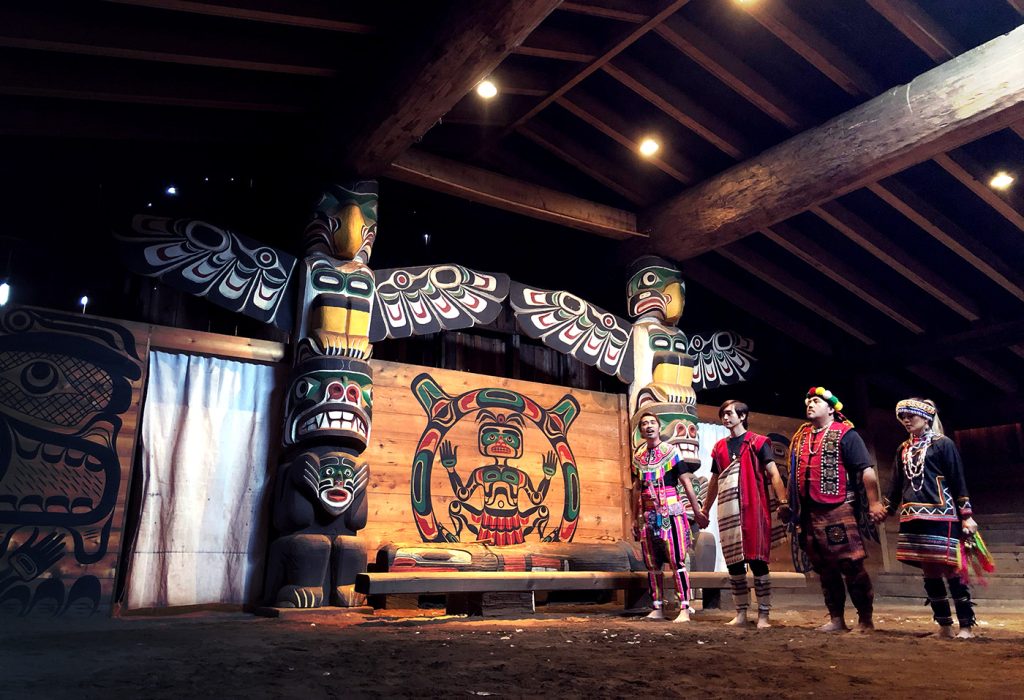
Indigenous people in Canada and Taiwan have certain things in common, which isn’t widely known in either country. However, a Taiwanese Indigenous filmmaker hopes that his new documentary feature, Identity: Lost and Found, will elevate the public’s understanding.
Director Tjaikung Rusegeseg followed four Indigenous musicians from Taiwan on a two-month tour of Canada in 2022. Keyboardist Suana Emuy Cilangasay (Sakizayan/Amis), guitarist Masaw Ali (Atayal-Han Chinese), singer Abus Tanapima (Bunun/Amis), and drummer Vaqacun Kalevuwan (Paiwan) were all members of Kanatal. They performed at Vancouver TAIWANfest, Mission Folk Music Festival, and a Small World Music event in Toronto. Along the way, they furthered their understanding of Indigenous identity through musical collaborations.
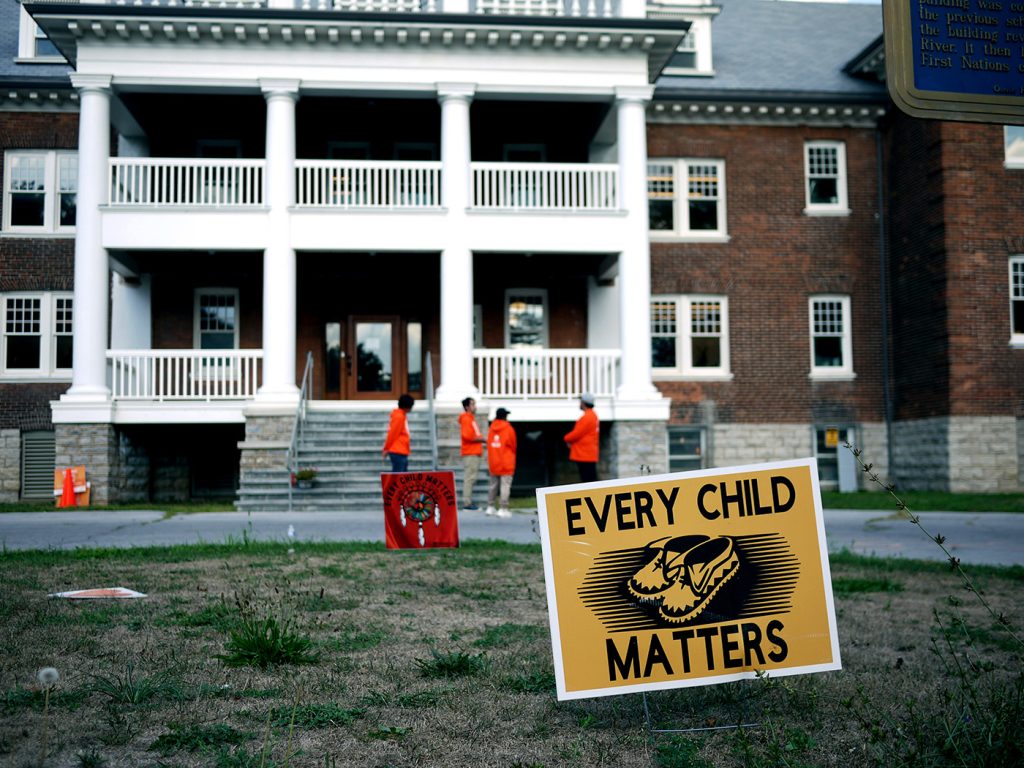
In addition, Kanatal members attended the Three Fires Homecoming Pow Wow in Hagersville, Ontario. Perhaps most significantly, they visited a museum on the site of a former Indian residential school in Brantford.
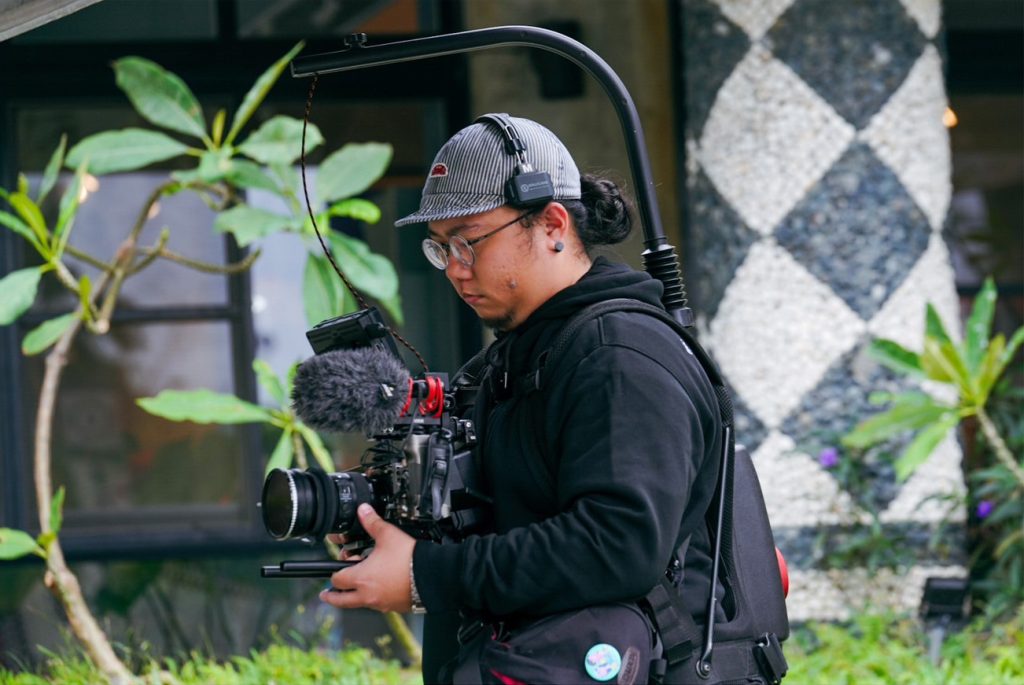
“I hope that the audience can see the transformation of the four members,” Rusegeseg tells the Pancouver in Mandarin. “They all start in different places in their life but they’re on this journey together. How they change from the start to the end of the journey is very different.”
Associate editor becky tu translated the interview with Rusegeseg into English. Identity: Lost and Found will be screened for free on September 1 at the Annex (823 Seymour Street) as part of Vancouver TAIWANfest.
Kanatal members took an unforgettable trip to the Woodland Cultural Centre, which houses more than 56,000 artifacts. It’s on the grounds of what was once the Mohawk Institute Residential School.
“That experience left a deep impression because as soon as they stepped out of the car in the parking area, there was a very solemn mood,” Rusegeseg recalls.
Language linked to identity
The Woodland Cultural Centre presented a short film to the musicians. And Cilangasay, who had visited Canada before, shared stories of what he had heard about the abuse of Indigenous students in these schools.
“Then on the actual tour, they learned more about some of the tragic tales that took place about Indigenous people not being able to speak their language,” the director states.
Abus, a Golden Melody Award nominee for Best Vocalist (Indigenous language) and Best Newcomer of the Year, tears up in an on-camera interview after hearing about this.
The musicians learned that the Canadian government created the Indian residential school system in the 19th century to accelerate the assimilation of Indigenous people into settler society. Religious organizations were often contracted to operate the schools. There, students were prohibited from speaking their traditional languages, cutting them off from their identity.
Thousands of Indigenous children died in these institutions. The last one closed in Saskatchewan in 1996.
Language reclamation is also a major issue for Indigenous people in Taiwan, which has 16 officially recognized tribes. Rusegeseg says that when the island was under Japanese control from 1895 to 1945, Indigenous people weren’t forbidden from speaking their own language. However, they had to learn the Japanese language and history in school.
Following Japan’s defeat in the Second World War, Mandarin became the compulsory language in schools in Taiwan. In 1949, Chinese Nationalist leader Chiang Kai-shek’s government and many of his followers retreated to Taiwan after losing the Chinese Civil War to the Communists under Mao Zedong. The same year, Chiang imposed martial law on Taiwan, which wasn’t lifted until 1987.
Watch Kanatal perform “Peace”.
Mandarin imposed on Indigenous people
“During the martial-law era after the Japanese occupation, there was a restriction on all dialects, including Taiwanese,” Rusegeseg says. “There were punishments but it wasn’t like it was in Canada where they grouped you all together in the schools.”
Rusegeseg says his parents’ generation was most affected by language policies in Taiwan. However, he says that in recent years, the Taiwanese government has changed its tune and is encouraging Indigenous people to reclaim their languages.
“What’s happening now is the younger people are able to speak it more,” he states.
Moreover, the Taiwanese government has approved an Indigenous language development law. This guarantees the right to receive judicial documents and government notifications in one’s own language.
In addition, the National Assembly has eight seats reserved for Indigenous people. There’s also guaranteed representation in local governments in the six main cities.
None of these rights has been enshrined in Canada. Yet Rusegeseg believes that Taiwanese people can still learn a great deal from how non-Indigenous Canadians interact with Indigenous people.
“I felt very impacted by the mutual respect that I could see,” he says.
For example, Rusegeseg says that people in Taiwan might say that they love Indigenous people and Indigenous culture. Yet he thinks that they often act like “complete tourists” when they visit Indigenous communities in his country.
“They’ll go up close and take pictures without asking,” Rusegeseg insists.
Furthermore, he says that they might touch things without asking. That sharply contrasts with his experience visiting the powwow in Ontario.
“Everyone there was really respectful. They acted more like spectators if they were non-Indigenous,” the director recalls. “They followed all the host’s instructions. I was very moved by that.”
Director felt confused about his identity
As a filmmaker and video producer, Rusegeseg aims to explore the relationship between contemporary and traditional cultures. Because he’s of mixed ancestry, he says that he felt conflicted and confused about his identity when he was growing up in the southern Taiwanese city of Pingtung.
“In university, I really started to understand what it means to be of the Paiwan tribe,” he says. “I joined a club formed by Indigenous students from different tribes.”
The filmmaker notes that Kalevuwan, the drummer, grew up in a Paiwan community. But Kalevuwan also spent time in the city, where he experienced discrimination due to his Indigenous heritage. Ali, the guitarist, was most unfamiliar with tribal life because he didn’t live in an Atayal community. Cilangasay and Tanapima, on the other hand, had a fair amount of knowledge.
“After this experience in Canada and after they went back to Taiwan, they all started to have different understandings,” Rusegeseg notes. “It kind of took them on different paths. For example, Suana [Cilangasay] and Vaqacun [Kalevuwan] just moved back to the tribe.”
Kanatal has since broken up, but not before it created memorable original music with lyrics written in some of the Indigenous languages of Taiwan.
Vancouver TAIWANfest will present a free screening of Identity: Lost and Found at the Annex (823 Seymour Street) on September 1. For more information, visit the website. Follow Pancouver on X (formerly Twitter) @PancouverMedia and on Instagram @PancouverMedia.




