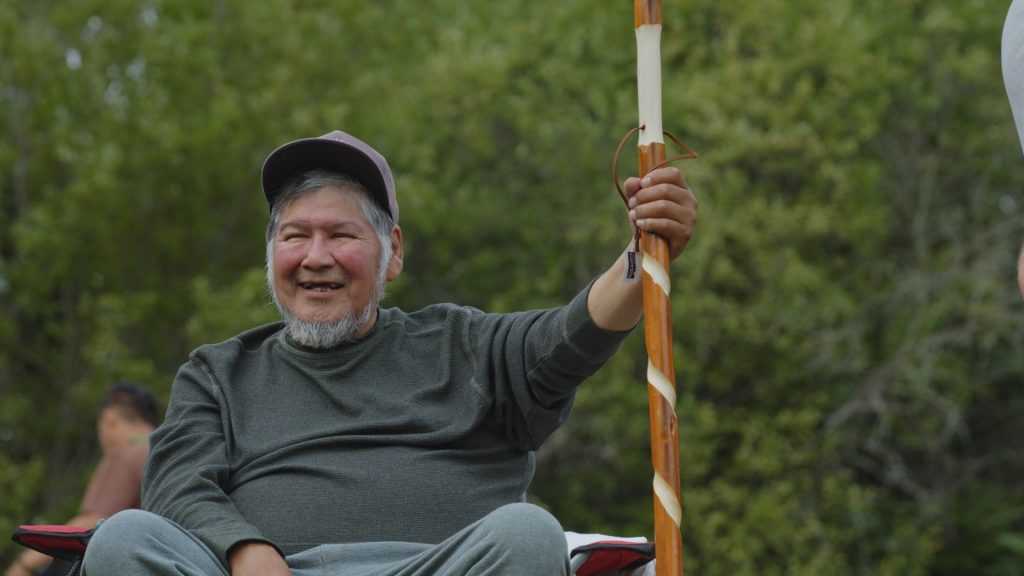
Vancouver filmmaker Jules Koostachin presents deep thoughts in her new documentary, NiiMisSak: Sisters in Film. Among them is the power of storytelling to change perspectives about First Nations and Métis people.
“We are, as Indigenous people, the actionable solution,” Koostachin, who is Cree, declares in her remarkable Telus Original documentary. It premieres on Friday (December 6) at the Whistler Film Festival.
“We are the change,” the Attawapiskat First Nation member continues. “We are the meaningful change because it is through our stories—through our soul—that we will create a better world for the next generation.”
NiiMisSak: Sisters in Film focuses on a rising wave of IsKewWak (women) who are doing precisely that through their features and documentaries. The world premiere comes two days after Koostachin received the prestigious DOC Vanguard Award. In the film, Koostachin and six other Indigenous women filmmakers share their insights.
For example, B.C.-based Indigenous filmmaker Marie Clements (Bones of Crows) speaks about how Indigenous women directing Indigenous women bring “real living knowledge” to films addressing violence against Indigenous women. As a result, she maintains that audiences see this topic portrayed in a very different way compared to when it’s presented by white male directors.
Another B.C. Indigenous filmmaker, Asia Youngman (“N’xaxaitkw”), emphasizes the importance of “narrative sovereignty” over her projects. Meanwhile, Kayah George says that she didn’t want to create a Pan-Indigenous film with her debut short documentary, “Our Grandmother the Inlet”.
“It’s a Tsleil-Waututh story,” insists George, great-granddaughter of iconic Tsleil-Waututh actor Chief Dan George.

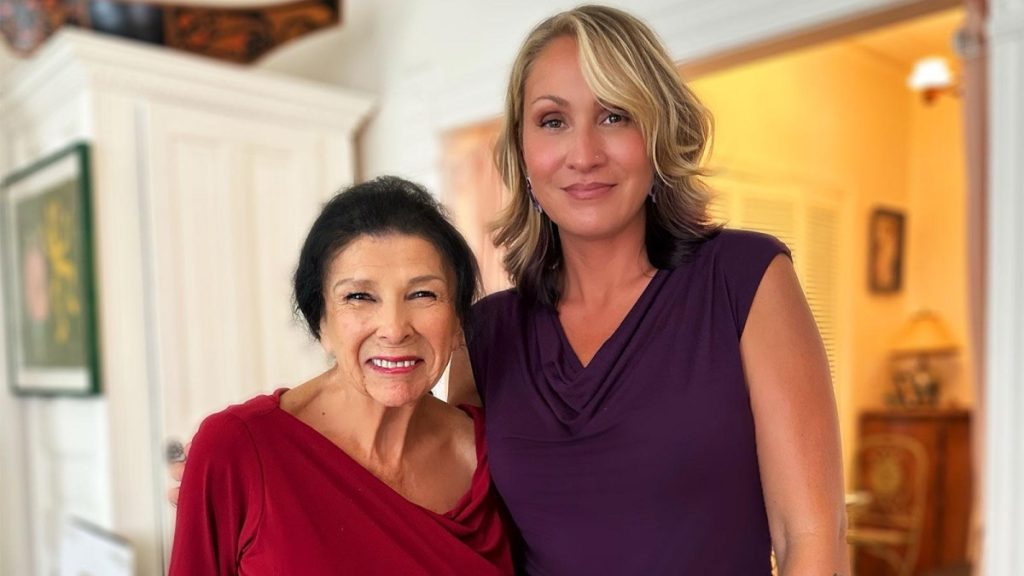
Koostachin interviews Alanis Obomsawin
Vancouver-based Cree filmmaker Jessie Anthony points out that she was told that she wasn’t qualified to teach Indigenous storytelling. Yet a year later, she won a Leo Award for best screenwriting for her feature, Brother, I Cry. Tristin Greyeyes (“Spirit”) sees Indigenous filmmaking as a means of taking back power from others who have been telling Indigenous stories.
Yet another Indigenous woman in film, Kira Doxtator (trainee assistant director on Koostachin’s Angela’s Shadow), sums up the movement this way: “We are reclaiming our identity and reclaiming the way that we’re being represented on-screen. I guess, even reclaiming sovereignty over the narratives that have been told about where we come from, our bodies, what we look like, what we are capable of.”
But the centrepiece of NiiMisSak: Sisters in Film is the ultimate Indigenous woman movie-making trailblazer, 91-year-old Alanis Obomsawin. She has finished 57 films in her storied career.
“Your work—your job—as a documentarian is to listen,” Obomsawin advises prospective filmmakers.
The steely-eyed matriarch then states that none of today’s Indigenous women filmmakers will ever have to go through what she endured during her career.
“For me,” Obomsawin adds, “the most important thing is the voice of our people: their stories told by themselves.”
If I had any regret as a viewer, it’s that Koostachin didn’t have sufficient time in her documentary to feature several other influential female Indigenous filmmakers. The collective success of Doreen Manuel, Loretta Todd, Tracey Deer, Tasha Hubbard, and Elle-Máijá Tailfeathers, as well as the women in Koostachin’s film, is a testament to a broader story that’s mostly gone unrecognized in the mainstream media.
Cherishing creative freedom
According to Koostachin, who earned a PhD from UBC in 2021, Indigenous women filmmakers are self-producing out of necessity. That’s because mainstream producers aren’t trusting them with big-budget projects.
“I know that we’re underrepresented,” Koostachin says in her film. “I know that people maybe just don’t think we’re qualified or have enough experience, even though we do.”
At the same time, Koostachin acknowledges in NiiMisSak: Sisters in Film that by making independent films, she has “the creative freedom to do what the hell I want to do”.
Moreover, Koostachin bristles whenever people use words like “magical” and “fantasy” to describe her films. She maintains that these terms imply an “untruth”.
“For me, it’s almost like saying our belief system is like a mythology. There’s no truth behind it. It’s something that’s been fabricated,” Koostachin states. “But for many of us, these Indigenous stories—these ways of being—are our truth.”
Perhaps the most trenchant comment of all comes from Clements, who recently won a major award from DGC Canada for her miniseries Bones of Crows. She suggests that for people to exist in spaces that weren’t made for them is enough. The implication is clear—she’s talking about Indigenous women directors succeeding simply by making a film.
“The rest is up to you at that point,” Clements states. “I’m here—and here I come. Watch it. See what happens.”
The Whistler Film Festival will present the world premiere of NiiMisSak: Sisters in Film on Friday (December 6) at Village 8 Cinemas. The festival continues until Sunday (December 8). For tickets and more information, visit the website. Follow Pancouver on X @PancouverMedia and on Instagram @PancouverMedia. Follow Charlie Smith on Bluesky @charliesmithvcr.bsky.social.