

In 1959, a 29-year-old Detroit record-store owner, ex-boxer, and musician founded the most influential Black-owned record label in history. Berry Gordy’s Motown Records produced a slew of hits by a such legendary performers as The Temptations, Stevie Wonder, The Supremes, The Jackson 5, Four Tops, and Smokey Robinson.
Next month, Vancouver singer-songwriter and stage performer Krystle Dos Santos will tell that story through the music in A History of Motown. It’s at the Firehall Theatre (280 East Cordova Street) from April 2 to 13.
“I like to call it educational, enlightening, and entertaining, because I think that people learn best when they’re having fun and where there’s music involved,” the versatile Dos Santos tells Pancouver over Zoom. “The first half will be, basically, what I present in schools—a history of Motown—which is a lot more fun than it sounds like.
“It is really a concert and then I sprinkle in pictures and facts and stories with all of that,” she continues. “Then, the second half is going to be some of my favourite Motown songs—like a party fun time. It’s in a theatre setting, but I hope people get on their feet, dance, and sing along.”
In addition to Dos Santos’s vocals, A History of Motown features Jon Holisko on drums, Cole Tinney on piano, Gavin Youngash on guitar, Phil Bell on bass, and Dominic Conway on saxophone.
Dos Santos says that Motown has been a part of her world since she was repeatedly sing Stevie Wonder’s “Part-Time Lover” as a five-year-old child.
“It was a little puppy dog that followed me everywhere,” she quips.
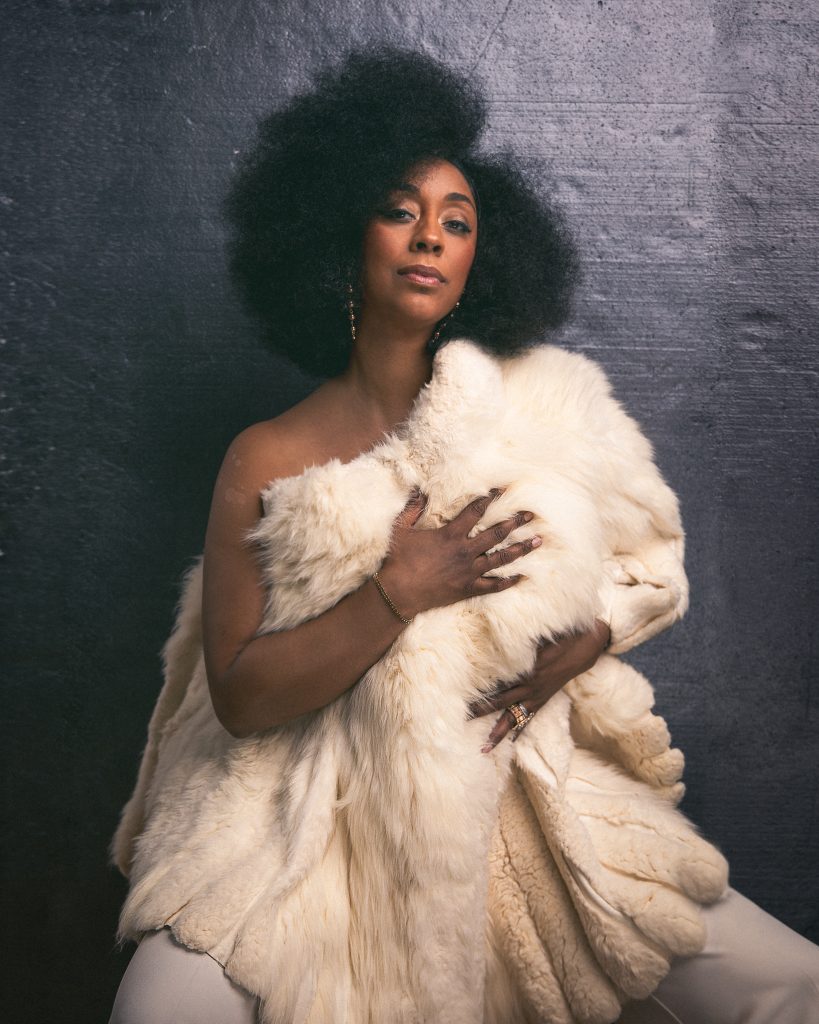
Dos Santos addresses civil rights
This early immersion in the music of Stevie Wonder set Dos Santos on a path to record three studio albums and win two Western Canadian Music Awards. As a singer, she moves effortlessly from R&B and soul to jazz and country rock.
In The History of Motown, she will draw connections between the U.S. civil rights movement and the Detroit music scene of the 1950s and ’60s. Gordy, in fact, aimed to create a universal sound to defy the segregation taking place on the radio airwaves.
“That was one of the main goals, I think, that Berry Gordy had,” Dos Santos says. “He was like, ‘I don’t want us to be on Black radio; I want us to be on all radio.’ ”
He succeeded magnificently, breaking barriers for Black artists. In addition, one Motown artist, Marvin Gaye, wrote politically charged songs like “What’s Going On” and “You’re the Man”. Another Detroit-based singer of that era, Aretha Franklin, used to tour with civil-rights leader Martin Luther King, Jr., performing at some of his speaking engagements. Franklin was a close friend of Smokey Robinson.
“I actually include Aretha [in the show], even though she’s the only artist that wasn’t on the Motown record label,” Dos Santos reveals. “I like to talk about her because of the massive role she played in that era.”
Dos Santos is no stranger to musical theatre. With producer-writer Tracey Power, she co-created and starred in Hey Viola! about Canadian civil-rights trailblazer Viola Desmond.

Sharing history through music
Dos Santos also created BLAK: Canadian Women in Music, which celebrates Black Canadian women. In this musical journey, Dos Santos draws attention to politician and scholar Rosemary Brown, educator and writer Valerie Jerome, and singers Dee Daniels, Dawn Pemberton, Tanika Charles, and Jully Black, among others.
Moreover, Dos Santos and her band offer A History of Motown in schools in live and virtual performances.
“In the last five or six years, I’ve finally come to this incredible convergence of entertainment and education, where I feel really, really uplifted by the stories that I’m able to tell,” Dos Santos states. “And the fact that I can do that floating on a musical sort of ocean is really such a blessing.”
She plans to continue along this path with an upcoming educational music project about another chapter of Black Canadian history. Dos Santos plans to create a show about Vie’s Chicken and Steak House, a popular Black-owned restaurant that existed for decades in Hogan’s Alley. Legendary Black musicians and singers ranging from Louis Armstrong and Cab Calloway to Billie Holiday and Diana Ross visited the venue in Vancouver’s Strathcona neighbourhood.
The co-owner, Viva (“Vie”) Moore, was the descendant of a pioneering Black family from Salt Spring Island, who moved to B.C. following the notorious Dred Scott decision of 1857. This U.S. Supreme Court ruling denied citizenship to American residents of Black African ancestry, setting the stage for the U.S. Civil War. Moore’s husband and co-owner, Bob, was from Alabama.
“Massive Black artists of the time would come through Vie’s Chicken and Steaks because they couldn’t go to the white restaurants and hotels,” Dos Santos says. “We’re telling the story of the B.C. Black community through that show.”
Event details
The Firehall Arts Centre presents A History of Motown by Krystle Dos Santos from April 2 to 13. For tickets, visit the Firehall Arts Centre website. Follow Pancouver on X @PancouverMedia and Bluesky @pancouver.bsky.social. Pancouver is also on Instagram @PancouverMedia. In addition, follow Charlie Smith on Bluesky @charliesmithvcr.bsky.social.




