
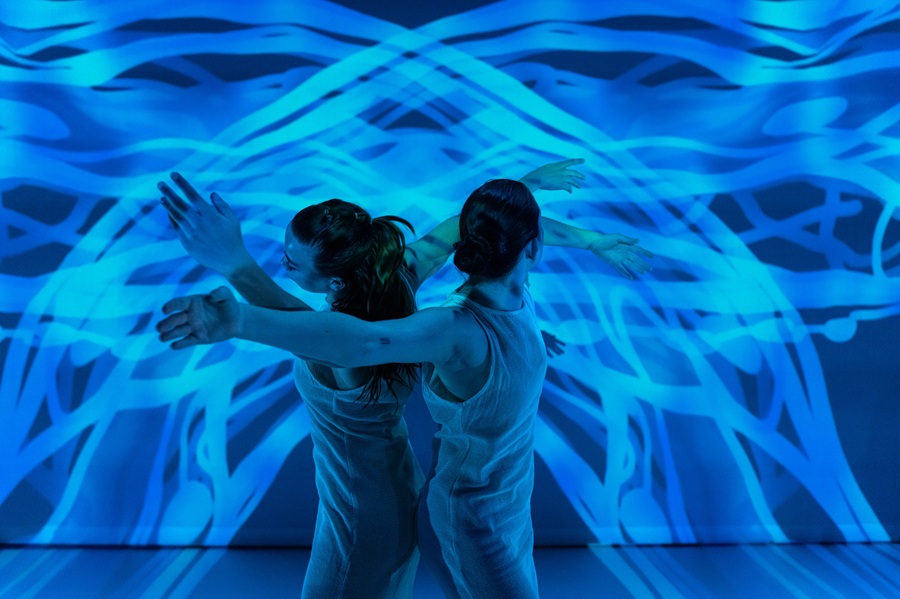
Mixed-race Anishinaabe dance artist Olivia C. Davies says that Vancouver’s Matriarchs Uprising festival began as a dream.
“I was artist-in-residence at the Scotiabank Dance Centre for their 2018-2019 season,” Davies tells Pancouver over Zoom. “I put forward a number of different initiatives to kind of test the waters, and see what would land. Matriarchs Uprising, the inaugural festival, happened to be one of those.”
The idea took off, with the female Indigenous dance festival debuting over three days in June of 2019. It coincided with National Indigenous History Month and included six performances by artists and groups based in Canada, the United States, and Australia. But it was more than just a series of artistic productions. As artistic director, Davies also emphasized community engagement.
“That was the beginning of the Talking Truth Circle Conversations, where artists are centred—and our witnesses surround us—in conversations about life and love and hopes and dreams, as well as the work itself,” Davies says, “and then offering community workshops and masterclasses for everyone to engage in these forms of contemporary dance through an Indigenous lens.”
From February 16 to 21, Matriarchs Uprising returns to the Scotiabank Dance Centre (677 Davie Street) for its seventh year, along with events at Morrow (910 Richards Street – Unit 204). Presented by O.Dela Arts in partnership with The Dance Centre, the wide-ranging program includes live performances, workshops and masterclasses, Talking Truth Circle Conversations, and film screenings.
It opens with five short dance films from Indigenous women, which will be available on-demand, online throughout the festival. They will also be screened in the Scotiabank Dance Centre foyer during the pre-show of each evening program.
Matriarchs Uprising partners with PuSh festival
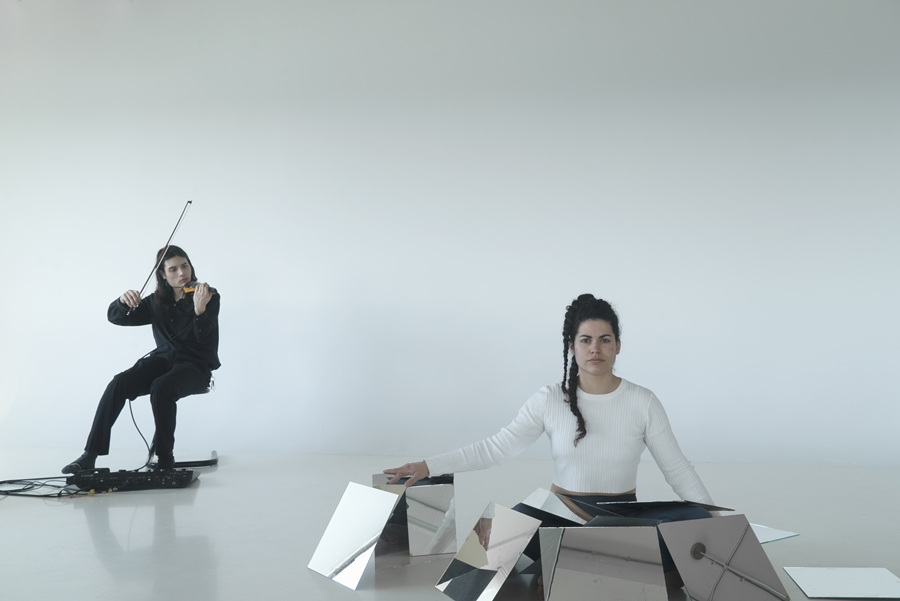
The first live performance is Wahsipekuk: Au-delà des montagnes. According to the festival website, Wolastoq and Québécoise artist Ivanie Aubin-Malo draws on Wabanaki oral traditions in “a journey of dance, music, and song into a reimagined tale, invoking the Giants”. Violinist Julian Rice (Mi’kmaq and Kanien’keha:ka) will also perform at this event, which will be at the Scotiabank Dance Theatre’s Faris Family Studio at 7 p.m. on Wednesday (February 18).
“We’re really excited about that,” Davies says. “That’s also our first time partnering with the PuSh festival on a presentation.”
The following night offers up a double bill in the same theatre. World champion hoop dancer Beany John collaborates with contemporary dancer-choreographer-musician Sophie Dow on the high-energy carriers and keepers of the ancestral portals. That evening’s program also includes Ktunaxa choreographer Samantha Sutherland’s ʔa·kinq̓ uku. She will perform this solo, which is inspired by a 2023 wildfire in her home community of ʔaq̓am in the Kootenays.
Friday (February 20) features events at two locations. Morrow will be the site of Remembering Our Return Home at 4 p.m. It’s billed as “a scored improvisational performance weaving spoken word poetry, dance, and sacred objects”. It includes dance artists such as Davies, Dow, Ziyian Kwan, and Rianne Svelñis. This intergenerational performance collective also features Coast Salish storyteller and historian Rosemary Georgeson, Anishinaabe Elder and artist Sharon Jinkerson-Brass, Vuntut Gwitchin spoken-word artist Melissa Matheson-Frost, and Vancouver Moving Theatre co-founder Savannah Walling. Tickets are by donation.
Then at 8 p.m. on Friday at Scotiabank Dance Centre, Matriarchs Uprising will present another double bill. Sandra Lamouche created and will perform Out of Wounds. She was inspired to create this work after traditional Cree plant medicine helped alleviate her anxiety.
That will be followed by Australian choreographer Amelia Jean O’Leary’s Ngambaa (Mother in Gamilaraay). It’s about two sisters going through the fire and returning as time-travelling spirits.
Transmitting stories through the body
There will be another work linked to sisters in the Saturday evening double bill at the Scotiabank Dance Centre. Olivia Adams (Wulli Wulli) choreographed Matriarchs, which features her Wulli Wulli sister Arabella Walker’s artwork. According to the website, it’s “an intimate and mesmerizing contemporary dance work reflecting on the lived histories of First Nations women”.
Preceding that performance will be Raven Spirit Dance co-artistic director Michelle Olson’s new work-in-development. Salone Nieto directs Where did you go?, which addresses the journey from grief to hope. The festival will wind up on Saturday (February 21) evening with a closing reception party, featuring live music by vocalist Tsimka and electronic artist Michael Red.
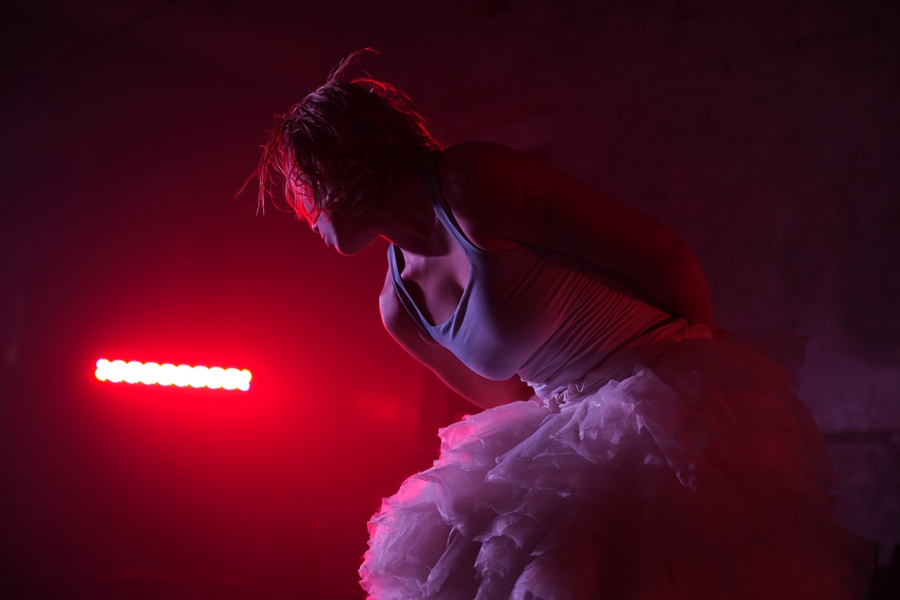
The entire festival reflects the artistic director’s keen interest in how stories are transmitted through the body. Davies is also exceedingly curious about the relationship between bodies, places, and spaces.
“I understand that we all carry our own blood history—blood memory,” Davies says. “And so much of what is beyond the present moment can be accessed through dance.”
In recent years, she has been exploring what it means to choreograph for augmented and virtual reality. She already completed a virtual reality live performance with maamawi (ᒫᒪᐏ): together through the fire, which premiered at the 2023 Matriarchs Uprising festival. It’s a futuristic interpretation of Anishinaabe fire prophesies and it’s part of the O.Dela Arts touring repertoire.
“I also work with non-Indigenous dance artists and practitioners in an Indigenous project scope,” she notes. “We recently collaborated with Vancouver’s musica intima vocal ensemble to create a beautiful duet.”
Matriarchs Uprising runs from February 16 to 21 at Scotiabank Dance Centre and Morrow. Presented by O.Dela Arts in partnership with The Dance Centre, the festival includes live performances, workshops, masterclasses, Talking Truth Circle Conversations, and film screenings. For tickets and more information, visit the Matriarchs Uprising website Follow Pancouver on X @PancouverMedia and Bluesky @pancouver.bsky.social..




