After decades as an artist and as a professor at Concordia University, Mary Sui Yee Wong is still not used to being in the limelight. As an introvert, she prefers producing artistic works—whether that’s sculpture, photography, video, costume, or public art—rather than swanning around in public.
“I haven’t actively participated as a career artist where I’m driving my work out there in the market,” Wong tells Pancouver over Zoom.
But as a trailblazing artist in exploring Asian identity dating back to the 1980s—and in her mentorship of Asian diasporic artists—Wong has had a significant impact. This has prompted the Richmond Art Gallery to present a major survey exhibition, Restless by Nature: Mary Sui Yee Wong, 1990s to the present, from April 12 to June 8. The curator, Zoë Chan, calls it a “long overdue retrospective”. According to the gallery, Restless by Nature “underscores Wong’s engagement with personal memory, cultural history, familial legacy, Orientalism, and anti-Asian sentiment in Canada”.
“I’m always very curious about how Asian culture is kind of commodified,” Wong tells Pancouver.
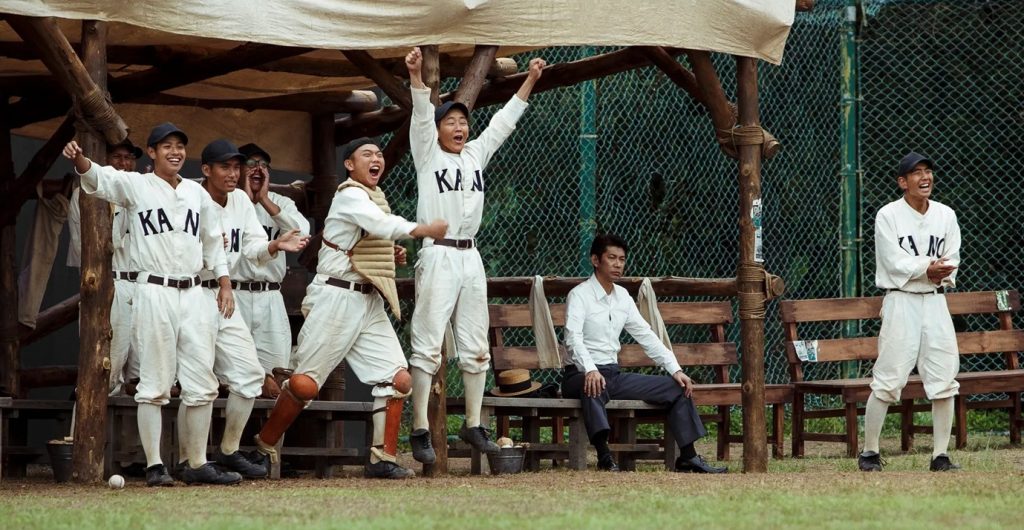
This is reflected in an updated series of photographs of her Yellow Apparel fashion line featuring two old friends, Vancouver artists Paul Wong and Henry Tsang, as well as Tsang’s partner, cultural worker Emiko Morita. The origins of Yellow Apparel go back to the late 1980s shortly after Wong moved from Vancouver to Montreal. She came across some fabric with images of four sets of dolls of different races. The dolls all had identical skin tones and happy faces.
To Wong, it seems that whoever designed this pattern must have thought people from various racialized backgrounds all look the same.
“I thought, ‘Who would buy this fabric? What would it be used for?’ ”

Wong creates Yellow Apparel postcards
Given Wong’s keen interest in identity and racism, she decided to purchase a bolt. She kept it for 10 years, not knowing what to do with it. But as Wong was working on her master’s degree in the late 1990s, some colleagues decided to launch a band called the Post Colonial English Society.
“I said, ‘I’ve got the perfect fabric. I’m going to make you guys costumes for your show.’ And that’s how it started,” Wong relates.
She chose the name Yellow Apparel because the fashion world was madly appropriating Asian motifs. The name also played off the popular clothing line American Apparel.
“I wasn’t serious about actually marketing clothes,” Wong emphasizes. “But I basically borrowed all of the devices used in fashion and marketing to produce designs of the work. So, I showed the costumes.”
Much to her chagrin, some of the outfits were stolen. In response, Wong posted advertisements in newspapers to announce this. She also photographed models and made postcards as a droll way of showing how cultures are being commodified.
In advance of the exhibition at the Richmond Art Gallery, she contacted the three Vancouverites to see if they would model her Yellow Apparel line.
“I asked them for a favour and they all came through,” Wong says with a sense of gratitude. “I’ve also got postcards that will be distributed through other galleries and venues.”

Growing up with Chinese opera
There’s a reason why Wong incorporates fashion into her artistic practice. She was born in Hong Kong, where her father, Toa Wong, was a master of Cantonese opera. In 1963, the family moved to Vancouver, and her dad later played a seminal role in promoting this art form in Canada. He even helped build and document a collection of Cantonese opera costumes at UBC’s Museum of Anthropology.
“Those costumes have significance,” Wong explains. “They tell you the social status. When a performer walks on the stage, the audience immediately knows that’s the scholar, that’s the princess.”
Her father, who passed away in 2015, also donated Cantonese opera scores, learning materials, and recordings to the UBC Asian Library. Wong reveals that some symbols in her art come from traditional Chinese theatre.
“In fact, I never thought I would be an artist,” Wong confesses. “I really only wanted to become an opera singer.”
However, there wasn’t a prospect of earning a livelihood as a Chinese opera singer in Canada. So, Wong enrolled at Emily Carr University of Art + Design when it was a diploma-granting college on Granville Island. She cites Sharyn Yuen, a papermaker and former Emily Carr instructor, as an important mentor.
“She made me feel that I had permission to do work about identity, politics, and so on,” Wong says. “Some of her early works were very inspirational for me.”
In the 1980s, Wong felt that Vancouver had too many siloes. So, she packed her bags and moved to Montreal, where she earned bachelor’s and master’s degrees in fine arts at Concordia University. She majored in sculpture and became trilingual, learning French in addition to her fluent English and Cantonese.
“I think that also opened up my world,” Wong says.

Wong researches classical paintings
She also immersed herself in Montreal’s activist Chinese movement and the city’s vibrant artist-run centre scene. Wong curated Un coup d’oiel sur l’Opéra de Pékin at La Maison de la Culture Frontenac in 1994. The following year, she had solo exhibitions at Observatoire 4 and McCord Museum and participated in group exhibitions at Galérie de la Ville and Saidye Bronfman Centre in the Montreal area.
One of her major commissions came as a result of Quebec’s Art and Architecture Integration Policy. She created Treasure in the foyer of Hôpital Chinois de Montréal, which serves seniors. Wong points out that in Chinese culture, a senior in the family is often referred to as a living treasure. But she also wanted to incorporate Chinese culture into the actual artwork, so she began researching classical paintings.
“The idea was to bring some of the outdoors indoors for the seniors,” Wong continues. “It was a four-panel glass mural with a picture of the sky—and then a digitized image of a classical painting.”
As part of the Capture Photography Festival, the City of Richmond Public Art Program and the Richmond Art Gallery commissioned Wong to create a new iteration of this work. Treasure II, 2025 includes a classical Chinese painting, Buddhist Temples amid Autumn Mountains, framed by two photographs of blue sky and billowing clouds.
This public art is on display outside Lansdowne Station until March 1, 2026.
In pursuit of social justice
Wong maintains that her artistic ethos is to be an observer. Moreover, she feels it’s important to use whatever skill sets she has to advance critical thinking.
“I hope to inspire others to ask questions and not be so easily accepting in order to make some change and in order to move toward some kind of social justice,” she states.
This is also on display in a new performance-based work in Restless by Nature: Mary Sui Yee Wong, 1990s to the present. Wong created Gold Mountain in response to the resurgence of anti-Asian sentiment during the COVID-19 pandemic.
“I have built a miniature model of a Chinese home and…the home will be on display initially in the gallery,” Wong explains. “And the performance is me basically destroying the home.”
Then, she plans to cover it with a gold leaf where it will remain through the exhibition.
“It’s a very visceral response to all the violence and all the atrocities that I feel have been hurled towards my community over the last few years.”

.
Event details
The Richmond Art Gallery is presenting Restless by Nature: Mary Sui Yee Wong, 1990s to the present from April 12 to June 8. The artist will activate her artwork with a live performance at 7 p.m. on April 15, followed by a curatorial tour with Zoë Chan. The Richmond Art Gallery will also present an online artist salon with Mary Sui Wong from noon to 1 p.m. on May 28. Register through the gallery website. The exhibition is part of the 2025 Capture Photography Festival Selected Exhibition Program.
Follow Pancouver on X @PancouverMedia and Bluesky @pancouver.bsky.social. Also find Pancouver on Instagram @PancouverMedia. Follow Charlie Smith on Bluesky @charliesmithvcr.bsky.social.