

Many years have passed since actor and playwright Munish Sharma lived in his hometown of Regina. However, he believes that he retains his Saskatchewan values. In fact, Sharma regularly jokes with his friends that in his core, he’s still very much a Prairie boy.
“If you grew up there, it doesn’t matter what your background or your ethnicity or religion is,” Sharma tells Pancouver by phone. “There’s this sense of kindness and respect, too, that is part of growing up on the Prairies.”
The University of Regina fine arts grad feels that his desire to make people feel welcome—which is so central to Prairie life—has served him well as a theatre artist. Sharma also says that he grew up as an older brother, so he’s always felt a need to look out for people’s well-being.
“There is definitely a little bit of that when I get to work—making sure that everybody has space or feels comfortable,” Sharma states.
“That idea of ‘you’re valued and you belong, and you can share your work as best you can’ is important to me,” he adds. “I try to exude that, and welcome that as well.”
Egalitarian values also permeate Sharma’s role in East Van Panto: Robin Hood, which the Cultch is presenting at the York Theatre. He plays a giant raccoon named Little Jaan opposite Hayley Sullivan as Robin Hood. Jason Sakaki plays Prince Ken and Marion; Steffanie Davis plays Toni the Pony. And Mark Chavez performs the roles of Hans the Hedgehog, Luz the Goose, and Robobrarian.
This is Sharma’s second consecutive appearance in Theatre Replacement’s annual holiday-season musical comedy. Last year, he performed in East Van Panto: Beauty and the Beast.

Sharma embraces sense of community
So how does Little Jaan compare to the Little John character in more traditional productions of Robin Hood?
“Little Jaan is more caring—still a protector, but a little bit more welcoming and fun-loving,” Sharma says.
Jivesh Parasram and Christine Quintana’s script embraces the East Van Panto tradition of hyper-local plot turns. In this version of Robin Hood, John Hendry Park—home to Trout Lake—has been privatized along with all the other Vancouver parks. Robin Hood and the “Merry-Thems” plan to invade Britannia in East Van in a scheme to take back their neighbourhood from the oligarchy.
Treasured East Van musician Veda Hille returns as composer and musical director. Anita Rochon is the director with Howard Dai as assistant director.
“East Van Panto, above all, means community to me,” Sharma says. “It’s very welcoming.”
He appreciates how this year’s East Van Panto raises big questions about people’s sense of belonging.
“One of the lovely things is this sense of being an individual within a community as opposed to being a central individual,” he states. “There’s also this feeling of being authentic to yourself and being authentic to others. It’s very sweet. There are some wonderful moments in the show.”
Sharma readily admits that it’s not always easy making a living in theatre. He feels fortunate that he’s been able to work with others to build shows as a writer and actor.
“Nothing is guaranteed,” he acknowledges. “I mean, that’s part of the gig.”
He’s had many career thrills, including playing a kidnapper named Bashir in Pi Theatre’s 2016 production of The Invisible Hand. Another highlight came when he was cast as Claudius in Bard on the Beach’s 2024 production of Hamlet.

Speaking Punjabi on-stage
Sharma feels that the Vancouver theatre scene has become far more inclusive in recent years, including in the area of casting.
“I’ve found for myself that there are a lot of new works that I’ve got to do,” Sharma says. “But there are still a couple of plays that we would all love to do that have kind of escaped me in a way. That’s the process. I definitely feel that there has been growth and I just feel we need to continue to find a way for it to flow more effortlessly.”
One of his most rewarding experiences as an actor came in local playwright Gavan Cheema’s Himmat. Produced by Theatre Conspiracy, it premiered at the Cultch Historic Theatre in 2022. Sharma played Banth, an immigrant labourer in hospital with cancer. Banth, a recovering alcoholic, shares stories of his life with his daughter Ajit, played by Cheema.
“Half of the play was done in Punjabi and I had to speak as much Punjabi as I think I ever spoke in my life—on stage!” Sharma says. “Paneet Singh was the director of that. It was just a wonderful experience.”
Sharma could pull off Punjabi monologues because he spoke this language at home with his parents. He also speaks Hindi.
Mahabharata and Danceboy
Himmat reminds him of the need to tell different stories. He’s especially pleased that Himmat attracted many audience members of Indian ancestry during this year’s run at the Surrey Arts Centre,.
“You could feel that this was a story that was important to be told on stage and had not been told that way,” Sharma says.
He was also cast as the divine hero Bhima in Why Not Theatre’s Mahabharata. This contemporary interpretation of the Sanskrit epic premiered at the Shaw Festival in 2023. Meanwhile, Sharma looks forward to future runs of Mahabharata Part One: Karma: The Life We Inherit. The Ravi Jain–directed production will be performed from April 8 to 20 at the Bluma Appel Theatre in Toronto. From May 13 to 24, Why Not Theatre will present it at the National Arts Centre in Ottawa.
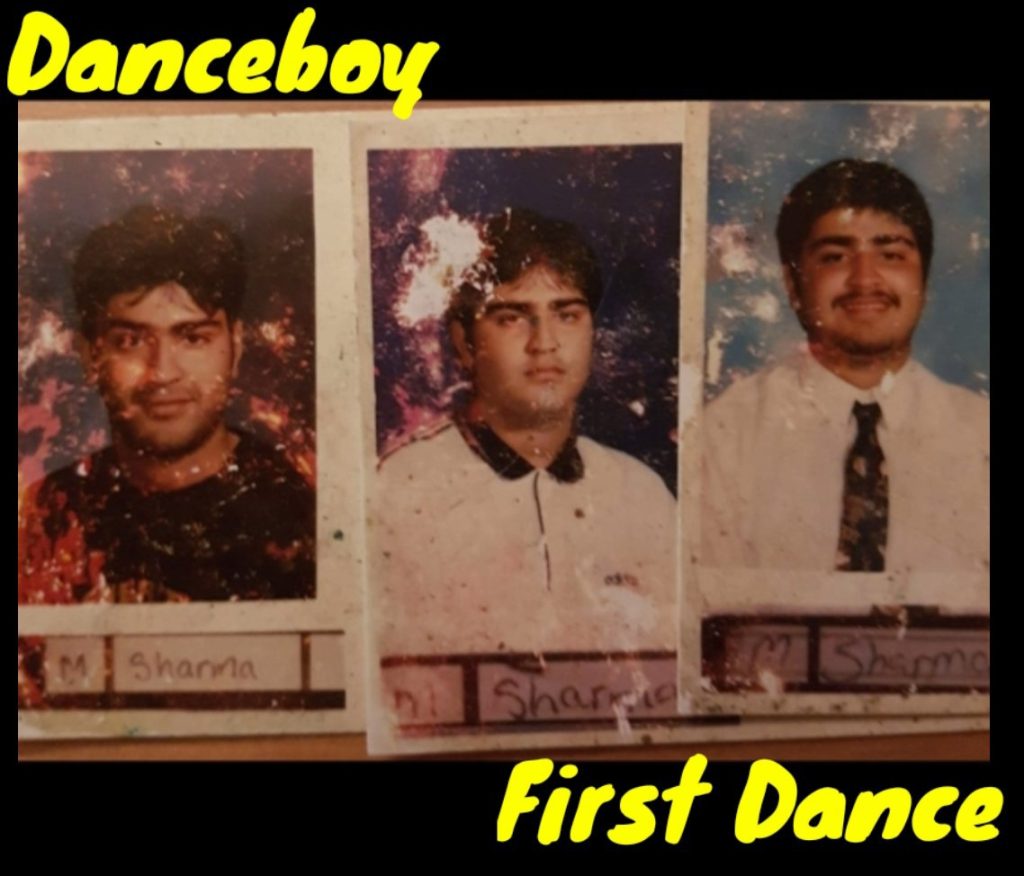
In addition, Sharma plans to perform a full-length version of own show, Danceboy, in the spring of 2026. He delivered the first reading at the 2018 Monsoon Festival. Sharma followed that up with excerpts at the 2019 Spring Fuse Festival. And in 2020, Sharma performed it under the title Danceboy: First Dance at the 2020 Tremors Festival following a two-week residency with Rumble Theatre.
As a dancer, he draws inspiration from Indian movie star Hrithik Roshan.
“In 2000 when Hrithik Roshan came out with Kaho Naa… Pyaar Hai, that was the first Bollywood actor that I could say was one of the best dancers I had ever seen,” Sharma says.
“I’ve been dancing since I was a kid. And one of the reasons I dance is because of Bollywood music,” he adds. “So, the story is about my love affair with dance and how it has come into effect in a lot of important moments in my life.”
Event details
The Cultch presents Theatre Replacement’s East Van Panto: Robin Hood at the York Theatre until January 5. For tickets and more information, visit the Cultch website. Follow Pancouver on X @PancouverMedia and on Instagram @PancouverMedia, and Charlie Smith on Bluesky @charliesmithvcr.bsky.social.
Watch Hrithik Roshan’s moves in the video for “Ek Pal Ka Jeena Phir” from Kaho Naa… Pyaar Hai.




