

In the wake of the 12th anniversary of the killing of seven Sikhs at the Oak Creek Gurdwara in Wisconsin, the ghost of mass murder continues to haunt the community.
The August 5, 2012 attack left six worshippers dead, including temple president Satwant Singh Kaleka. A seventh, Punjab Singh, remained in a coma until his last breath in March 2020. The victims included one woman, Paramjit Kaur. The other four were Prakash Singh, Suveg Singh Khattra, Ranjit Singh, and Sita Singh.
The lone gunman, Wade Michael Page, later killed himself after shooting a police officer multiple times. This was clearly a racially motivated crime directed against a visible minority as Page was a part of a neo-Nazi network.
This was not the first time that Sikhs had been targeted by white supremacists. There has been a spate of attacks on both Sikhs and Muslims since 9/11.
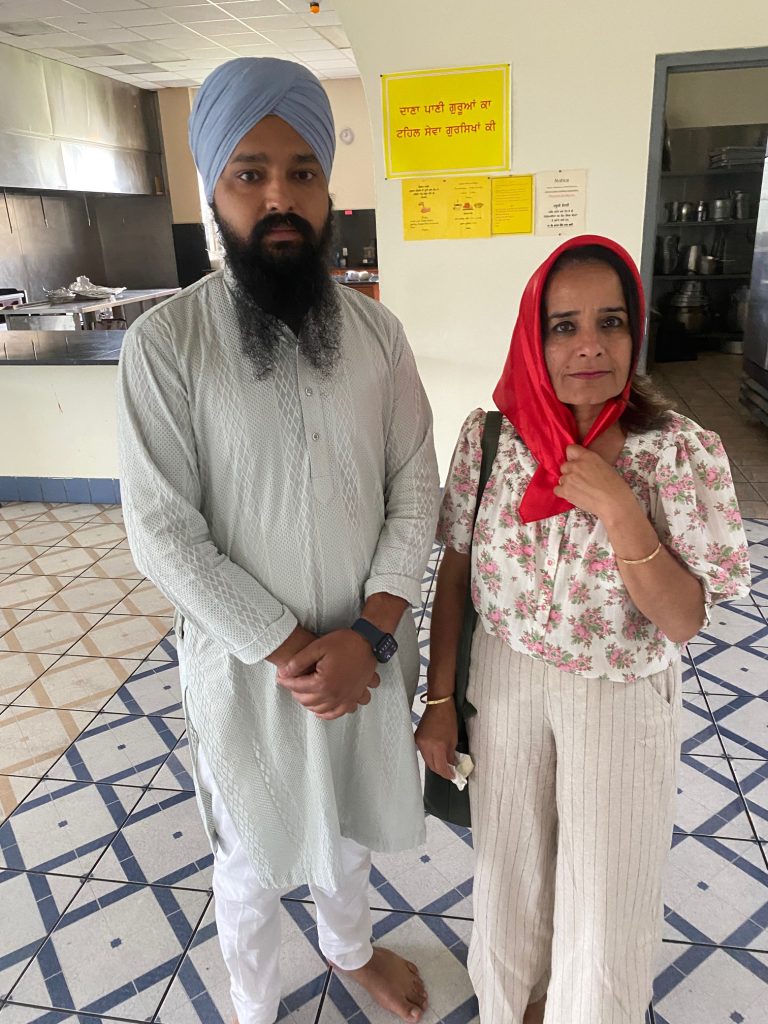
I was recently vacationing in Chicago and Milwaukee with my wife, Rachna Singh, who is B.C.’s education minister, and our two children. She was previously parliamentary secretary for anti-racism initiatives. We both followed these developments very closely in 2012, so we decided to stop by the gurdwara on our way back home from Milwaukee on July 29.
Since it was Monday there weren’t many people inside the temple, which is busy over the weekends.
Sikhs hid inside community kitchen
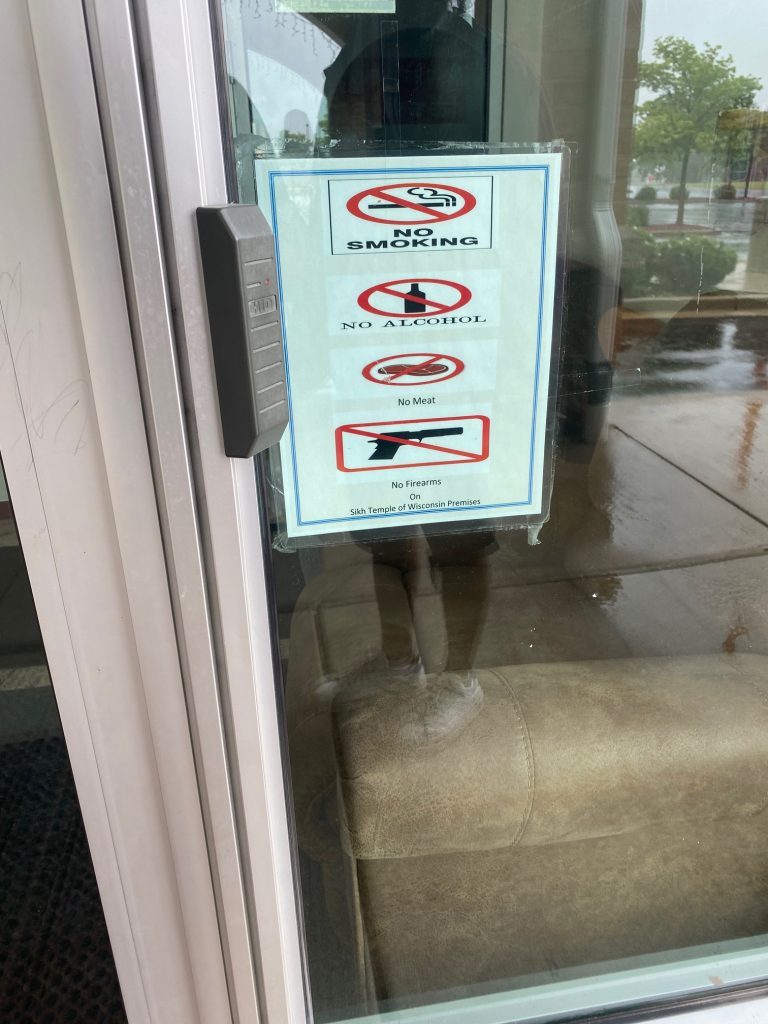
Rajinder Singh, a hymn singer, opened the main door for us. A sign outside warned against bringing any weapon inside. He told us that these doors are bulletproof and the temple has a limited access on ordinary days for security reasons.
Singh gave us a tour of the gurdwara and shared many details of how it all happened. He showed us the bullet hole inside the door leading to the congregation room. Not only has the sign of violence been preserved, but the pictures of all those who laid down their lives are sitting inside the library.
Singh told us that they are planning to display these pictures permanently on the wall in the hallway for everyone to see.
He then explained how the killer could have claimed more lives had he been able to get inside the community kitchen where many women had locked themselves in a safe spot.
When we left, it took us some time to process everything within our minds. I had covered it remotely on Radio India in Surrey, where I used to work back then.
The lessons of Oak Creek
Our memorable visit coincided with Donald Trump’s effort to get re-elected as U.S. president. Whereas Trump is known for his racist views and had emboldened white supremacy during his last term, his Democratic Party rival Kamala Harris could become the first woman of colour to lead the U.S.
For the record, Harris’s mother was Indian and her father is Black.
Unfortunately, during our weeklong vacation, a few Sikhs we met in Milwaukee were either eager to support Trump or perpetuated racist stereotypes about Black people. To be fair, we did not meet many people to test the general mood within the broader Sikh diaspora which is definitely diverse and cannot be painted with one brush.
However, this shows that in spite of the history of what happened in Oak Creek, there is a lot to do to keep anti racist conversations alive and defeat bigotry.
Under no circumstances can the politics of Trump be normalized and neither should it be presumed that racism is dead. And that goes for Canada where right-wing activism continues to gain ground.
After all, a Surrey gurdwara also witnessed the murder of Nirmal Singh Gill by neo-Nazis in 1998. Then there have been racist attacks on mosques and synagogues across North America in the years since then. So, let’s be awake. That’s my takeaway from what we learned during this trip.
Gurpreet Singh is a B.C. author and co-founder of Radical Desi. He’s married to Education Minister Rachna Singh. Follow him on Twitter @gurpreetonair. Follow Pancouver on Twitter @PancouverMedia and on Instagram @PancouverMedia.




