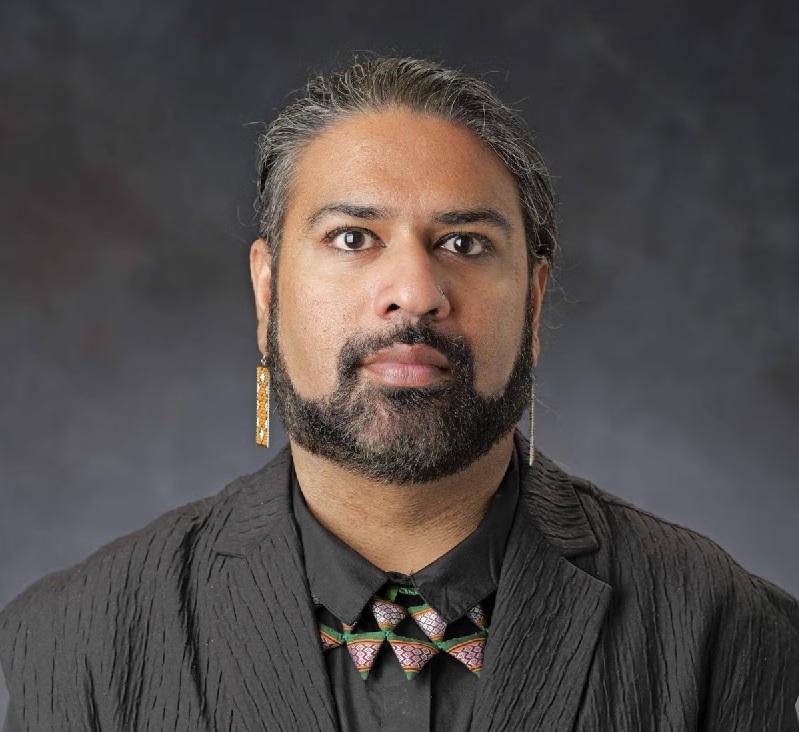
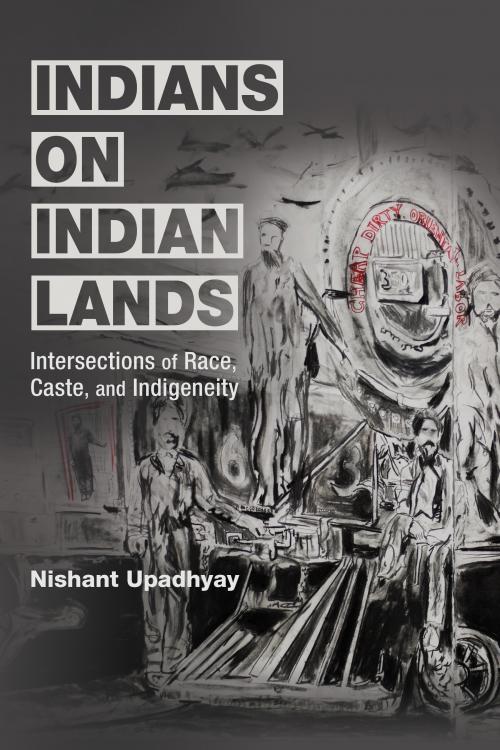
Scholar Nishant Upadhyay (they/them/theirs) has gone to great lengths to document the history of First Nations and their cross-cultural connections with settler immigrants, particularly those coming from India. Their 2024 book, Indians on Indian Lands: Intersections of Race, Caste and Indigeneity (University of Illinois Press), provides a nuanced and well-researched analysis of both the tensions and solidarities between the two groups of people and tries to situate the whole issue in the broader context of colonialism.
What is unique about this book is that Upadhyay—who is of the Indian origin, born in an upper-caste Brahmin family—has also questioned their own caste privilege. Through a boldly written chapter, “Unsettling Brahminism”, the assistant professor of ethnic studies at the University of Colorado Boulder dares to challenge upper-caste immigrants perpetuating racial stereotypes against Indigenous peoples while trying to present themselves as a “model minority” to survive in the oil and gas industry in Alberta.
Although an atheist, Upadhyay still recognizes their own caste’s dominance in India and within South Asian diasporas as well. Through Indians on Indian Lands, the York University PhD graduate tries to make readers understand how the caste privilege of skilled immigrants has helped in entrench right-wing Hindu nationalism in Canada. Moreover, Upadhyay demonstrates ways in which this works against the collective interests of oppressed communities of Indigenous peoples not only in Canada but also in India. There, attacks on religious minorities and political dissidents have increased under Hindu supremacist Prime Minister Narendra Modi.
Upadhyay offers hope for the future
Upadhyay cites the B.C. government’s recognition of International Yoga Day on June 21 as an example. They argue that this wasn’t just an appropriation of National Indigenous Peoples Day, but an attempt to create false equivalency between Hindus’ spiritual experience and the aspirations of Indigenous peoples fighting to revive their languages and culture. The scholar emphasizes that much like decolonization, dismantling of caste privilege is also needed in anti-racism work. They give a detailed account of their conversations with some people who are very outspoken against any affirmative action to help Indigenous peoples in Canada and other oppressed communities, such Muslims, Dalits, and Adivasis in India.
Even as the book gives hope for a better future and cross-cultural bridges between the Punjabi working-class immigrants and Indigenous communities through initiatives such as Idle No More, Upadhyay doesn’t romanticize the issue. Rather, they critically look at the ugly history of Indigenous women being exploited and abused by men from the Punjabi Sikh community. Yet Upadhyay has also amplified the stories of “dreamers”. They include Burnaby author Sadhu Binning, who has written short fiction about the abandonment of Indigenous women by Punjabi men, and his brother Paul Binning’s efforts to bring the two communities together through bhangra dancing, which originated in Punjab.
Gurpreet Singh is a B.C. author and co-founder of Radical Desi. Follow him on Bluesky @gurpreetradical.bsky.social. Follow Pancouver on X @PancouverMedia, Bluesky @pancouver.bsky.social, and Instagram @PancouverMedia.