

One of the co-founders of the MENA Film Festival, Arman Kazemi, says that he is constantly gaining insights into Southwest Asia and North Africa (SWANA). Even though the festival presents films about the region or by SWANA diasporic directors, he and other organizers haven’t created a list of countries that fall under the MENA umbrella.
“One thing that we’ve done intentionally since the beginning is that we don’t define what we mean when we talk about MENA,” Kazemi tells Pancouver over Zoom. “Make it elective for the audience or for the filmmaker or artist or participant to define what that means for them.”
In 2019, Kazemi, Anaïs Elboujdaïni, and Ghinwa Yassine launched the MENA Film Festival, along with Shaghayegh Haghdoust and Dariush Ghaderi Barrera. Kazemi, who’s of Iranian ancestry, says that back then, he wouldn’t have considered Ethiopia to be part of the MENA universe.
But in 2022, the festival screened Jessica Beshir’s Faya Dayi, a feature-length documentary about Ethiopia’s most lucrative cash crop, the khat leaf.
“This year, we’re screening a film from Mauritania,” Kazemi says. “I’m learning a ton about that.”
Sidi Mohamed Tolba and Tayib Tolba’s 28-minute dramatic short, “The Father, Probably”, is about a girl involved in a mysterious accident in a poor Mauritanian village. It will be screened as part of the “Veiling & Visibility Bundle” of shorts at the VIFF Studio Theatre on January 18.
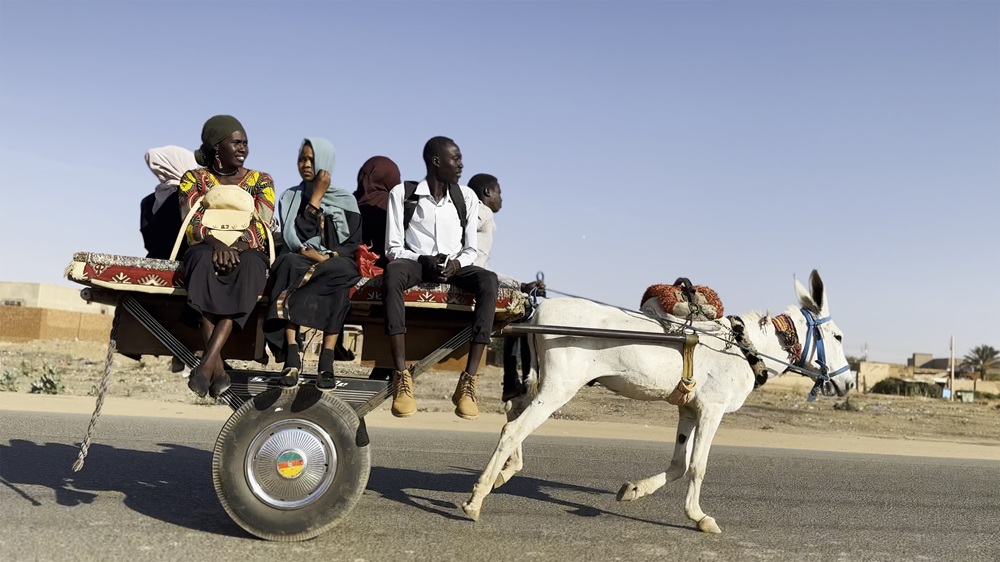
MENA shines a light on Sudan
Kazemi and Yassine, who’s from Lebanon, are co-executive directors of the MENA Film Festival. It will screen more than 40 shorts and features between January 15 and 23.
“I’m constantly learning about what it means to be from the region and how people identify with being from the region,” Kazemi says.
One of the festival’s landmark documentaries is Khartoum, which revolves around five people coping with the fallout of war in Sudan. It was nominated for the Grand Jury Prize for World Cinema – Documentary at the Sundance Film Festival. It has also won major awards on the festival circuit.
Khartoum co-director Timeea Ahmed will speak at a live talkback following a festival screening at the VIFF Cinema on January 16.
The festival will also present the Canadian premiere of Cotton Queen as the headliner feature. Directed and written by Qatar-based Suzannah Mirghani, this exploration of Sudanese womanhood was filmed in Egypt with Sudanese refugees who have escaped their war-torn country.
It’s a Sudanese coming-of-age story about a teenager named Nafisa (Mihai Murtada). She is a cotton picker being mentored by her grandmother and village matriarch, Al-Sit (Rabha Mohamed Mahmoud). Nafisa’s life takes a turn when a businessman with genetically modified cotton shows up with big ideas.
“For some, modernity is a promise of increased prosperity, whereas for others it’s a threat and a forced erasure of their history,” wrote International Cinephile Society reviewer Matthew Joseph Jenner. “Mirghani doesn’t seem too interested in taking a side, choosing instead to look at the argument from both perspectives.”
Cotton Queen won Best Feature Film at the Thessaloniki International Film Festival and the Audience Award at the Doha Film Festival. It will be screened at 6 p.m. on Sunday, January 18 at the VIFF Centre.
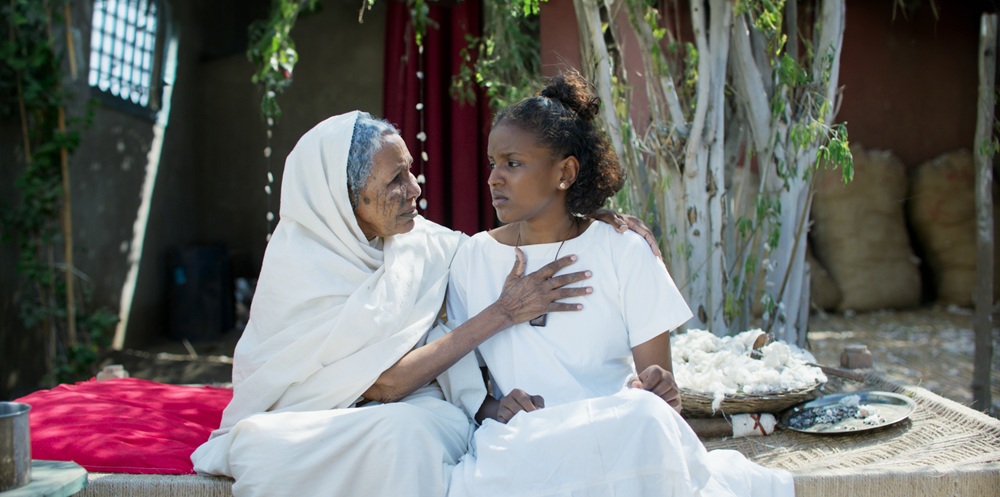
Directors champion local voices
The MENA Film Festival begins with an opening ceremony at 6 p.m. on January 15 at the Vancouver Playhouse. It will include entry on an Azure carpet, catering by Mazahr Lebanese Restaurant, and a musical performance by Sudanda. In addition, the festival will present its “Crush Bundle” series of short films, all along the theme of love.
On its website, the festival mentions its mission of sharing diverse perspectives from MENA/SWANA communities that “differ from the largely homogeneous images of the region as one of conflict and recipient of western aid”.
“It can be challenging just because a lot of the bigger features that are made for the festival circuit are often geared towards a festival jury,” Kazemi says.
But Kazemi quickly adds that there’s a “ton of activity, growth, and fecundity in that medium space—between the very, very early career grassroots and the top-tier big festival names”. In Kazemi’s view, some of these directors make exceptional experimental films that don’t necessarily encapsulate nation-state narratives. Instead, they champion specific local voices.
An example is Spanish director Ferran Domènech’s Naharina, which was filmed in Rojava (Syrian Kurdistan). The MENA Film Festival will present the North American premiere of this documentary about the revolutionary social, political, and ecological systems of this region. Naharina won Best Documentary at the Festival of Minority Languages, and it will be screened on January 17 at the VIFF Studio Theatre.
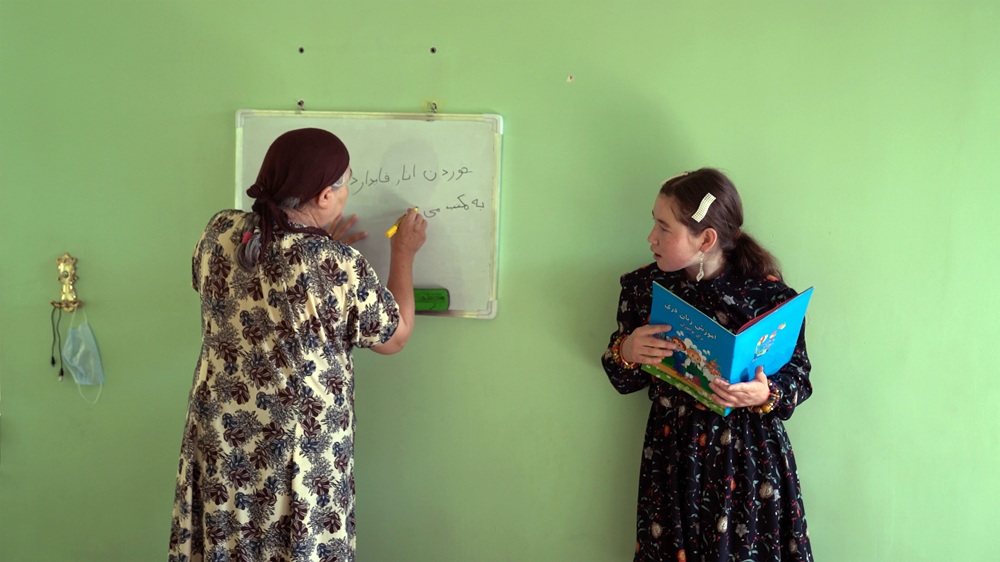
Dream of literacy interrupted by Taliban
Another bold film at the festival is Writing Hawa, which will be shown on January 18 at the VIFF Cinema. Directed by Afghan-born siblings Najiba Noori and Rasul Noori, it’s a documentary about their mother, who began learning to read four decades after her arranged marriage as a child bride. But their mom’s dream of literacy is interrupted by the return of the Taliban to power.
“In the beginning, the story was about my mother,” Najiba Noori told Cineuropa in an interview. “Then, slowly, it becomes the story of three generations of women in the same family.”
She noted in the same interview that her brother was twice taken into custody and beaten by the Taliban when he was filming the documentary.
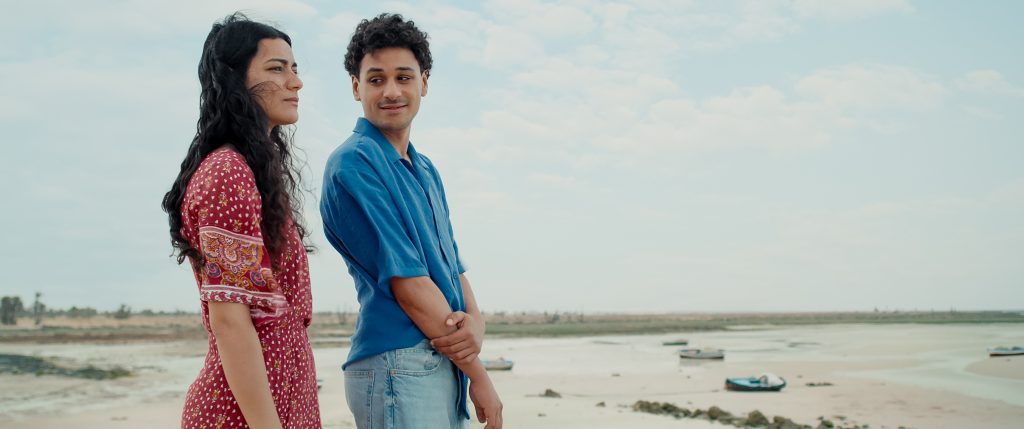
One of the intriguing dramatic features at the festival is Where the Wind Comes From. Director Amel Guellaty’s film follows a young man and woman on a road trip across southern Tunisia. Where the Wind Comes From won the Golden Bee for Best Film at the Mediterrane Film Festival and it will be screened at the VIFF Cinema on January 22.
Kazemi tells Pancouver that through his work with the MENA Film Festival, he has seen so many cinematic works that he wouldn’t be able to witness anywhere else. Furthermore, he points out that while some diasporic directors might have fled their country as refugees, these difficult personal histories do not define their identity nor the films that they create.
“The stories that they end up telling are quite nuanced and diverse,” Kazemi emphasizes.
The MENA Film Festival runs from January 15 to 23. For information and tickets to films and industry events, visit the website. Follow Pancouver on X @PancouverMedia and Instagram @PancouverMedia.




