
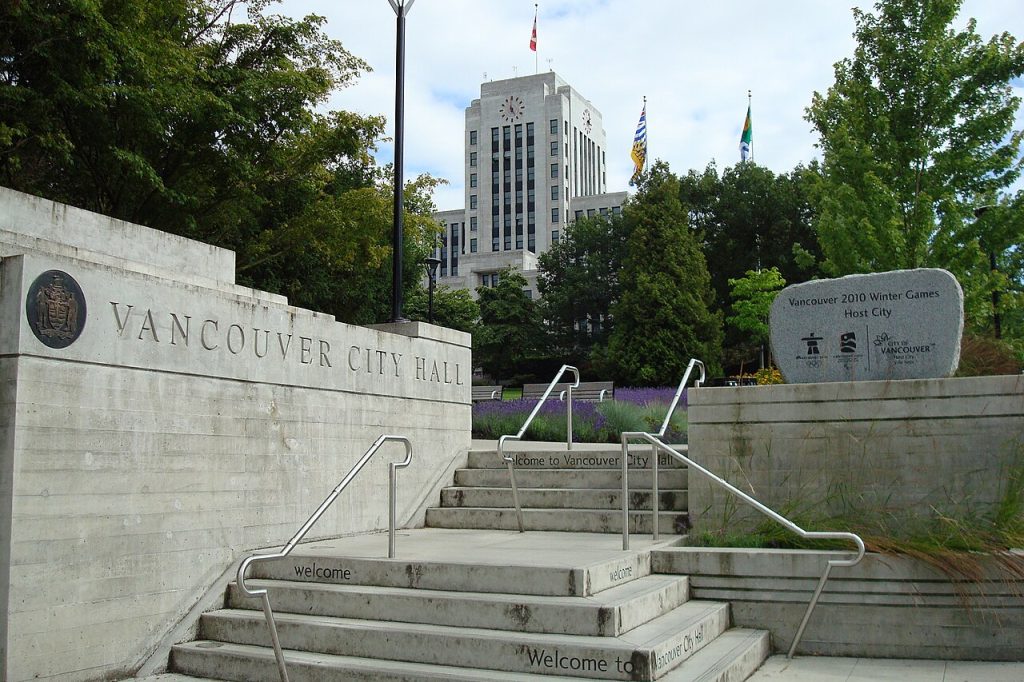
In November, Wanjara Nomad Collections representative Raj Singh Bhandall wrote the following letter to the Vancouver mayor and councillors, as well as to various stakeholders.
Dear City of Vancouver Representatives and Stakeholders,
I write to you on behalf of Wanjara Nomad Collections and countless Canadians who, over generations, have sought belonging, not erasure, within this rich tapestry we call Canada. And yet, we are confronted with the continued use of the term South Asian in City initiatives, including the recent “South Asian Canadian Discrimination Survey” and its anti-racism efforts. This term, far from fostering inclusivity, is an archaic, imprecise, and colonial construct that flattens the unique identities it purports to represent. In no uncertain terms, South Asian is a racist, reductive, and repressive label—a lingering echo from a past that Canada should resolutely leave behind.
This term does not merely lack nuance; it embodies a subtle violence—a quiet force that simplifies complex identities into a single, faceless mass. Using such terminology encourages what can only be described as linguistic Stockholm syndrome, wherein communities, in a bid to belong, internalize labels that strip them of individuality. Under the guise of convenience, South Asian forges a linguistic cage, forcing communities from diverse cultural backgrounds into a homogenized identity that disregards their nuanced histories, languages, and cultures. Each time South Asian is invoked, vibrant identities are dulled, reducing the cultural legacies of people from India, Pakistan, Nepal, Sri Lanka, Bangladesh, and beyond to an indistinct blur.
Consider the inconsistency within Vancouver’s own approach: the Chinese Canadian Museum honors a specific community with precision, acknowledging the unique identity and contributions of Chinese Canadians. Similarly, the City has recognized the specific historical injustices faced by the Chinese community, including the discriminatory Chinese Head Tax. We commend Vancouver’s formal apology for this chapter, which reflects the city’s commitment to addressing the harms of past policies and promoting inclusivity. By aligning with these recent initiatives, Vancouver has demonstrated its commitment to truth and reconciliation, recognizing the importance of culturally specific terminology. However, when it comes to communities with distinct and diverse histories, such as those from India, Pakistan, Bangladesh, Sri Lanka, and others, the City defaults to a colonial-era umbrella term that erases specific identities. If inclusivity lies in respecting the individuality of each community, then allowing some communities the dignity of specificity while denying it to others is a profound ethical failing.
Additionally, I must point out a critical flaw in the “South Asian Canadian Discrimination Survey.” For individuals who identify as Pakistani Canadian, Afghani Canadian, Sri Lankan Canadian, or any other specific cultural background, the survey’s options are inherently exclusionary. I do not identify as “South Asian.” Yet, the survey begins with, “This survey is intended for people of South Asian Canadian descent. Are you South Asian, South Asian Canadian, or a Canadian of South Asian heritage? Yes / No (Survey will end).” This framing forces respondents to adopt an identity label they may find reductive or inaccurate, effectively rendering the survey inaccessible to those who do not identify with the term “South Asian.”
The language we use is never a neutral choice. South Asian is not simply convenient; it generalizes and erases. Each time this term is invoked, it promotes a dangerous uniformity that runs counter to the values of a truly diverse Canada. Language shapes reality, and the label South Asian not only dictates how others perceive these communities but also how these communities come to see themselves. What begins as a term of convenience ultimately becomes a linguistic chain, subtly binding communities into a single, faceless identity.
There is a quiet despair in this forced homogenization—a suffering as complex lives are diminished to labels with no grounding in their true identities. The City’s recent contemplation of a South Asian Museum underscores this issue further. While the Chinese Canadian Museum celebrates the unique contributions of Chinese Canadians, it would never be called the East Asian Museum. Nor would Vancouver consider grouping Chinese Canadians with Japanese, North and South Korean, Mongolian, and Taiwanese Canadians under a single East Asian label. Why, then, is South Asian so readily applied to distinct communities with unique histories, languages, and cultures? Under the South Asian label, the proposed museum risks homogenizing the contributions of Sikh, Punjabi, Pakistani, and other communities, turning plural identities into a singular entity. Such a choice risks becoming a historical blunder, failing to reflect the true multiplicity of Vancouver’s heritage.
For instance, the story of the Guru Nanak Jahaz, was a Sikh-led initiative that also included Punjabi Hindus and Muslims. However, categorizing this as a South Asian story dilutes the Sikh, Punjabi, and regional identity inherent to the event, much like how the City has preserved the Chinese Head Tax as a uniquely Chinese narrative without reducing it to an East Asian story. This selective inconsistency reinforces why culturally specific language matters.
It is important to note that in the progression of harmful cultural erasure, labeling is a dangerous early step. Reducing distinct communities to a faceless mass in the name of inclusivity, ironically, becomes a subtle form of exclusion.
Addressing Misconceptions About the Term “South Asian”
- Convenience Must Not Override Cultural Respect: Administrative simplicity is no excuse for diminishing complex identities. Just as Vancouver would not categorize Chinese Canadians as East Asian, it is equally inappropriate to assume that these communities fit under South Asian.
- Unity Through Distinction, Not Homogenization: True unity arises from respect and recognition of each community’s individuality, not from blending distinct identities into a generalized term.
- Language Should Reflect Evolving Values: Familiarity does not make a term appropriate. Terms once widely accepted have since been retired due to their inadequacy and insensitivity. It is time to reconsider South Asian and embrace language that respects the individuality of our communities.
- Words Shape Reality: The language we use molds public perception. Redefining labels with cultural accuracy fosters inclusivity and honors the depth of Vancouver’s diverse communities.
A Call for Cultural Precision to Prevent Historical oversights
We respectfully urge the City of Vancouver to reconsider and retire the term ‘South Asian’ across all initiatives, including anti-racism and cultural redress programs. Continuing to use culturally imprecise language risks perpetuating a legacy of oversight that future generations may regard as a profound error. By embracing terminology that honors each group’s unique heritage, Vancouver can avoid a historical blunder and create a foundation of genuine inclusivity and respect.
Thank you for considering this matter with the gravity it deserves. Let us work together to forge a Canada where diversity is not managed, not simplified, but celebrated in all its facets.
Sincerely,
Take Action Now
Pancouver fuels creativity and promotes a more inclusive society. You can contribute to support our mission of shining a spotlight on diverse artists. Donations from within Canada qualify for a tax receipt.
Share this article




