In 1968, U.S. photographer Eddie Adams snapped one of the most iconic images in the history of journalism. Saigon Execution shows Brigadier General Nguyễn Ngọc Loan holding a snubnose revolver to the head of Viet Cong prisoner Nguyễn Văn Lém. Loan’s streetside killing of Lém in broad daylight transformed public perceptions about the Vietnam War.
Now, a stunning new Canadian documentary sheds new light on two families connected to this tragedy. Saigon Story: Two Shootings in the Forest Kingdom lives up to its billing as “part history, part mystery” as it unravels back stories behind an image burned in the consciousness of Vietnamese people.
In the process, Montreal-born director Kim Nguyen (Rebelle/War Witch, The Hummingbird Project) emphasizes the centrality of Vietnamese Buddhist transcendence ceremonies (Mông Sơn Thí Thực rituals) to help the living and dead gain spiritual peace and liberation.
The DOXA Documentary Film Festival will present the western Canadian premiere at the VIFF Centre on May 1.
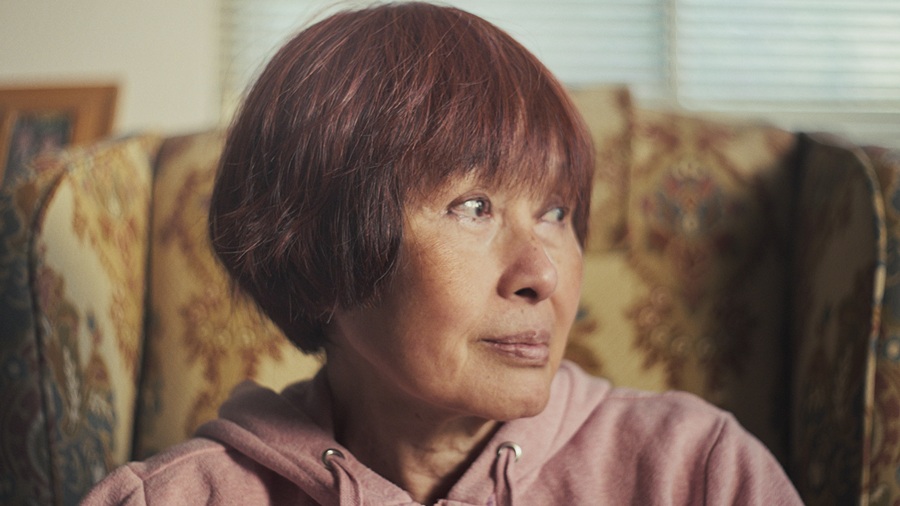
Following a harrowing opening montage of the execution, four leading figures emerge in fairly quick succession in Saigon Story. The first, Mai Ly Hafer, is a Vietnamese woman living on Bainbridge Island in Washington state. Her first husband, Vhin, was a South Vietnamese soldier photographed at the scene of the killing.

Saigon Story reflects on life cycles
Mai Ly recalls falling in love with Vhin despite plenty of red flags, only to be almost murdered by him. Following the end of the Vietnam War, she moved to Montreal before eventually settling near Seattle, where she cares for her elderly and kind-hearted second husband, American Roth Hafer.
“My story is about life cycles, not just my own, but humans connected to me,” May Ly declares in English.
A second key character, Nguyễn Ngọc Loan, is the daughter of the executed man in the photograph. As she strolls near the Củ Chi Tunnels—where Viet Cong soldiers hid before staging guerrilla attacks on U.S. and South Vietnamese forces—Loan reveals that she was only three years old when she lost her father.
“There was a newspaper photographer that captured an image of him,” Loan states in Vietnamese. “My family and I feel deep pain and sadness but there is still a sense of happiness to be able to see our father and for the whole world to know him. To this day in my heart and soul, I’m very proud of my father.”

Part history, part mystery
Her brother, Nguyễn Dũng Thông, stands in a lush forest near the tunnels, which are now a major tourist attraction near Ho Chi Minh City (formerly Saigon).
“There is a room where leaders and commanders would hold meetings,” Thong says in Vietnamese. “During these meetings when there would be an alarm, everyone would escape through one of these tunnels.”
The fourth key figure, Võ Trung Dũng, is an independent journalist in Ho Chi Minh City who speaks fluent French. He explains how the Eddie Adams photo was the catalyst for his chosen career and why it remains controversial in Vietnam.
Dũng points out that South Vietnamese government justified the brigadier general’s killing by accusing Lém of massacring 20 civilians. But according to him, communist families in the area maintain that Lém sacrificed himself to save a high-ranking superior.
That’s where the “part history, part mystery” comes in as the journalist tries to unravel the truth behind the photograph. In his director’s statement, Nguyen says that he “wanted to shine light on just how much our lives are built by chance collisions between our personal journeys and overarching moments in history”.

DOXA will present Saigon Story
But Saigon Story: Two Shootings in the Forest Kingdom is so much more than historiography mixed with investigative journalism. By personifying the image itself, Nguyen breathes wisdom, insights, and emotionally laden observations into the famous photograph.
Meanwhile, via some imaginative composite rephotography, the director vividly brings Vietnam’s past into present-day focus. Moreover, visuals from Ho Chi Minh City’s War Remnants Museum and streetside interviews reinforce the currency of the story.
This poignant and gripping film is full of surprises as it tracks two families’ quest for inner peace following the trauma of war. Co-produced by Noble Films and the National Film Board of Canada in association with TVO and Knowledge Network, Saigon Story: Two Shootings in the Forest Kingdom stands as a hallmark in Canadian documentary filmmaking.
May it win plenty of awards while enjoying a long life on the festival circuit and in the living rooms of the nation.
The DOXA Documentary Film Festival will present the western Canadian premiere of Saigon Story: Two Shootings in the Forest Kingdom at 5:15 p.m. on May 1 at the VIFF Centre. The festival will present a second screening at 5:30 p.m. on May 7 at the SFU Djavad Mowafaghian Cinema. For tickets and more information, visit the DOXA website. Follow Pancouver on X @PancouverMedia and on Instagram @PancouverMedia.