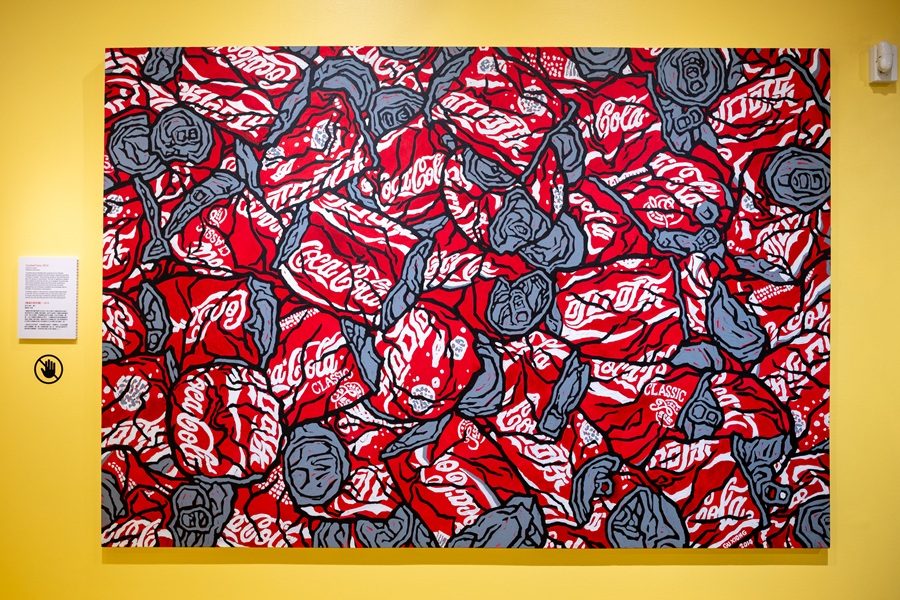
From Crushed Cans to new beginnings: Gu Xiong’s journey of migration, identity, and belonging
In Part 2 of our series his Museum of Vancouver exhibition, Gu explains why crushed cola cans are a metaphor for his life in Canada.

In Part 2 of our series his Museum of Vancouver exhibition, Gu explains why crushed cola cans are a metaphor for his life in Canada.

In the first article in a two-part series, Gu explains how art saved him after he was sent to the countryside during the Cultural Revolution.

Fuyubi Nakamura curated the exhibition with help from young Tibetan-Canadian artists and students at Lodoe Kunphel Tibetan Language School.

A discussion with key employees at three Vancouver cultural institutions about creating inclusive museum and gallery exhibitions.
Panel Info:
Date: Friday, November 15, 2024
Panel Time: 2:30 pm – 4:30 pm
Location: Vancouver Central Library

While researching her PhD at UBC, Fong gained deep insights into how Chinese Canadian history is represented in museums.


The Society of We Are Canadians Too created Pancouver to foster greater appreciation for underrepresented artistic communities. A rising tide of understanding lifts all of us.
This project is funded in part by the Government of Canada.
We would like to acknowledge that we are gathered on the traditional and unceded territories of the Coast Salish peoples of the xʷməθkwəy̓əm (Musqueam Indian Band), Skwxwú7mesh (Squamish Nation), and Səl̓ílwətaɬ (Tsleil-Waututh Nation). With this acknowledgement, we thank the Indigenous peoples who still live on and care for this land.
This project is funded in part by the Government of Canada.
The Society of We Are Canadians Too created Pancouver to foster greater appreciation for underrepresented artistic communities. A rising tide of understanding lifts all of us.
We would like to acknowledge that we are gathered on the traditional and unceded territories of the Coast Salish peoples of the xʷməθkwəy̓əm (Musqueam), Skwxwú7mesh (Squamish), and Səl̓ílwətaɬ (Tsleil-Waututh) Nations. With this acknowledgement, we thank the Indigenous peoples who still live on and care for this land.
Independent arts journalism needs readers like you!
If you value stories like this, please consider supporting Pancouver.