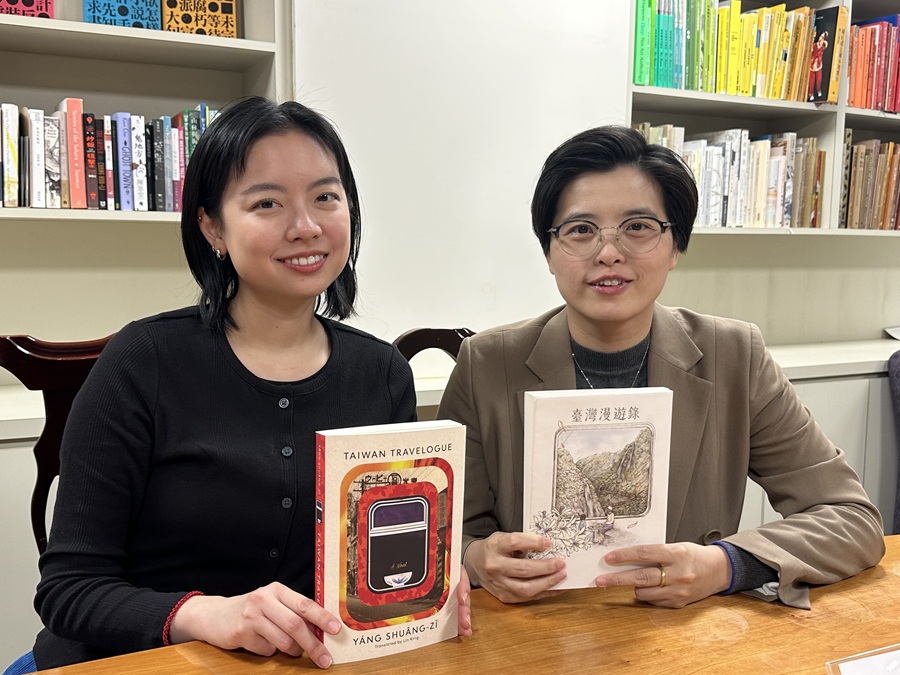
Taiwan Travelogue wins 2026 International Booker—a deftly translated tale of food, love, and history
The novel follows fictional Japanese novelist Aoyama Chizuko and her Taiwanese interpreter, Ō Chizuru as they travel across colonial Taiwan.

The novel follows fictional Japanese novelist Aoyama Chizuko and her Taiwanese interpreter, Ō Chizuru as they travel across colonial Taiwan.

The Government of Canada will invest more than $113 million over four years to help B.C. students learn in French and speak better French.

A nation’s literature used to be tied to language, but this can no longer be the narrow criterion for defining a canon.

For newcomers to a country, success often depends on learning to read fluently in a new language.

Mamdani called for fairness in Arabic, Bangla, Urdu-Hindi, and Spanish during his campaign to become mayor of America’s largest city.

India is a home to numerous ancient and linguistically rich languages across its many regions.

For years, foreign-language films have been recognized as an invaluable resource for language learning.

Le mot inuktitut signifie « comme les Inuits » et désigne une partie d’un continuum linguistique plus large parlé dans l’Arctique nord-américain.

The word Inuktitut means “like the Inuit,” and is the name for part of a wider language continuum spoken across the North American Arctic.

The film goes beyond mainstream narratives, enabling viewers to imagine an India they often don’t get to see.

