Filmmaker Damien Eagle Bear still remembers the first time that he saw the #skoden Internet meme. It showed a dishevelled Indigenous man with his fists raised, ready for a fight.
“I was hanging outside with some friends at a patio,” Eagle Bear tells Pancouver over Zoom. “And they were laughing.”
Little did Eagle Bear know then that this meme would send him on a filmmaking journey that would culminate in his award-winning documentary, #skoden. TELUS Optik TV will make #skoden available for free on demand, starting on National Indigenous Peoples Day (June 21).
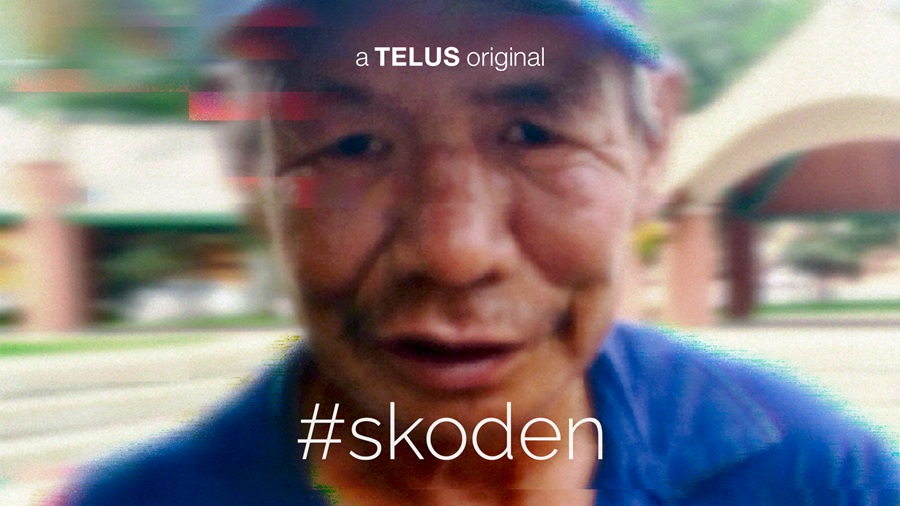
Skoden is a popular slang term in Indigenous communities, meaning “let’s go then”—i.e., time to take action or start battling. The man’s name in the #skoden meme was Pernell Bad Arm. A member of the Kainai Nation (Blood Tribe) in the Blackfoot Confederacy (Niitsítapi), Pernell had fallen on tough times when the photo was taken. By then, he was living unhoused in the streets of Lethbridge in southern Alberta.
Eagle Bear, who is also Niitsitapi, was pretty sure that he recognized the man when he first saw the meme more than a decade ago.
“I didn’t quite know what to do other than just tell my friends,” Eagle Bear recalls.
The meme quickly spread through Indigenous and non-Indigenous communities. Some viewed Pernell’s fists as a sign of resistance while others thought the meme was racist. Then in 2018, CBC reporter Leonard Monkman presented a more nuanced picture of Pernell—who died in 2015—by quoting friends and one family member.
Eagle Bear discovers videotape
Eagle Bear, who is based in the Okanagan, felt that the CBC story meant that he no longer needed to think about doing this. But the meme continued being shared. Many misunderstood the context behind why Pernell appeared to be in a fighting mood.
Then one day during the pandemic, Eagle Bear decided to clean out his office because he had nothing else to do. He came across some videotapes that he had shot 10 or 11 years earlier while making his first documentary. Much to his surprise, the first tape that he watched was an interview that he had conducted with Pernell in a Lethbridge homeless shelter.
“I knew I recorded him,” Eagle Bear says. “But I didn’t realize…he was the first person I interviewed.”
A couple of weeks later, then TELUS Originals production executive Ken Tsui emailed Eagle Bear asking if he would like to chat about documentary ideas. Tsui didn’t go for Eagle Bear’s original pitches. So the executive asked the filmmaker if he had anything else to offer.
That’s when Eagle Bear revealed that he had a videotape of an interview with Pernell, who was by then an Internet meme.
“That’s kind of where the ball got rolling,” Eagle Bear notes. “It was a very rough pitch.”
It took a couple of years for him to flesh out the proposal—and only after he had confirmed three core interviews that he needed for the film. One was with Pernell’s older brother, Dennis Bad Arm. Another was with Pernell’s friend, Mark Brave Rock, founder of a community patrol called the SAGE Clan. The third was with the Deanna Vincent, a compassionate former case manager at the Lethbridge shelter.
“I knew that those three would be very integral in telling this story,” Eagle Bear says.

Filmmaker aimed to humanize Pernell
The filmmaker had some key objectives. First, Eagle Bear wanted to create a sense of Pernell beyond a seemingly violent meme. Secondly, Eagle Bear aimed to spotlight the SAGE Clan’s exceptional work. Thirdly, he wanted to elevate understanding about what it’s like for Indigenous people to live unhoused in the streets of Lethbridge.
Furthermore, Eagle Bear wanted Pernell’s family and friends to know that he wasn’t trying to sensationalize his story. He also declared that he wasn’t chasing after the person who took the photo or shared it online or created the meme.
“Coming into this film, it really was just about humanizing Pernell,” Eagle Bear emphasizes.
These assurances helped him record illuminating interviews with the three core commentators on Pernell’s life and situation, as well as with his cousin Charlene Brown Weasel and Kanai Nation councillor Travis Plaited Hair. The initial screenings of #skoden were with Blood Reserve members.
At the 2025 DOXA Documentary Film Festival, Eagle Bear won the Vancouver Film Studios Award for Best BC Director for #skoden. He also won the Earl A. Glick Emerging Canadian Filmmaker Award at the 2025 Hot Docs Festival in Toronto.
Then in April of this year, the Lethbridge International Film Festival screened #skoden, which reveals shocking racism against Indigenous people in the southern Alberta city.
Eagle Bear tells Pancouver that he doesn’t think that #skoden should included in the category of “reconciliation films”. But he also stresses that it shouldn’t be solely up to Indigenous people to be raising the types of issues—including pervasive racism against unhoused Indigenous people—that he highlights in his film.
“I was really trying to communicate with the non-Indigenous community members in Lethbridge that it is your responsibility…if you work in these systems or you know people in these systems to try and have these conversations and start pushing things,” Eagle Bear says. “Also, have conversations with family members about these issues because it is so prevalent.”
Screening details
TELUS Optik TV will make #skoden available for free on demand, starting on National Indigenous Peoples Day (June 21). Follow Damien Eagle Bear on Instagram @eaglebearfilms.
Follow Pancouver on X @PancouverMedia and Bluesky @pancouver.bsky.social. Also find Pancouver on Instagram @PancouverMedia.