By Sophia Lee
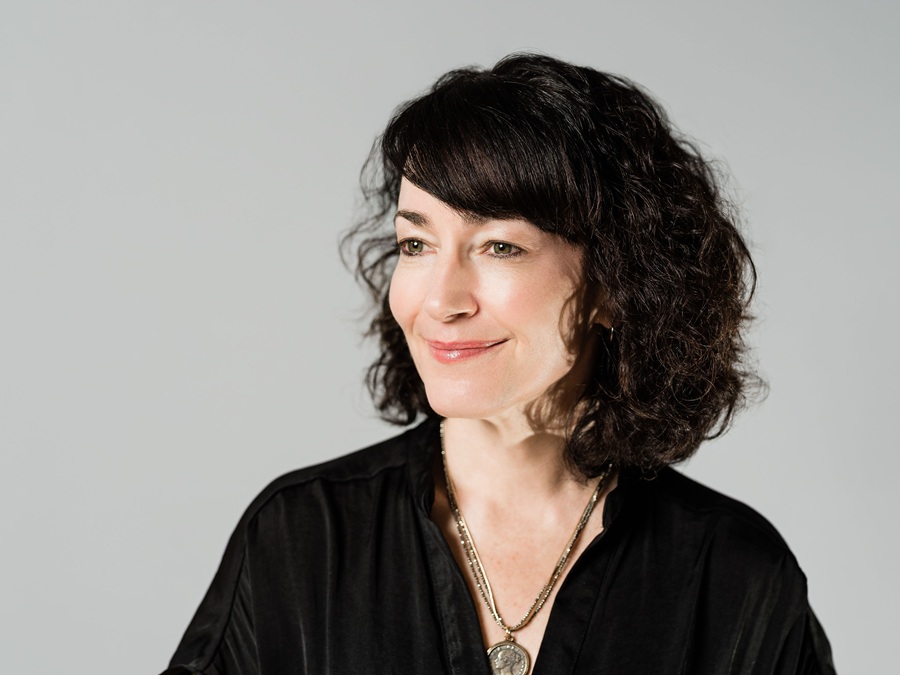
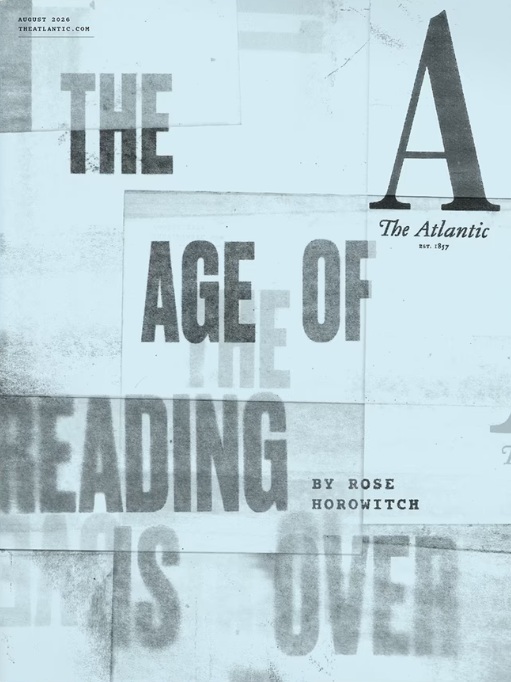
When The Atlantic declared “The Age of Reading Is Over” this year, Leslie Hurtig read it, and passed it along to people she knew—friends, colleagues, fellow booksellers—curious what they’d make of it. As artistic director of the Vancouver Writers Fest, she has spent around three decades inside the Canadian book world: as a bookseller, a publicist, a rights manager, and for the past nine years, the person who shapes what much of the city’s literary calendar looks like.
Hurtig found the article’s statistics alarming, but not surprising. What she didn’t buy was its presupposition. “I don’t think I agree with the overall premise, that the age of reading is over,” she said, sitting on Granville Island, a short walk from the Festival’s year-round programming hub.
Her skepticism comes from repetition. She’s heard this before, even more than once. “1990 is when I got my first job in a bookstore, and the big thing then was audio tapes,” she recalled. “People said it was going to be the end of books. That obviously wasn’t the case.”
Ebooks brought the same panic in the late 1990s. COVID brought it again, this time aimed at brick-and-mortar bookstores. On the contrary, they thrived.
“We were stuck at home, people were looking for reassurance and comfort, and we often get that through books,” she said. “It was kind of a renaissance.”
Hurtig celebrates authors
Asked whether The Atlantic‘s use of the word “postliterate” matches what she actually sees in a room of readers, Hurtig turned the question back. “What do you consider reading?”
Indigenous storytelling traditions, she pointed out, were never written down at all, and have survived for generations through voice alone. She is, by her own admission, an enthusiastic audiobook listener.
“Does that make people illiterate, if they’re only listening rather than reading? Maybe it does. I don’t think I’m the right person to comment on that from an academic level.” But as someone in the business of celebrating authors and stories, she considers an audiobook a legitimate way to absorb a story.
The instinct of meeting readers where they are, then invite them further in shapes how she programs the Festival itself, which has quietly grown from a one-week event into year-round programming, running from January through December across several series, including school visits, a spring book series, and a partnership with the Vancouver Public Library.
To reach younger readers specifically, she doesn’t rely on outreach campaigns so much as on which authors she books: novelists like R. F. Kuang, whose Taipei Story draws a younger, more socially engaged crowd, or Rachel Reid, whose romance novel Heated Rivalry pulls in readers in their twenties and thirties who might not otherwise buy a festival ticket.
“I think it’s really about the authors we bring to the Festival,” she said.
This year’s programming (with events inspired by guest-curator and Fire Weather author John Vaillant) leans into urgent themes : the climate crisis, the opioid epidemic, the housing crisis, Indigenous land rights, and the shifting relationship between Canada and the United States. “I think writing is a political act,” she said simply.

Writers fests build community
When asked what a festival captures that reading statistics never could, Hurtig didn’t hesitate. Sitting on the board of the Canadian Association of Literary Festivals, she has watched the same instinct play out from tiny island festivals to major urban ones: people show up not just for the books, but for each other.
“To attend any literary festival is to be with like-minded people,” Hurtig said, whether they’re there to think through a hard issue, or simply to escape into a good story for a while.
Asked what has surprised her most in her years running the Festival, she didn’t point to data. She pointed to poetry, specifically, WORD!, the Festival’s spoken word event for high school students curated each year by local poet Jillian Christmas.
“The applause afterward, the tears, the students lining up just to shake hands with these poets afterward… it tells you there’s a real need for all of us to connect with our feelings,” she said.
It is, by her account, one of the Festival’s most enthusiastically attended events, drawing audiences young and old alike.
The book, in other words, isn’t going anywhere: not because nothing has changed, but because, in her view, the need it answers hasn’t.
The Vancouver Writers Fest will take place from October 18 to 25. To learn more about its 90+ events, visit the website.
Follow Pancouver on X @PancouverMedia and Bluesky @pancouver.bsky.social. The publication is also on Instagram @PancouverMedia.