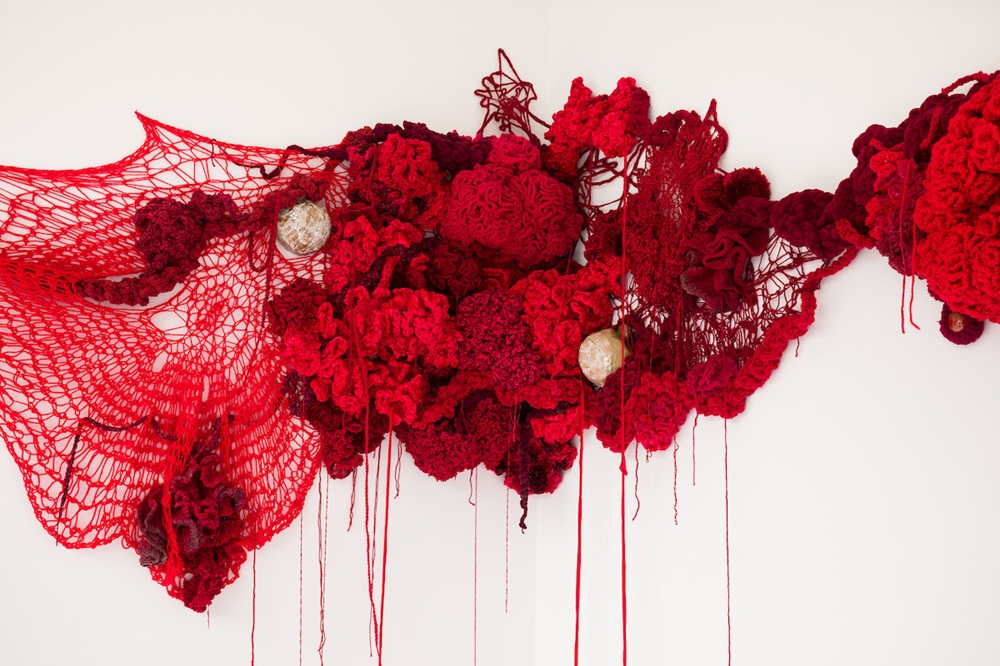
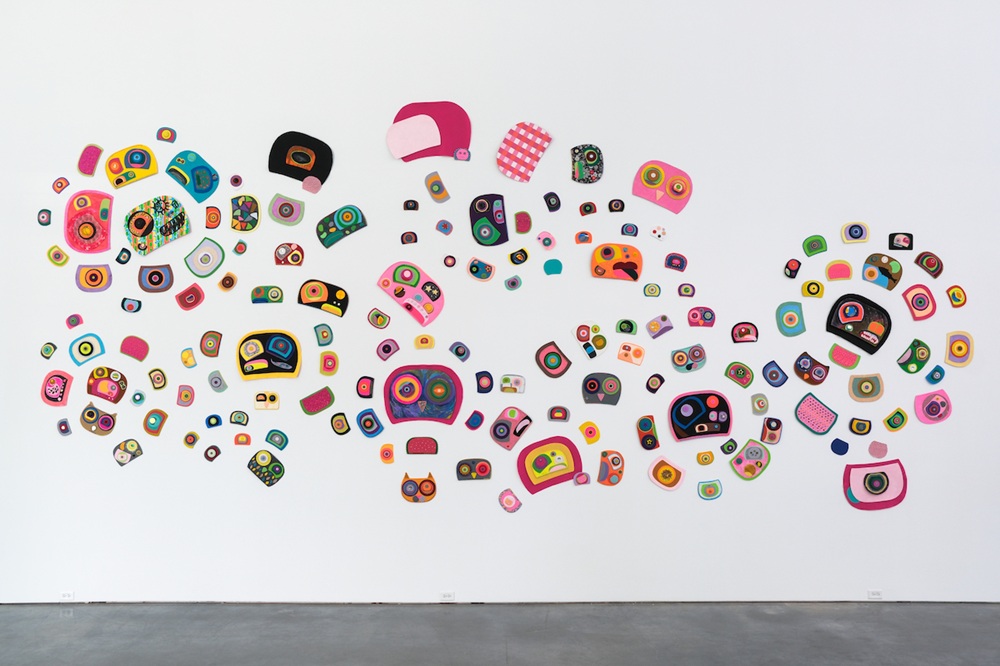
The Richmond Art Gallery’s upcoming exhibition is called The Chromophiliacs. Curated by Zoë Chan, it brings together 10 artists whose use of colour is central to their practice.
The Chromophiliacs features major works by Diyan Achjadi, Moozhan Ahmadzadegan, Charlene Vickers, and Jan Wade, alongside new commissions by Maru Aponte, Sandeep Johal, Yaimel López Zaldívar, Laura Meza Orozco, Osvaldo Ramirez Castillo, and Malina Sintnicolaas. The exhibition runs from January 24 to April 4.
Below, you can read Zoë Chan’s responses to five questions from Pancouver.
Pancouver: What criteria were you considering in selecting what would be on display in The Chromophiliacs?
Zoë Chan: I chose artists who were working with colour, of course, as you mention above. Their use of colour is often linked to cultures and artistic traditions that embrace colour rather than reject it. There’s an idea that to talk about serious issues that you have to use muted colours—this exhibition rejects that idea. The featured artists are exploring all kinds of questions related to mental health, death, the impacts of colonisation, war, etc.
Pancouver: What can people expect to see when they enter this exhibition at the Richmond Art Gallery?
Zoë Chan: A packed exhibition overflowing with colour by artists who are working in a range of artistic and craft-based mediums. Each artist is using colour in many different ways and for many different reasons.
Pancouver: “Chromophilia” happens to be the name of the final chapter in London-based writer David Batchelor’s book Chromophobia, which was first published in 2000. How has Batchelor’s writing on Chromophobia—the fear of colour in Western culture—shaped your thinking about art?
Zoë Chan: I wasn’t surprised by his thesis. However, it’s surprising how insidious and persuasive chromophobia is…For example, the notion of the gallery space as a white cube evoking purity and intellectual rigour, is often just an unquestioned norm in my field, myself included.
Pancouver: Chromophobia makes the point that discrimination against colour has been a hallmark of western civilization since the time of Aristotle. Moreover, this chromophobia has also been used as a means of “othering” non-western civilizations in unflattering ways. Can you comment on the links between chromophobia and xenophobia?
Zoë Chan: It would be hard not to equate contemporary manifestations of chromophobia in the rise of white supremacist movements or the rise of ICE under the Trump regime and the crackdown on immigrants and people of colour in the U.S.
Pancouver: We’re living in an era of growing xenophobia. How can The Chromophiliacs exhibition contribute to a more cosmopolitan view of the world?
Zoë Chan: I hope that The Chromophiliacs as an exhibition reflects the diversity of artistic practices that exist in Vancouver. And we’re just scratching the surface with 10 artists!
The Richmond Art Gallery presents The Chromophiliacs from January 24 to April 5. For more information, visit the Richmond Art Gallery website. Follow Pancouver on X @PancouverMedia, Bluesky @pancouver.bsky.social, and Instagram @PancouverMedia.