Prior to the start of this year’s Vancouver Queer Film Festival, new artistic director Mary Galloway talked to Pancouver about the importance of matriarchs. Galloway, a member of the Cowichan First Nation, also mentioned that in her first year at the helm, she aimed to Indigenize the 37-year-old festival to a much greater degree.
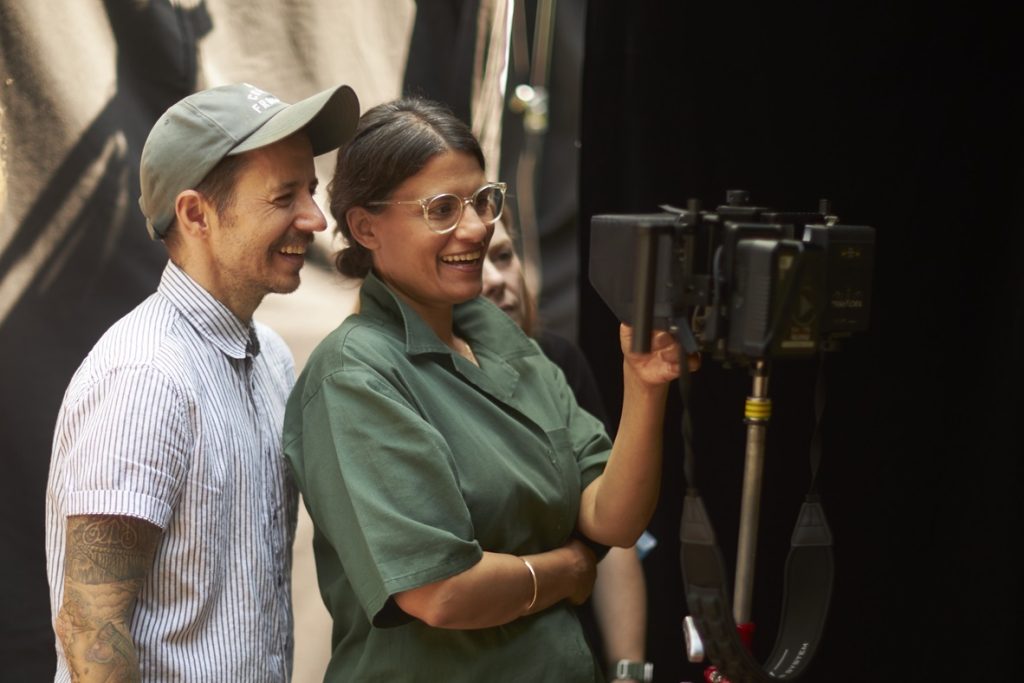
This helps explain why The Nest will be shown on the final day of in-theatre screenings. Julietta Singh and Chase Joynt (Framing Agnes, No Ordinary Man) co-wrote and co-directed this emotional and incisive National Film Board–produced documentary.
The Nest shares several tales from 140 years of history in a Victorian mansion near the intersection of the Red and Assiniboine rivers in Winnipeg. In the process, it offers fresh insights into how Métis people in Red River viewed expansionist-minded Canadians in the late 1860s.
Singh, a decolonial writer and scholar, grew up in this home with her mother, a long-time activist for feminist, environmental, and antiracist causes. At the age of 80, her mother suffered a serious injury after falling down the stairs. As this matriarch recovered, Singh returned to her hometown to interview her on-camera and research previous occupants of the home.
Much to Singh’s surprise, she discovered an “amazing set of resonant political histories and subjugated feminist and minoritized legacies contained within the house”, according to her director’s statement.
“The women of the past who emerged through my research quickly became my transhistorical sisters, aunties, mothers and grandmothers,” Singh states. “Being a racialized child of immigrant parents, my whole understanding of home and belonging was suddenly shifting, as was my sense of ethical attachment and responsibility toward other communities whose marginalized histories were interwoven with mine.”
The Nest highlights colonial oppression
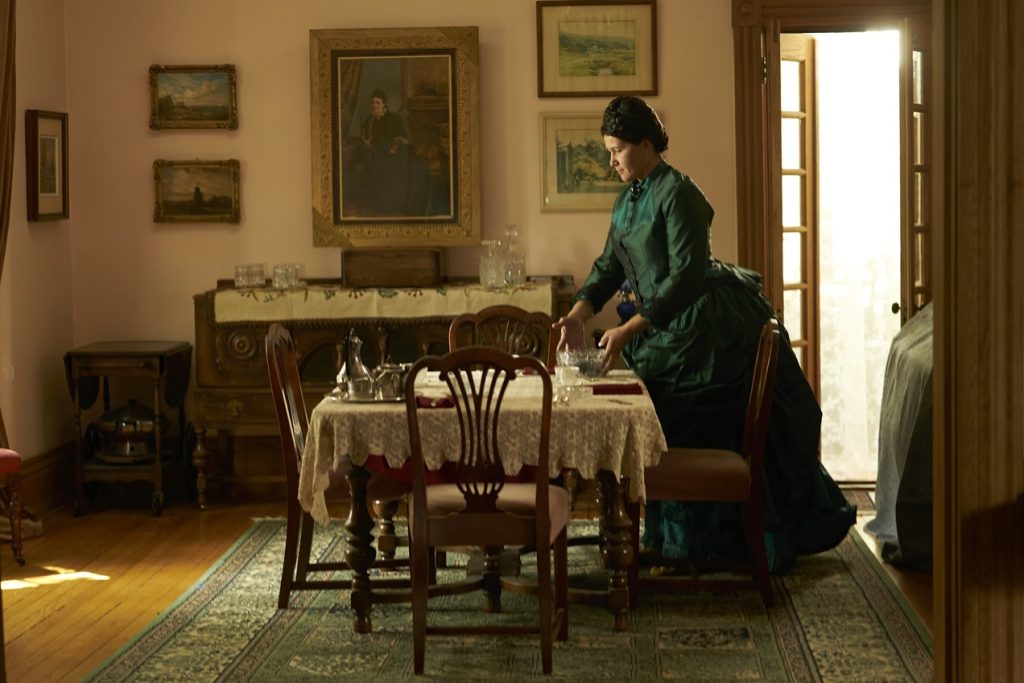
It turns out that the home was built by a radical Métis matriarch, Annie Bannatyne, who helped spark the Red River Resistance led by Louis Riel. Bannatyne is portrayed in the documentary by Michif writer katherena vermette.
Another matriarch who occupied the home was Mary Ettie McDermid, who is portrayed on-screen by Joanna Hawkins. McDermid was born deaf and became the first deaf teacher in Manitoba.
Singh and Joynt also highlight the oppression of migrants from South Asia, which Singh and her father experienced in Winnipeg. In addition, the co-directors include a section on the incarceration of Japanese Canadians in the Second World War.
In the 1960s, the house was occupied by the Japanese consul-general, Kumao Okazaki, along with his wife and their daughter Masa. Junko Bailey plays Mrs. Okazaki and Johanna Phillips plays Masa Okazaki in the section dealing with this period.
On the NFB website, Singh says that she and Joynt aimed to create a feeling of maternal intimacy between a diasporic mother and daughter. Nothing was scripted in these and other scenes with historical figures.
“I like to say that the film was an experiment in intimacy, a way of becoming friends with our ancestors across time and with each other across differences. ‘Directing’ often felt more like opening doors and offering space for communities to animate vital parts of their history,” Singh states.
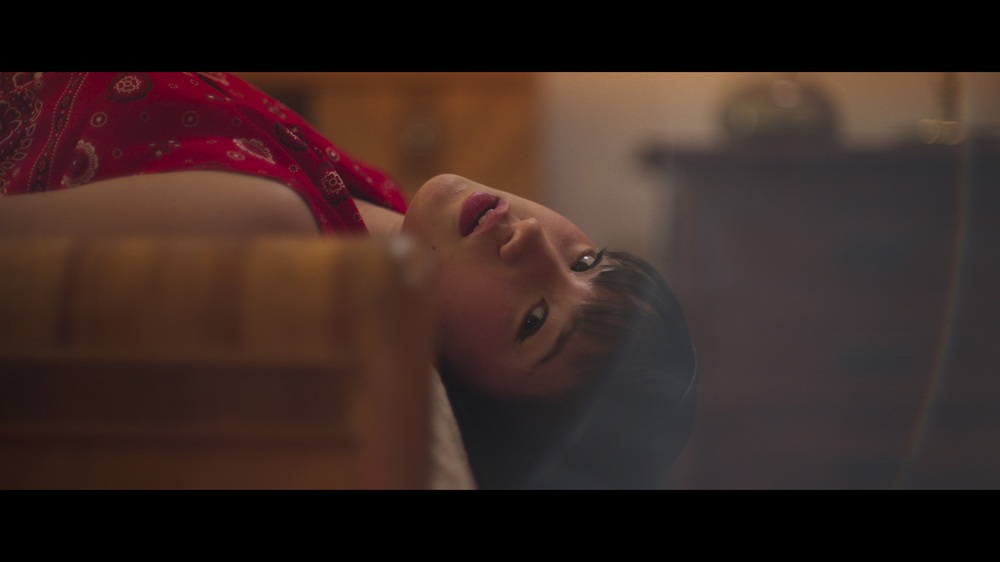
Re-embodiment bypasses archival constraints
In his previous work, Joynt has addressed how film has both enabled and obscured the histories of transgender people.
“My foray into The Nest is one that extends from and evolves my past work,” Joynt reveals in his director’s statement. “I’ve been a fan of Julietta’s transformative thinking since my very first encounter with her, and was transfixed by the stories she was uncovering about her childhood home!
“I knew instantly that my methodological approach to trans representation would dynamically align with Julietta’s decolonial approach to narrative, and specifically to her rethinking home not as a space of personal isolation but as an explosive archive of lost feminist histories.”
As narrator, Singh speaks eloquently of the previous occupants of the house as her “brick-and-mortar kin”. And through superb writing, masterful editing, and outstanding music choices, cinematography, lighting, and costumes, the co-directors re-embody these figures from the past as compelling figures. There are none of the standard re-enactments rooted in specific archival references so common to other historical documentaries.
“In this way, re-embodiment released us from the constraints of a specific archival past and invited a new form of cinematic cohabitation,” Joynt says on the NFB website. “We also applied this method to costume and production design by delving with our film team and collaborators into historically grounded yet imaginative pathways for animating the past in the present.”
Through this approach, Singh and Joynt not only create a memorable story about place, they also vividly demonstrate how women’s history still hasn’t received its due in this country.
The Vancouver Queer Film Festival will present the Vancouver premiere of The Nest at 5:45 p.m. on Sunday (September 21) at Cineplex Odeon International Village Cinemas (88 West Pender Street). For tickets and more information, visit the festival website.