The Tŝilhqot’in National Government and Museum of Vancouver are setting an example for cultural institutions around the world. This comes in how their dealing with Indigenous artifacts taken from traditional territory to urban museums.
Last February, a delegation of Tŝilhqot’in elders, youth, children, Women’s Council members, and former leaders travelled to Vancouver. They had a straightforward purpose. They wanted to repatriate important ancestral belongings from the Museum of Vancouver.
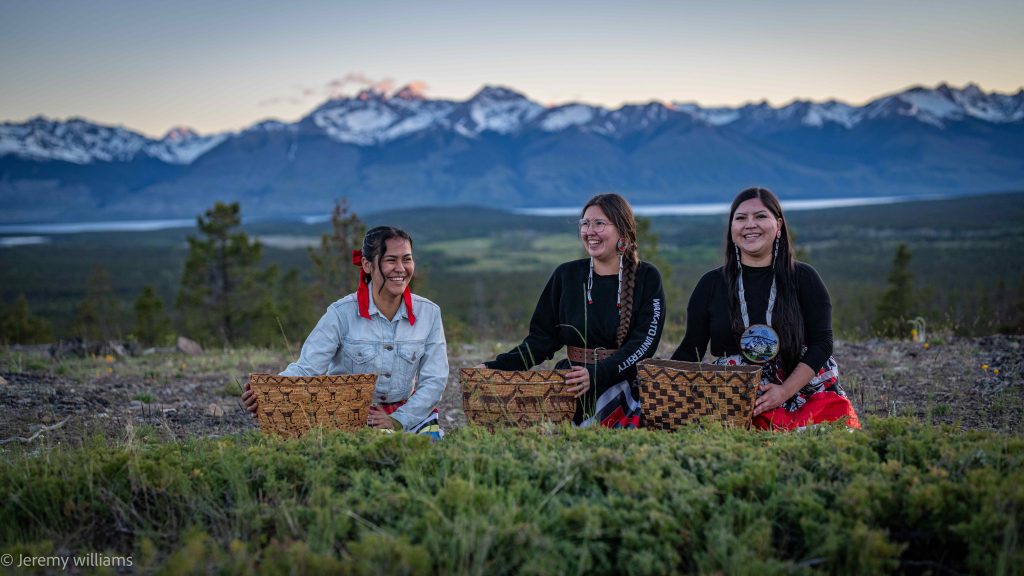
Among the 60 retrieved items were 29 qatŝ’ay (coiled root baskets). In addition, they repatriated 29 lithics, one birch bark knife sheath (embroidered with dyed porcupine quill), and one pair of snowshoes made from wood, rawhide and sinew, according to a joint news release.
“The objects repatriated have now reconnected with the Tŝilhqot’in people and territory after more than a century,” said Nits’ilʔin (Chief) Joe Alphonse.
He’s the tribal chair of the Tŝilhqot’in National Government, which is based in Williams Lake. The nation’s traditional territory extends from the Chilcotin Plateau to the North Cariboo and to the Coast Mountains
“Our people, particularly our youth, have taken immense pride in the strength of our people represented in the baskets,” Alphonse continued. “Our people held deep knowledge of the environment, using plants, animals, and natural materials for food, shelter, medicine and tools. These objects are an amazing showcase of the strength of the Tŝilhqot’in people.”
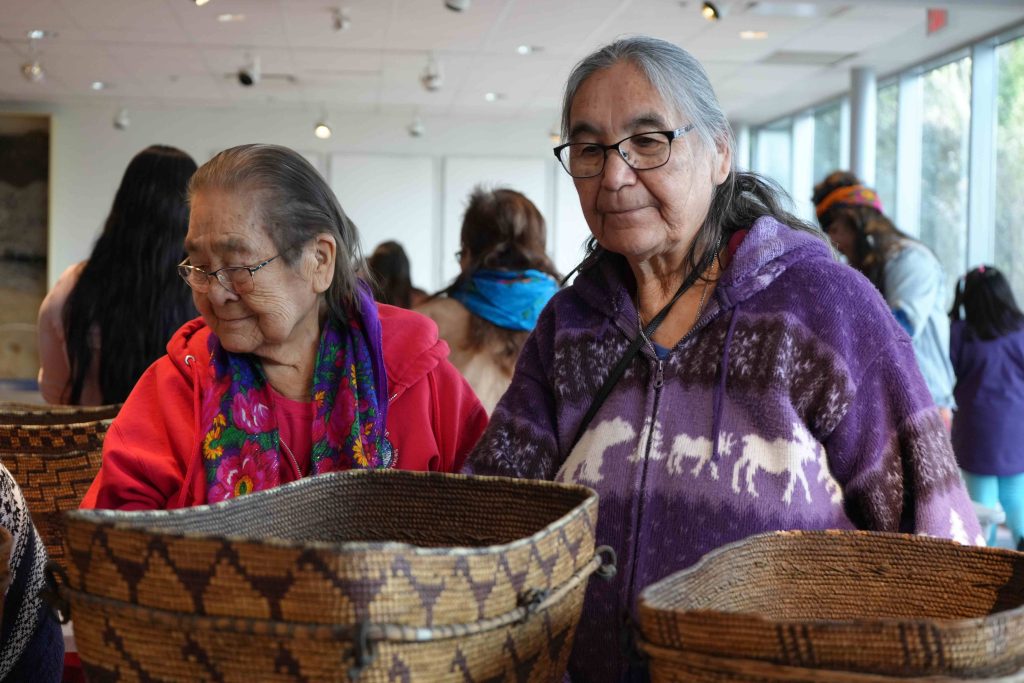
Celebrating Tŝilhqot’in Repatriation
Sharon Fortney, the Museum of Vancouver’s senior curator of Indigenous Collections, Engagement and Repatriation, talked about the importance of repatriation. She noted that it’s one of the ways in which her institution respectfully engages with Indigenous communities.
“Our staff understands that we are only acting as caretakers of the belongings in the collection, that the stories and knowledge that animate them resides with the families and communities from which they originate,” said Fortney, who is of Klahoose and German ancestry.
The CEO of the Museum of Vancouver, Mauro Vescera, declared that this “significant repatriation…is a valuable step in this important ongoing work”.
Last year, Vescera told Pancouver that the Museum of Vancouver does not act like it owns Indigenous artifacts. He refers to them as “belongings” of Indigenous peoples.
“They are very respectful,” Vescera emphasized at the time. “It’s really about the important pieces that they want to have conversations about.”
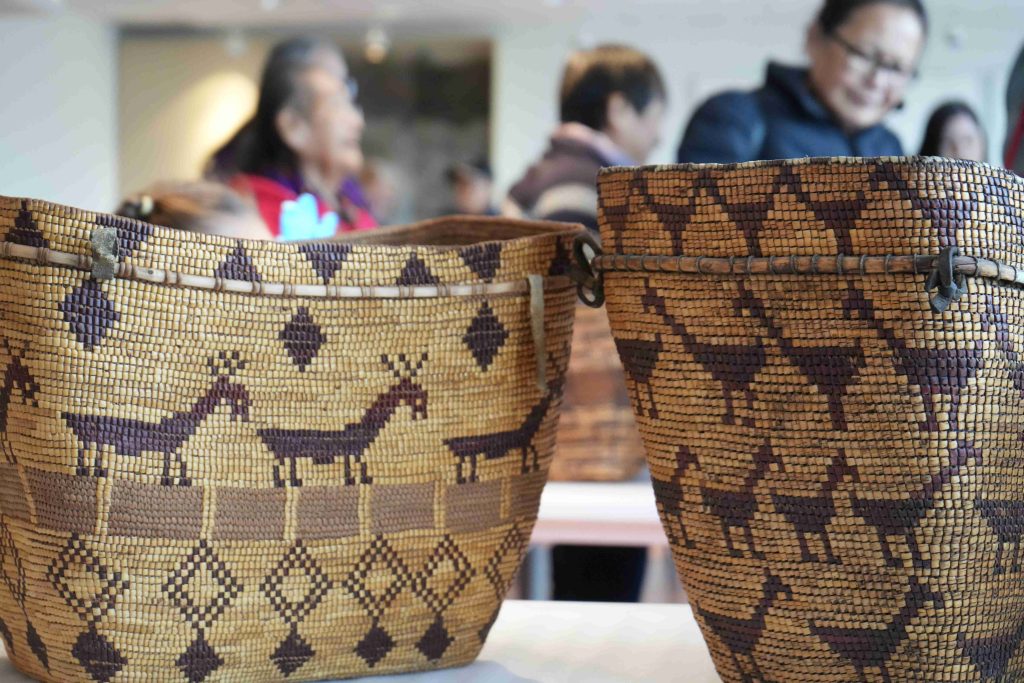
As a result of their partnership, the Tŝilhqot’in National Government and the Museum of Vancouver are developing a collaborative exhibition.
“Celebrating Tŝilhqot’in Repatriation” will be one component of The Work of Repair: Redress and Repatriation at MOV. They will unveil this exhibition at the Museum of Vancouver in the spring.
For more information on the Museum of Vancouver, visit its website. Follow Pancouver on X @PancouverMedia and on Instagram @PancouverMedia.