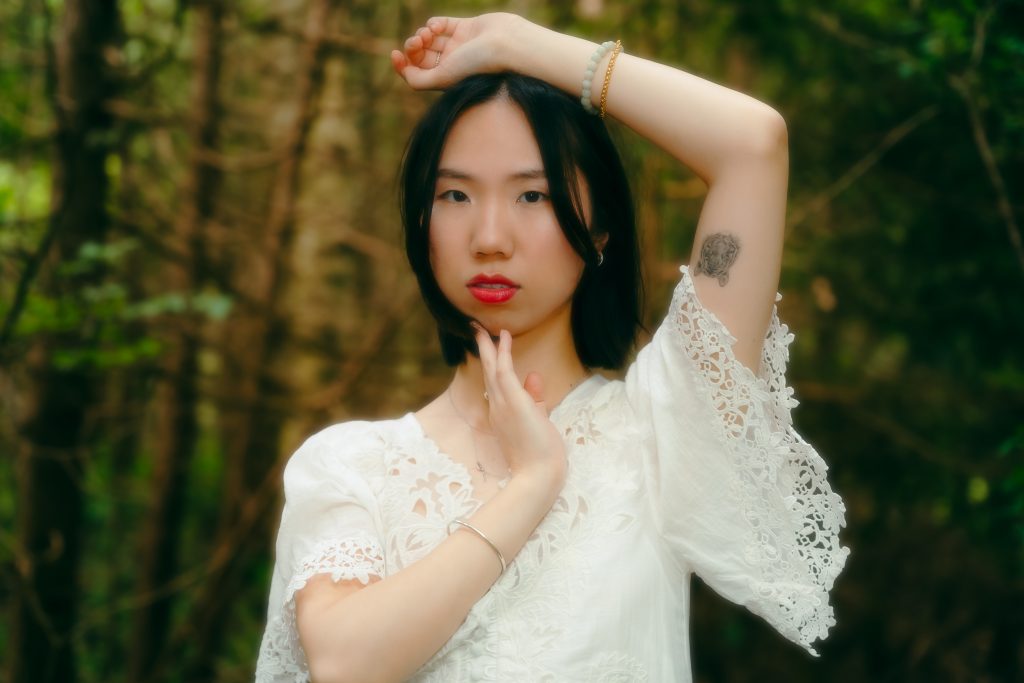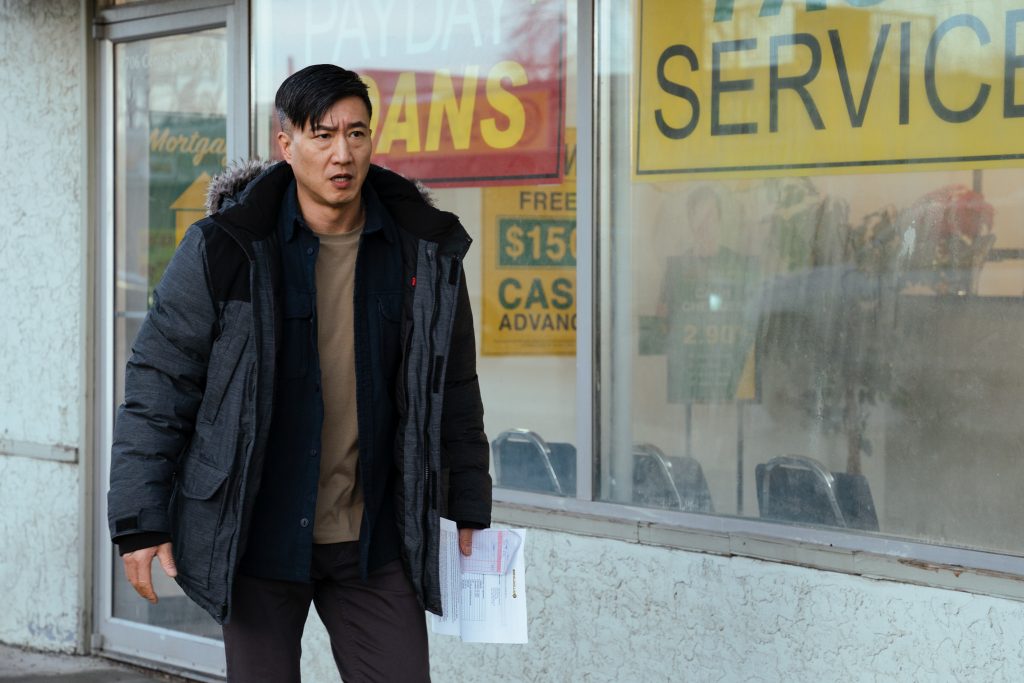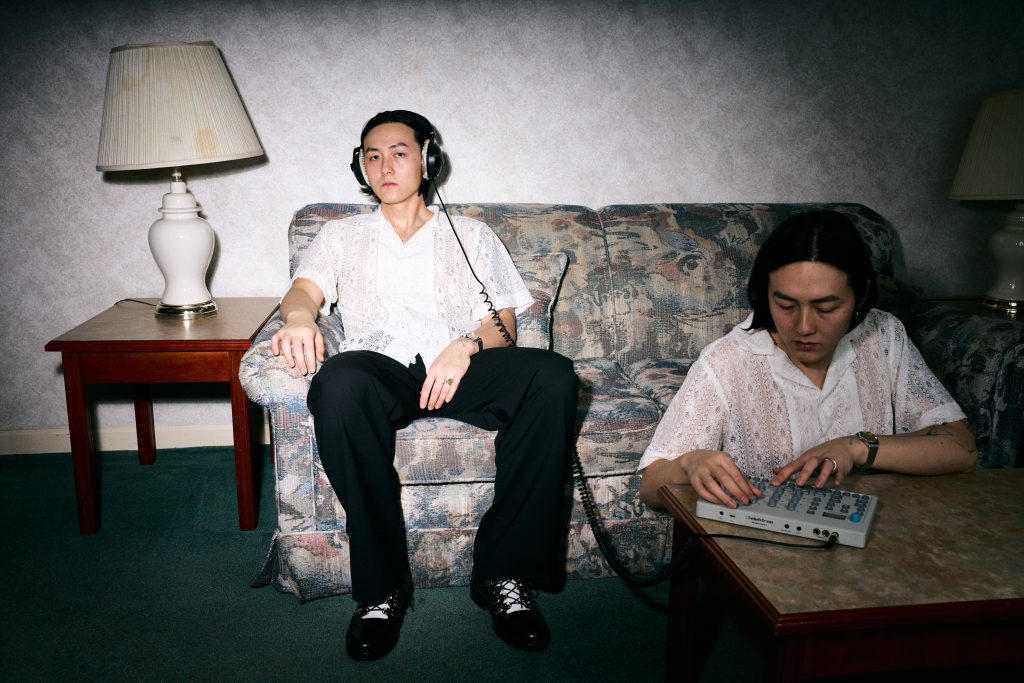
When Vancouver hip-hop artist handwash decided to create a video for his single “East Side”, he wanted to show pride in his identity. So, the Hong Kong-born songwriter headed down to Vancouver’s Chinatown with the director, Jhonny Jaques. They were determined to depict the diversity of the neighbourhood.
“That’s where the idea came when I would dress like these different stereotypes of people that would be in Chinatown,” handwash tells Pancouver over Zoom.
The “East Side” video offers a modern-day Vancouver equivalent to the pioneering Black rappers who used to hang out in the streets of Bronx. But instead of rhyming in English, handwash belts out his rapid-fire verses in Yue Chinese (Cantonese). At times, he is dressed as a shady drug dealer, curious senior, or serene visitor to the Dr. Sun Yat-Sen Classical Chinese Garden. In addition, handwash appears as a latex-glove and apron-wearing worker, as well as regular guy wandering through the historic district.
Compelling lyrics and urgent music reinforce the struggles of young Hongkongers living on the East Side.
“I’ve always heard stories of Chinatown being very different from 30 years ago or so,” handwash adds. “But the Chinatown I’ve known is like this.”
Watch the video for handwash’s “East Side”.
Origins of the name “handwash”
On Monday (September 2), handwash will join four other members of the Third Culture Collective for an afternoon of free music in downtown Vancouver. Like handwash, the four other musical artists—Shinlok, Kei Valentine, James Tseung, and Crayon—are also Hong Kong expats who’ve made their homes in Vancouver in recent years. They’ll perform from 1:30 to 6 p.m. on the Pancouver Stage in šxʷƛ̓ənəq Xwtl’e7énk Square (north side of the Vancouver Art Gallery).
According to handwash, they were brought together by the Canadian-born son of Hong Kong immigrants.
“That didn’t go as well as planned so we decided to start our own thing,” handwash says. “The name Third Culture Collective was just this idea of…if we would be based in Canada from now on, what would we become in the future? What would our kids become?”
His birth name is Hon Lam Chan and he developed his stage name of handwash in 2019. It emerged while he was joking around with his brother, who makes clothes; for some reason, handwash likes cleaning them by hand.
“At the time, I was making music—making beats—on my computer,” he explains. “And I really liked the idea of making something that’s a little bit more organic on my computer… and I thought handwashing was a good metaphor for that.”
The hip-hop bass artist often addresses patriarchy and self-improvement in his songwriting, as well as his identity as a Hongkonger who has fled the city. His most recent single, “Juggle (Chill Out)”, is in English. It has a lighthearted tone while delivering a serious message. It came about from hearing about his friends struggling with multiple jobs while trying to juggle friendship with family obligations.
“I wrote it during summertime,” handwash says. “I wanted everyone to kind of be happy.”
Hence the chorus repeatedly declaring “Chill Out”, including once in Cantonese.
Watch the video for “Juggle (Chill Out)”.
Inspired by U.K. electronic musicians
The new single reflects how handwash draws inspiration from subtle relationships between people. He enjoys making music about simple things that humans do in their everyday lives.
Handwash isn’t the first member of his family to live in the Western Hemisphere. His grandfather was born in South America but was sent back to Guangdong Province, where he eventually married handwash’s grandmother. They moved to Hong Kong in the 1940s or 1950s, according to handwash, and they had six children.
The hip-hop artist moved to the United Kingdom in 2013 for studies, staying for four years before returning to Hong Kong. In the U.K., he felt inspired by seeing so many artists creating electronic music.
“Looking back, I know a lot of them came from immigrant backgrounds,” handwash says. “So, they combined their language and their style into that.”

With his love of language, handwash wanted to do the same in his native dialect. But because the Hong Kong music scene had been so dominated by ballads in recent decades, handwash couldn’t draw upon many local influences in his hometown.
“That was…the starting point of me making music,” he states. “I just wanted to fill the gap of Cantonese urban music.”
At first, he composed English-language music in Hong Kong. And handwash initially found it difficult to write urban music in Cantonese when he chose to go down this path. But with practice, he has become a wildly popular performer since moving to Vancouver in 2021.
Watch handwash perform at the 2023 Jade Music Fest.
Adapting to Vancouver
Fortunately, handwash had relatives who had been living in the West Coast city for decades, which helped his transition to a new country. He also appreciates connecting with organizers of Vancouver TAIWANfest and the Jade Music Fest, who were eager to showcase his energetic live performances.
“It just made it a lot easier compared to my experience back in the U.K.,” handwash says cheerfully. “Vancouver is so welcoming.”
However, he still faces challenges, noting that he finds it difficult to meet new people in Vancouver.
For Hongkongers, the word “Chinese” refers to many things. For example, it can describe a language, race, ethnicity, or nationality. So, where does handwash stand on this question?
“I assume it’s a nationality for most people,” he replies. “They usually don’t ask if you’re Chinese or not. They would just put me in that box, which I’m not uncomfortable with. At the same time, I know that I’m not that.”
If people are curious, he’s happy to explain how Hong Kong’s culture differs from other parts of China. To him, Hong Kong offers a mix of traditional Chinese values along with the effects of Britain’s influence in the 20th century when the city was a colony.
He still self-identifies as a Hongkonger, However, on a daily basis, he questions whether that remains true today.
“Is Hong Kong still a place where you have to be in to be a Hongkonger?” he asks. “Or is it a part of me that I bring with me to Canada?”
Pancouver editor Charlie Smith interviews handwash.
TAIWANfest presents handwash and other members of the Third Culture Collective from 1:30 to 6 p.m. on Monday (September 2). Their free shows will be on the Pancouver Stage in šxʷƛ̓ənəq Xwtl’e7énk Square (north side of the Vancouver Art Gallery). For more information, visit the Vancouver TAIWANfest website.
In addition, handwash will perform on November 9 in a concert called Confetti at Performance Works. It’s part of the Jade Music Fest and begins at 3 p.m. For free tickets, visit Showpass. Also as part of the Jade Music Fest, handwash will speak at the Museum of Vancouver at 10:30 a.m. on November 7. His talk is entitled “Hip-hopping my identity”.
Follow handwash on Instagram @handwashhk and find his music on Spotify and Bandcamp. To see more handwash videos, visit his YouTube channel. Follow Pancouver on X (formerly Twitter) @PancouverMedia and on Instagram @PancouverMedia.
This article is part of “Beyond Chinese”, a joint initiative of Pancouver and the Asian-Canadian Special Events Association. Through interviews with artists and cultural workers, Beyond Chinese intends to offer a more nuanced view of people with Chinese ancestry. Pancouver and the Asian-Canadian Special Events Association gratefully acknowledge the support of Canadian Heritage.