He was expelled from the country of his birth. He spent the rest of his life finding ways to serve it. This is the story of a Vancouver-based philanthropist whose quiet dedication has touched over 300,000 lives.
Some stories begin with loss. Vasant Lakhani’s story begins with an expulsion. In 1972, Idi Amin ordered over 50,000 Asians out of Uganda, taking away their citizenship with almost no warning. Vasant was Ugandan-born. He had worked hard to build his life there, rising to manage a battery manufacturing factory within ten years of finishing his degree at the M.S. University of Baroda. He asked to be allowed to stay. The answer was no.
One wonders what it must feel like to be told that the country of your birth no longer considers you its own. To carry your life in a suitcase and walk away from everything you have known. Most people would carry bitterness with them for the rest of their days. Vasant seems to have carried something else entirely: a quiet and unshakeable desire to be of use.
Starting over in the cold
Vasant landed in Thunder Bay, Ontario. It is a city of around 110,000 people in the far north of the province, and in almost every way it was the opposite of Kampala. His two children were aged six and one. His wider family had scattered to the United Kingdom. In winter, the temperature could fall to minus forty degrees. His first job was standing on a construction site in the snow, directing traffic with a flag.
It is worth stopping to think about what that moment must have been like. Here was a man who had managed a factory in another country, now starting over in middle age with a flag in his hand in a snowstorm. Most people would have felt crushed by that. Vasant kept going. He found work as an accountant and bookkeeper at a law firm. He ran small businesses. He rebuilt his life piece by piece.
By 1988, he had found the work that fit him best. He joined Ontario’s Ministry of Citizenship as a Community Development Officer and Race Relations Consultant. For more than a decade, he created programs that challenged racial discrimination in workplaces and helped employers understand how to build fairer teams. He became a person that the Thunder Bay community trusted deeply. He served as President of the Multicultural Association of Northwestern Ontario and chaired the local Multicultural Folklore Festival for nearly ten years. In 1988, the Lieutenant Governor of Ontario presented him with the Outstanding Achievement Award for volunteerism.
It is hard not to wonder: how does a man who was treated so unfairly by the world go on to spend his life fighting for fairness in others? Perhaps that experience taught him exactly how much a single act of injustice can cost a person. And perhaps that knowledge made him determined that fewer people would have to pay that price.
Retirement that was not really retirement
In 2001, Vasant retired from public service and moved to Vancouver to be close to his children. Within a few months, he had boarded a plane to Bhuj, Gujarat, to help with earthquake relief. He stayed at a local temple and served food to survivors. A few years later, he was in Kerala, carrying bricks and moving sandbags to help rebuild homes that had been destroyed by the 2004 tsunami.
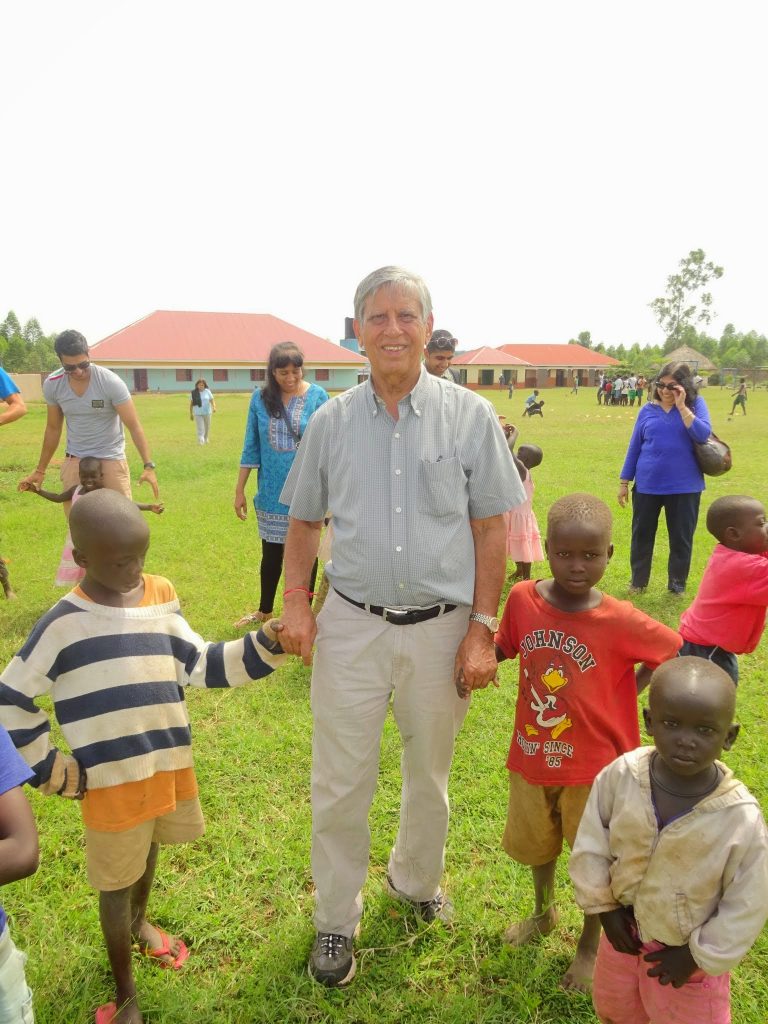
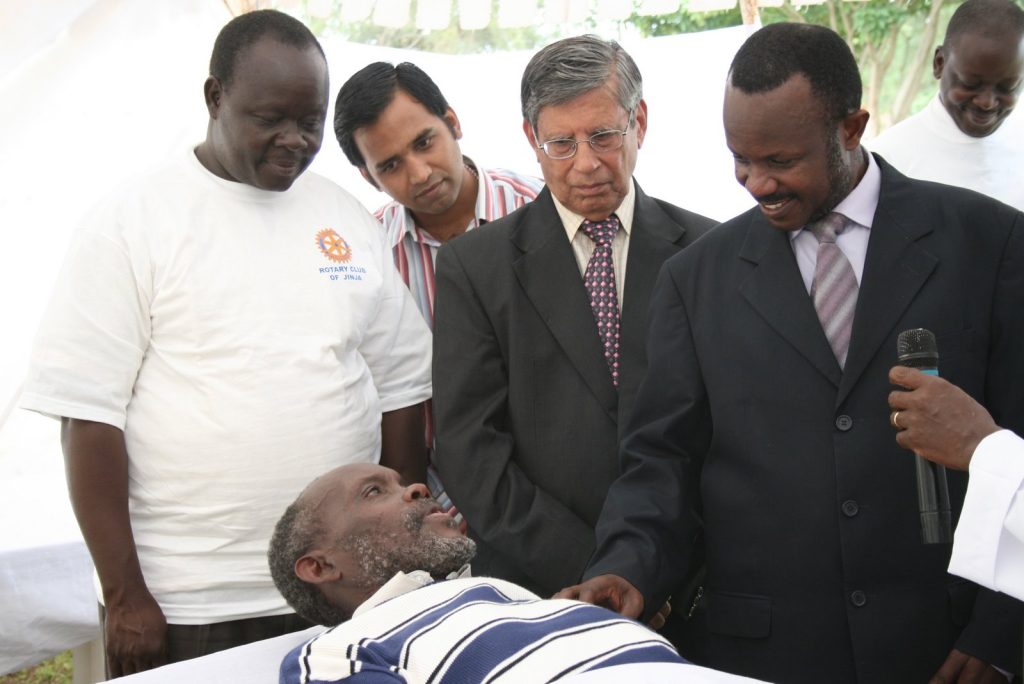
Through this work, he connected with members of the Association of Indian Professions of Northern Ohio, who asked him to organize a medical camp in Gujarat. It was a success. Then came the question that would change the direction of his life: did he have any connections in Uganda? He did, of course. Uganda was still home to him in some deep way, even after everything. In 2007, Vasant led a team of volunteers back to the country that had expelled him and organized a free medical camp that served 6,000 patients in a single event. That number told him everything he needed to know about how much was needed.
One wonders what it feels like to return to a place that once turned you away, now carrying medicine and meals rather than a suitcase. Whether, walking through those streets again, there is grief, or peace, or both at once. Whatever Vasant felt, he came back. And then he came back again. And again.
Building something that would last
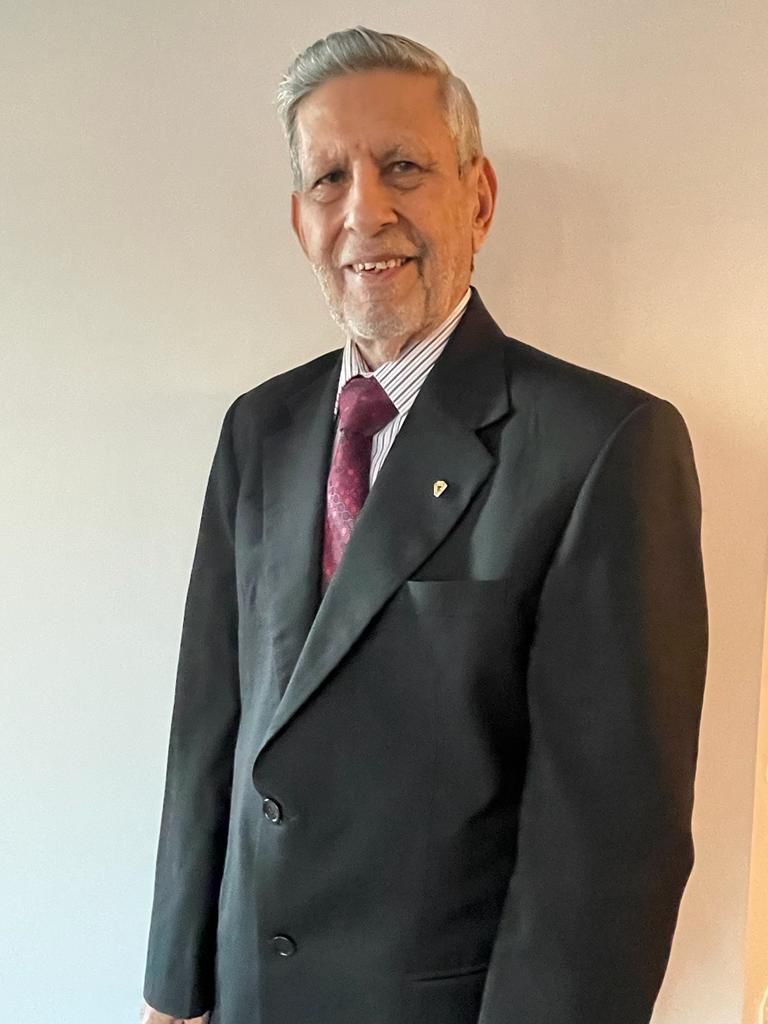
In 2011, Vasant founded the Indo-Africa Charitable Society (IACS) in Canada and the Indo-Africa Charitable Trust in the UK. The purpose was simple and clear: to provide free healthcare, clean water, and education to people in Uganda and India who needed it most.
Since that first camp in 2007, IACS has served over 300,000 patients in Uganda. Nearly 95,000 meals have been provided during those camps, because Vasant understood from the beginning that many people travelling long distances for care would arrive without food.
The work has grown year by year. Eye and dental camps now run in partnership with Mengo Hospital. Around fifteen wheelchairs are donated every year to patients who need them most, including people in the remote Karamoja region. Sewing machines and training are given to women living with HIV/AIDS, diabetes, and kidney disease in Northern Uganda, so they can earn an income and care for their children. In 2016, IACS built a Vocational Youth Training Centre at the Smile Africa orphanage in Tororo, giving young people skills in computing, sewing, and carpentry.
The work in India has continued alongside all of this. Water bore holes with filtration systems have been built in village schools. Flood relief was provided in Bududa in 2018 and in Kampala in 2025. School supplies have reached hundreds of children in Kabale. Christmas hampers have been shared with families across Northern Uganda.
There is something quietly extraordinary about a person who does not ask what the world owes them, but only what they can still give. One wonders whether Vasant ever stops to look back at the list of what has been done and feel the full weight of it. Three hundred thousand patients. Ninety-five thousand meals. Wheelchairs. Water wells. Schools. A vocational centre for orphaned young people who now have a trade and a future. It is a remarkable accounting for one life.
Still going, still growing
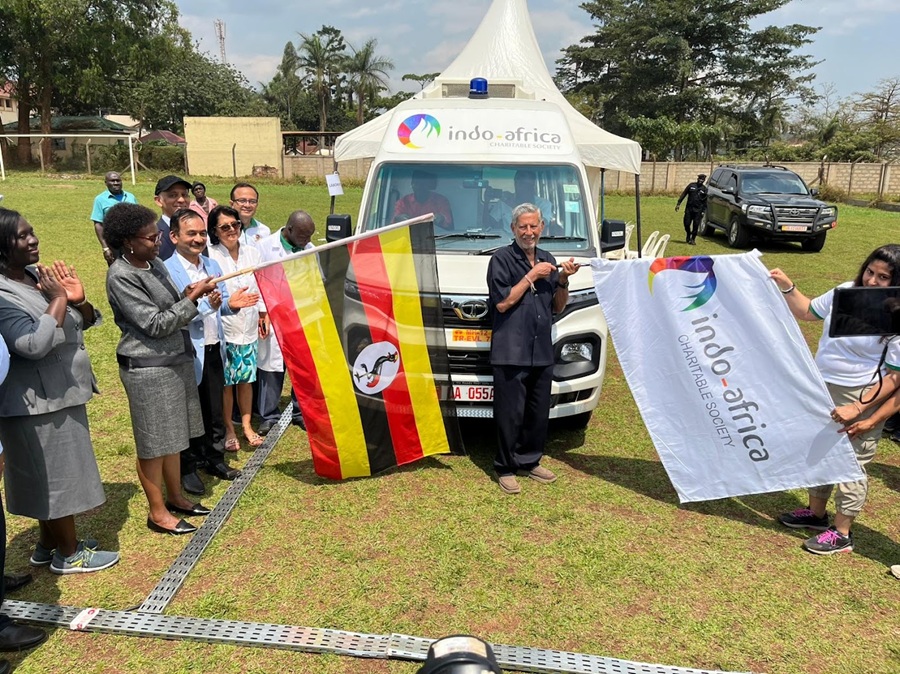
In 2025, Vasant is not slowing down. IACS is partnering this year with the Mehta Group in Lugazi, as well as supporting two further camps in Karamoja with Touched Hearts and in West Nile with FUMSA. A mobile laboratory has been donated to Mehta Hospital to serve the Buikwe and Mukono Districts. A ten-day medical camp focused on cleft lip surgery is planned for early 2026.
Back in Vancouver, Vasant continues to serve hot lunches to people experiencing poverty in the Downtown Eastside and in Surrey every week. More than 9,000 meals have been served through that program since it began. He remains President of the Lohana Cultural Association, a member of the Burnaby-Deer Lake Rotary Club, and a well-known and respected figure in the South Asian community of British Columbia.
In 2019, the University of British Columbia presented him with an Outstanding Achievement in Community Service Award. It is one of five major honours he has received across his lifetime, including a Commemorative Medal from the Governor General of Canada and a Lifetime Achievement Award from Drishti Magazine.
Uganda expelled him. He came back, and kept coming back, to heal it. And perhaps that is the most honest way to describe what Vasant Lakhani has done with his life. He was given a wound early on. He chose to turn it into a well. Not just for himself, not just for his family, but for hundreds of thousands of strangers across three continents who will never know his name but whose lives are different because he showed up.
What is perhaps most striking about Vasant is not the scale of what he has built, but the fact that he has never seemed to need recognition to keep going. He was serving on construction sites before anyone was watching. He was carrying bricks in Kerala with no cameras present. He started the medical camps in Uganda years before the charity was even formally registered. The giving came first. Everything else followed.
That is a rare kind of person. And Vancouver, and Uganda, and the world, are better for having him.

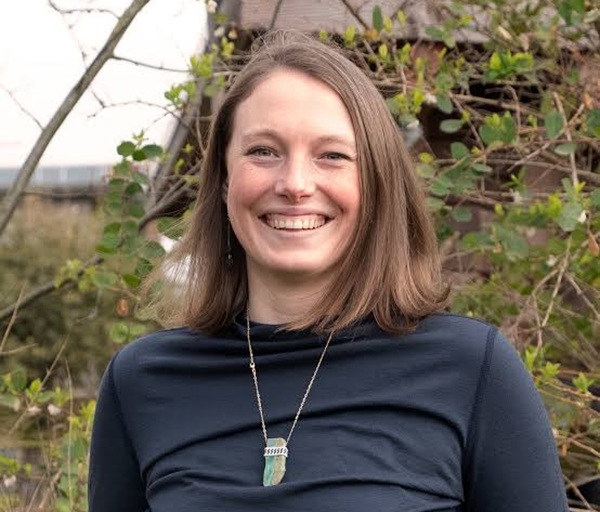
Nina Buddhdev is a B.C.-based cultural arts strategist, visual artist, and heritage arts activist and the founder of the Bandish Network. To connect with Nina via the Arts BC Insight Team, please visit: https://artsbc.org/insight-team. Listen to her B.C. Museums Week Live Podcast: Exploring Models of Cultural Engagement with Nina Buddhdev. To learn more about the Bandish Network, visit its Facebook page.
Follow Pancouver on X @PancouverMedia. Find Pancouver on Bluesky @pancouver.bsky.social and Instagram @PancouverMedia.