
The Vancouver International Film Festival is a beacon of independent feature-length documentaries and dramas. But it also serves as an important launching pad for directors of short films, who can leverage screenings and awards to win new fans and future funding to advance their careers.
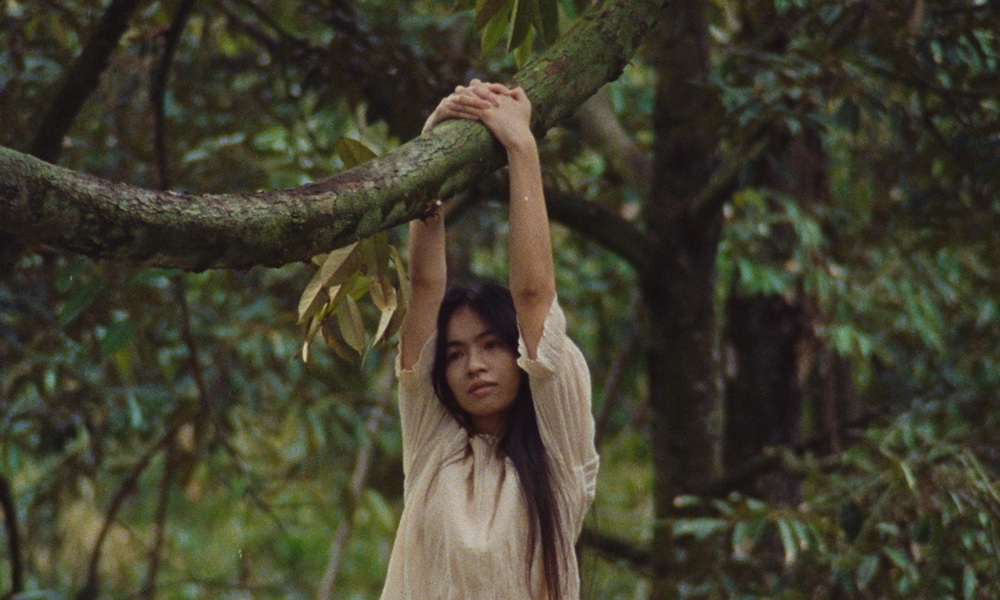
Vancouver filmmaker Solara Thanh Bình Đặng (“Her Name Is Like a Sigh”) is one such example. Her new 19-minute short, “chin (ripe)”, revolves around a rural Vietnamese woman who has to decide if she will enter into an arranged marriage. Lệ (Hayley Ngọc Mai) is young and confident, but she faces an uncertain future without a husband.
Last month, the Toronto International Film Festival presented the world premiere of this intriguing tale. The Vancouver International Film Festival is screening “chin (ripe)” as part of Short Forum 4: Um, womanhood on Monday (October 6) and Tuesday (October 7).
The story opens on a durian farm in the Mekong Delta in the early 2000s. The durian is known as the “king of fruits” for its enormous size. It hangs from high in the tree, with a spiky husk protecting the sweet and nutty pulp inside. In the second scene, Lệ is summoned from inside the house because of an accident. Her widower father, Ba (Cong Ningh Nguyen), was struck in the head by a heavy durian that fell from above.
As the chain-smoking Ba recovers, he suggests that Lệ should consider marriage.
“Did the durian hit your head that hard?” Lệ retorts.

Camera angles in “chin (ripe)” add suspense
One thing leads to another, and before long, a cool, good-looking guy in a fedora named Hieu (Samuel An) shows up at the farm unannounced.
In “chin (ripe)”, the durian is firm, full of personality, and seems to have a mind of its own—just like Lệ. Viewers never know when it will assert itself, which adds suspense, notwithstanding the pastoral setting in Vietnam.
Solara Thanh Bình Đặng and her cinematographer, Chananun Chotrungroj, make wonderful use of camera angles of the durian to augment the mood. They also cleverly position Lệ at eye-level in an important scene with the much taller mystery man. This reinforces that she is still in charge of her destiny despite her small frame, leaving the audience guessing what will happen next.
Imagine that: a highly watchable, feminist short film by a B.C. director—entirely in Vietnamese—about arranged marriage set in the Southeast Asia. It’s one more sign of how cosmopolitan Vancouver’s film industry has become.
The Vancouver International Film Festival will present “chin (ripe)” in Vietnamese with English subtitles. It’s part of Short Forum 4: Um, womanhood at 6:30 p.m. on Monday (October 6) and 3:15 p.m. on Tuesday (October 7) at International Village 7. Follow Pancouver on X @PancouverMedia and on Instagram @PancouverMedia.


