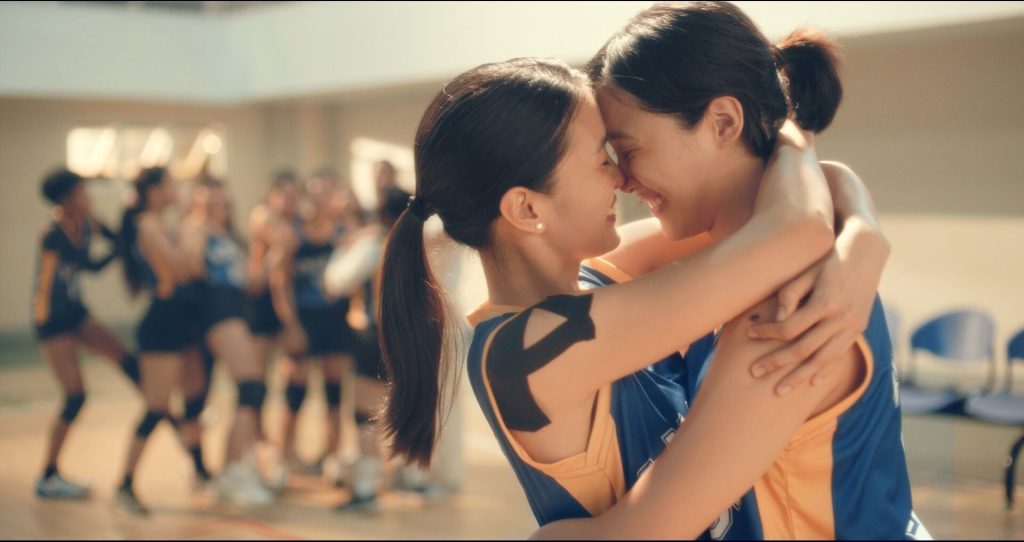
Sometimes all a girl wants is a lesbian romcom where girls fall in love and there’s a happy ending.
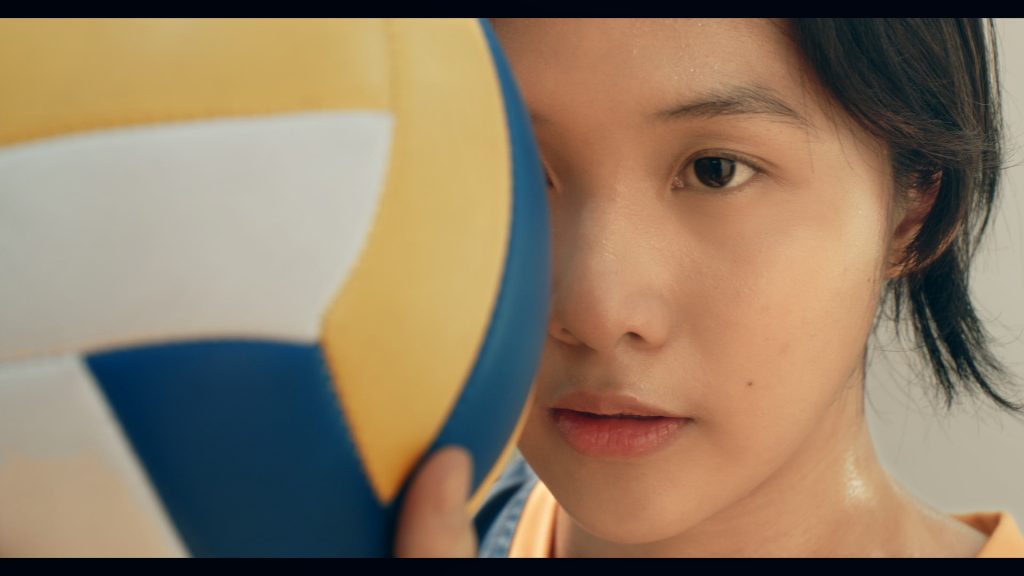
Director Samantha Lee of the Philippines is creating films that are just that. Her latest film, Rookie, will be screened at the International Village on September 22 as part of the Vancouver Queer Film Festival. It stars Pat Tingjuy as Ace, a tomboy teenager who ends up on the volleyball team with no prior experience, and Aya Fernandez as Jana, the captain of the volleyball team.
This is a coming-of-age story, a light-hearted romance, and a sports drama all rolled into one. In the warm glow of the gymnasium lights, a rivals-to-lovers dynamic unfolds gently. But I want to talk about how the film also touches upon certain topics that resonate with most girls, no matter what cultural background or sexual orientation.
Growing up as a girl, feeling “safe” is something the world often takes for granted.
From the very first scene, we are hit with the harsh reality of “girls vs. boys”. Ace is allowed to join a boys’ pickup basketball game, but they do not pass to her. When she finally scores, the game ends with the boys muttering, “She’s lucky we even let her score.”
This kind of microaggression is often brushed away like it’s a given that girls and boys can never play together equally. Watching Ace’s proud smile fading when she realizes the game is over simply because she got her hands on the ball reminded me of third grade. I used to play soccer with the boys before I successfully stopped a goal from the opposing team, and then suddenly I wasn’t allowed to join their games anymore. I don’t think I was truly aware of the great gender divide until that moment. So girls play with girls, where they belong.
Ace is a new transfer to an all-girls Catholic school. Her height lands her a spot on the volleyball team despite never having played the sport before. The audience can see right away that she is out of her element on this unfamiliar court. Her discomfort is exemplified by her tugging at the uniform, too high up on her legs.
In recent years, the controversy over female athletes’ uniforms have been garnering attention. Some say the uniforms enforce sexualization of the athletes in a way the men’s uniforms are not held to the same standards. Some say the uniforms are meant to maximize comfort and movement during the game. It seems the entire internet has some kind of opinion on what these talented women choose to wear while doing their job.
In the film, when Ace finally expresses her discomfort out loud, the coach doesn’t dismiss her. Instead, they adjust her uniform so the hem is longer. What a comfort it is, to see an adult figure go above and beyond to help the girl feel safe in her own body.
Watch the trailer for Rookie.
But there is another danger lurking in the gym. Rookie doesn’t shy away from the real-world experiences of sexual harassment that girls go through, often silently. I won’t spoil too much, but I was pleasantly surprised by the subtle way this subject is depicted, without dragging down the tone of the film. It can be isolating. Especially when you’re a teenage girl, struggling to fit in. I remember when the #MeToo movement exploded—it was simultaneously a relief to know that we weren’t alone, as much as it was horrifying to realize just how many people have been hurt this way.
What strikes me most about the film is that there was never a doubt that the girls would find the support they need.
The girls are free to talk about periods in the locker room. Ace’s mother casually teases her about finding her schoolmates cute, despite her attending an all-girls’ school. When Ace flirts with Jana, there is no hint of violence or disgust.
While homophobic microaggressions do pop up, the film does not linger on it. That is not to say the remarks are any less hurtful. These are words heard so commonly, even outside of the context of the Philippines or the religious nature of the school. But we move past it, as we do in real life, without letting go of our linked hands.
Rookie shows us the sweetness of first love, the joy of giving your best, and how having fun is just as important as winning the game.
When I interviewed director Lee earlier this year, she mentioned that she wanted to create the films her younger self could have seen. Too often people complain about the lack of fluffy queer media, particularly for queer women of colour. Beyond the mainstream, accessible with subtitles, there are films like Rookie, where serious topics can be explored alongside happy endings, and girls are safe to kiss other girls.
The 36th Vancouver Queer Film Festival runs until September 22nd. For tickets and more information, visit the website.