Julian Jason Haladyn, OCAD University
When I finished the manuscript for my book The Pause, which looked at the COVID-19 pandemic through the idea of “pausing”, a notion frequently invoked in pandemic discussions of suspended and cancelled activities, I was happy to be done and not to think about the pandemic anymore.
My first instinct was to get rid of all the books I had bought on COVID-19, knowing that after living through the crisis I would never want to read them again. Yet when my book was released this past May, it was obvious that the effects of the pandemic were still very present.
These effects range from lingering health issues with long COVID, to supply chain shortages, to grief for those who died and for all the experiences missed. In their article “The Youngest Pandemic Children Are Now in School, and Struggling,” journalists Claire Cain Miller and Sarah Mervosh outline the difficulties faced by children born during the COVID-19 crisis.
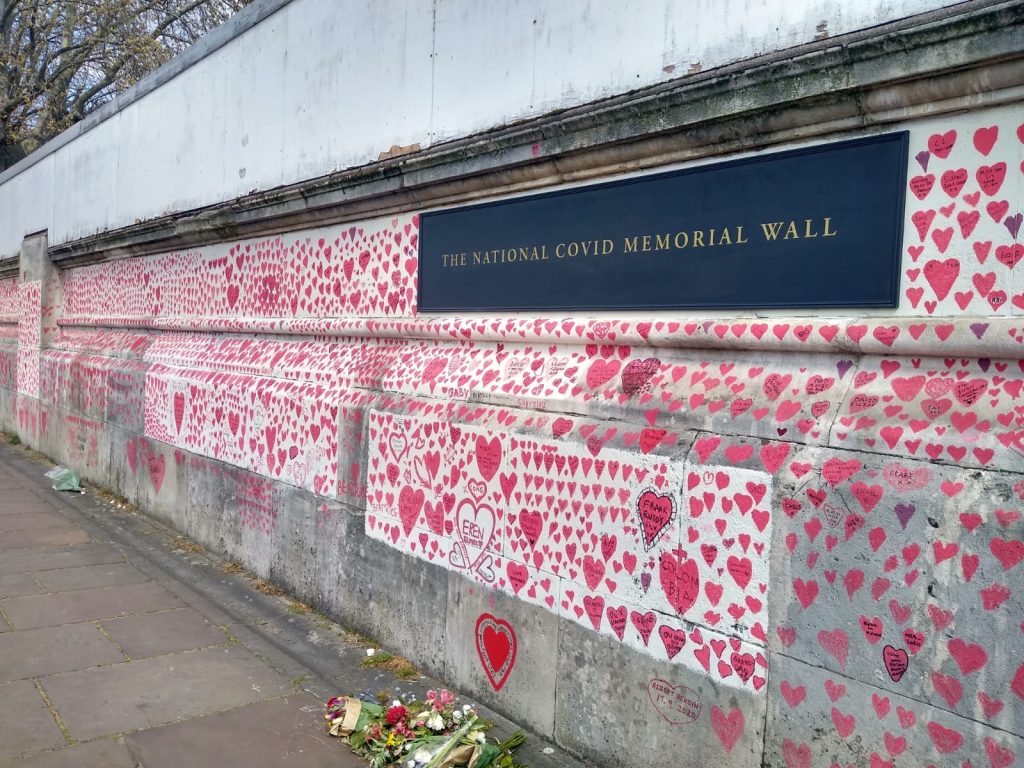
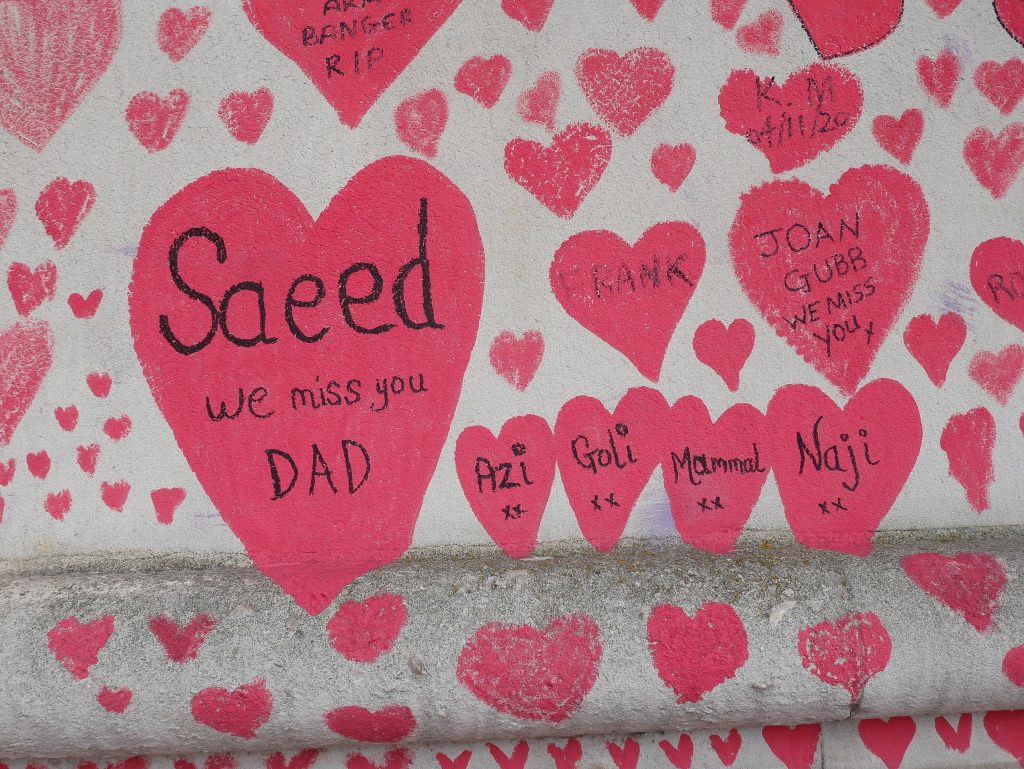
And then there are the seemingly undefinable changes in life, both literal and psychological, that for many are after effects of living through a pandemic. Chief among these is a heightened sense of anxiety, feeling overwhelmed, busy yet hardly able to do what is needed. For many, life feels out of sync, untimely even.
The truth is, as many of us have come to realize, while people discussed pausing activities, one cannot actually pause life. Which leads to questions: Are we in need of a different kind of pause? How do we deal with what has been lost, or begin to understand the strange pandemic years? Artists suggest some vital ways of contemplating these questions.
The Mark of Trauma
Earlier this summer I read Rachel Whiteread: The Mark of Trauma, a small publication that documents the British artist’s installation …AND THE ANIMALS WERE SOLD at the Palazzo della Ragione in Bergamo, Italy. She created a series of marble sculptures that, following social distancing rules, were located exactly two metres apart.
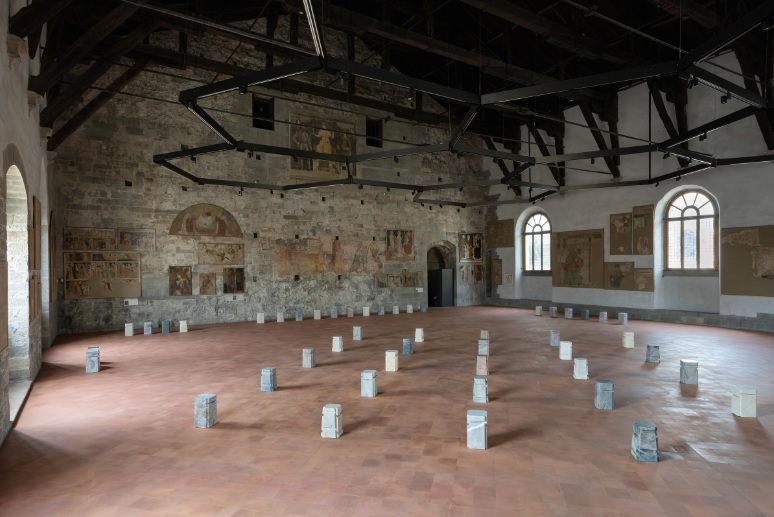
Whiteread described the artworks as existing in their own “bubbles.” Conceived near the end of the pandemic, in 2021, the exhibition took place in 2023. The conscious use of space in separating the individual sculptures describes a type of material pause that continues to affect people’s experience of the world. While the mandates are gone, traces of them remain, such as worn stickers or paint on the ground. We might try to ignore the distance we feel, but life reminds us.
I appreciated the way the installation and publication tried to capture the trauma of something as simple as distance. The space between the sculptures had, in the installation, become also about time. The pause is materialized in the space and time separating the marble works.
Whiteread’s “bubbles” are an ideal description of the late pandemic when practices, such as social distancing, had become forced. Yet once the mandates were dropped, in many ways it was as if they had never existed.
Cyclical sense of time
If the idea of pausing felt helpful early in the pandemic and intolerable by its end, it may be helpful to reflect on notions of pausing that are more speculative or meditative. This involves a very different understanding of time, one that is no longer comparable to the pausing of a linear narrative.
This is captured beautifully in Mohawk artist Shelley Niro’s 2023 Pandemic Moon, a large, detailed photograph of the moon.
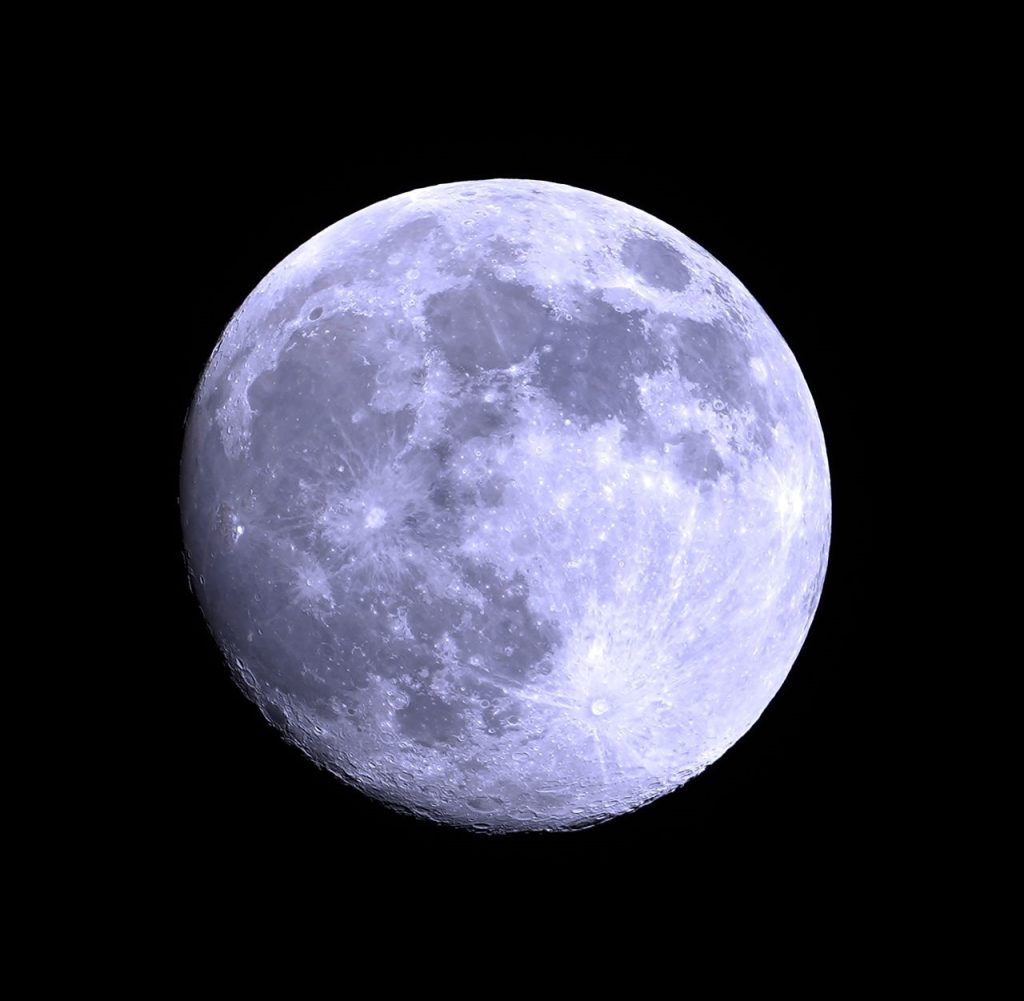
This image is one of the works included in the exhibit Shelley Niro: 500 Year Itch. I saw the exhibit earlier this year at the Art Gallery of Hamilton, and it’s now showing at the National Gallery of Canada.
Standing in front of Pandemic Moon, which is presented in a circular light box, is a very meditative experience. The symbol of “the moon can lead us to question our place in the world,” notes Melissa Bennett, co-curator of 500 Year Itch in her exhibit catalogue essay.
Niro’s title Pandemic Moon suggests the pandemic is represented by the moon, which notably defines a cyclical sense of time. She appears to imagine the global crisis as part of a larger, deeper history of human and nonhuman events.
Such a vision of time invites very different understandings of pausing. If we do in fact need another pause, perhaps this is the form it must take to address the distant yet present realities of the pandemic.
Julian Jason Haladyn is an assistant professor of Art History at OCAD University. This article is republished from The Conversation under a Creative Commons license. Read the original article.