“One chopstick breaks easily; a bundle does not” was one of the first proverbs I learned as a child growing up in Taiwan. At the time, it was just another saying adults repeated. But when I moved to Canada at 17, alone and unsure of what came next, those words took on a different weight.
As an immigrant with no family nearby, I navigated unfamiliar systems—finding work, housing, school, and banking—all while trying to appear strong and capable. I worked multiple jobs, kept my head down, and absorbed the unspoken expectation that success meant doing it alone.
But over time, I realized something I had always known deep down: strength doesn’t come from isolation. It comes from the community.
The everyday architecture of care
A sense of collective care is a cornerstone of many Asian cultures. In our families, decisions are rarely made with just the individual in mind. Whether it’s something as simple as sharing food or as significant as deciding where to live, we act with others in mind; parents, siblings, children and neighbours alike. It’s not about sacrifice; it’s about survival, and about honouring the people who have held us up.
In many Asian households, financial decisions reflect this too. It’s common for families to pool resources across generations, to buy homes, support education, or start small businesses. Grandparents help raise children. Adult children support aging parents. These choices are shaped by values of responsibility, respect, and reciprocity.
And yet, when we enter traditional financial institutions in Canada, those values can seem invisible, or worse, out of place. So much of the financial system in the country is designed around individualism: credit scores, income brackets, personal assets. As an immigrant and a newcomer, it rewards self-reliance, and often penalizes those who approach money as a shared tool rather than a private asset.
Belonging, not just access
But what if our financial systems reflected our communities instead of asking us to leave them at the door? What if belonging, and not just access, was the ultimate goal?
I’ve had the privilege of working with credit unions, where I’ve seen how financial institutions can operate differently. Credit unions are community-rooted, member-owned, and driven by social purpose. They aren’t accountable to shareholders or focused on maximizing returns. They’re built to reinvest in the people and places they serve.
At their best, credit unions embody the same principles I was raised with: mutual care, trust, and collective responsibility. They take the time to understand people’s lives and offer support that reflects real needs, not just numbers on a spreadsheet. That can look like culturally thoughtful multilingual services, financial planning that acknowledges multigenerational households, or simply taking the time to build meaningful relationships.
It’s time to move beyond inclusion as the end goal.
Too often, organizations, including financial institutions, approach “inclusion” by inviting people into systems never designed with diversity in mind. Translated brochures and one-off diversity campaigns attempt to incorporate differences into existing structures, without questioning or transforming systems still rooted in colonial and patriarchal norms. We must reimagine and rebuild systems that truly centre equity, redefine worth beyond narrow measures like “creditworthiness”, and create spaces where everyone can experience genuine belonging.
For newcomers and marginalized communities, especially those navigating racism or cultural bias, financial systems can feel like closed boxes—rigid, confined spaces that force people into predefined shapes and limits. But they don’t have to be. When we design systems with diverse lived experiences in mind, these boxes can transform into a field that is interconnected and ever-evolving—much like many Asian cultures, which are shaped by community, relationships, and the natural flow of life—elements that aren’t confined by rigid boundaries.
Care is the system
I often think back to that proverb about chopsticks. It’s more than a metaphor—it’s a blueprint. A single chopstick is fragile. Together, a bundle is strong.
The same is true of communities. When we build systems that reflect the way people actually live and care for one another, we build resilience. Not just for individuals, but for all of us.
In Taiwan, people often greet each other by asking, “Have you eaten yet?” It’s not just about food—it’s a heartfelt expression of care, a way of checking in, and truly seeing one another.
That’s the kind of system I believe in—one where care is at the centre, and where community is more than a buzzword. Where everyone has a place. Where strength is shared.
Where no one breaks alone.
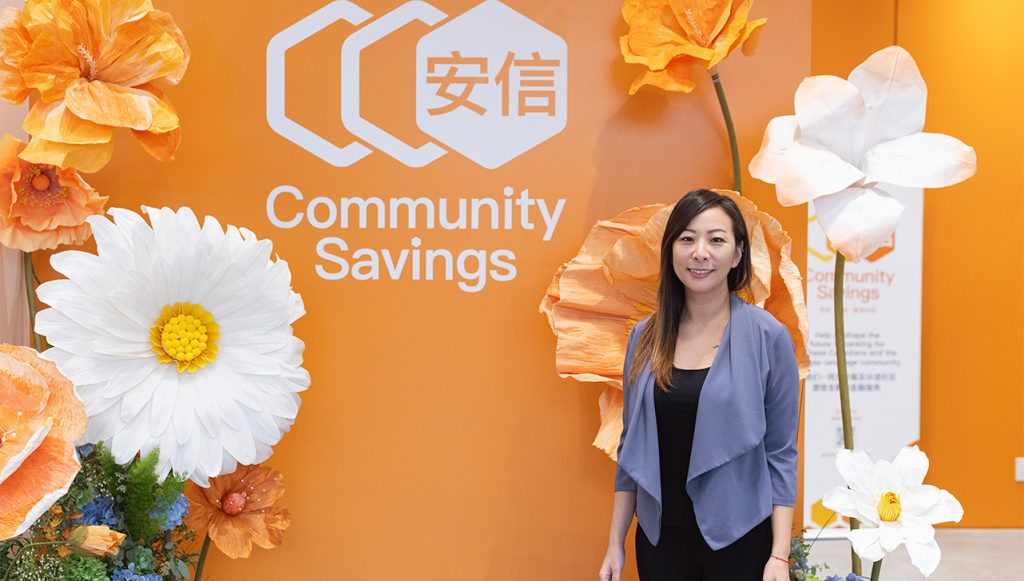
Katrina Chen is president of AnXin Community Savings Credit Union and B.C.’s first Taiwanese-born cabinet minister. She believes financial institutions can learn a lot from Asian cultural values—especially the emphasis on care, collective success, and mutual support. Follow Pancouver on Instagram @PancouverMedia, on X @PancouverMedia, and on Bluesky @pancouver.bsky.social.