

Stanley Park is often described as Vancouver’s jewel, as it is the city’s largest urban park, with its expansive rainforest, scenic trails, and waterfront vistas. However across town, Vancouver has another gem. Although much smaller and manmade, it is also worth appreciating—the Dr. Sun Yat-Sen Classical Chinese Garden in Chinatown.
This year marks the 40th anniversary of the Ming Dynasty–style garden, which opened on April 24, 1986. It has remained the one constant in a neighbourhood that has evolved immensely in the past four decades.
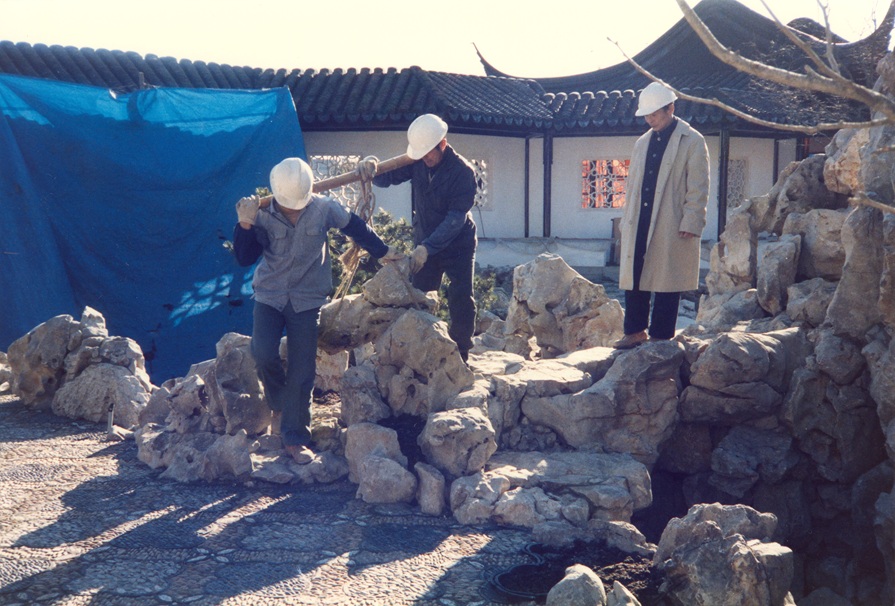
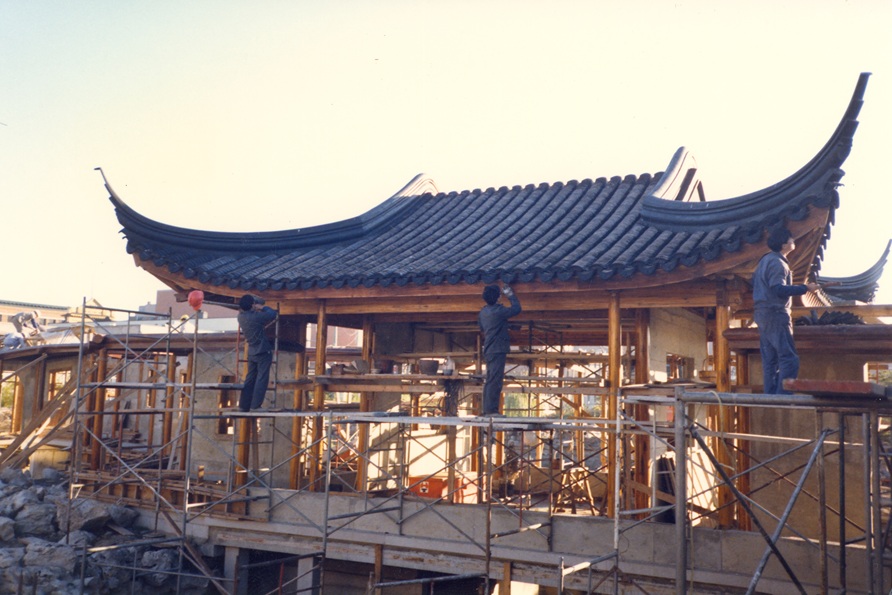
The first full-scale classical Chinese garden built overseas, the Dr. Sun Yat-Sen Classical Chinese Garden was created using materials such as rocks, wood, and tiles imported from China. In addition the courtyards and halls were constructed using a technique called “mortise and tenon” that uses a series of interlocking posts and beams to hold the pieces together without the use of nails.
Local architect Joe Wai and landscape architect Don Vaughan, together with experts from the famous Humble Administrator’s Garden in Suzhou, designed the garden. Executive director Henry Heng Lu says that over 40 years ago, it cost $5 million to build it, and estimates it is worth $500 million today.
“It’s nearly impossible to replicate this whole process anymore, because in terms of diplomacy [at the time], importing foreign materials, the costs of accommodation and flights, and having 52 people living here for 13 months,” he explains. “Today there are fewer and fewer of these people [skilled craftsmen] as well.”
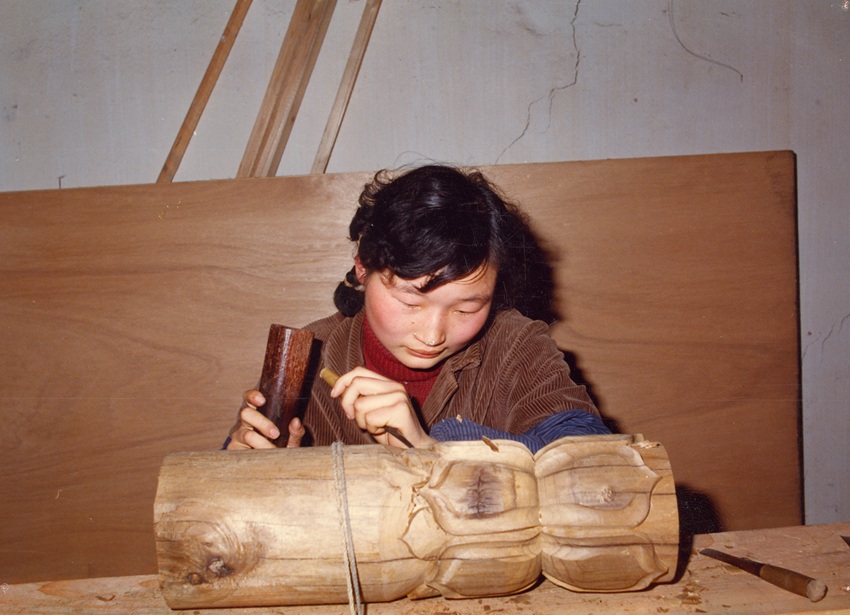
Which is why on this significant milestone, the Dr. Sun Yat-Sen Garden wants to highlight its history and significance in the neighbourhood.
To celebrate, the garden will mark Friday (April 24) with admission back to 1986 prices—$3.00 for adults, $1.50 for children, and $5 for a family. It will be open from 9.30 a.m. to 8 p.m. that Friday, Saturday, and Sunday.
This weekend, there will be an exhibition showing the history of this horticultural treasure, how the garden was built, and why it is named after Dr. Sun Yat-Sen. He led the revolution to overthrow the Qing dynasty, effectively ending dynastic rule in the “Middle Kingdom” in 1911, which is why he is known as the Father of Modern China.
The site was designed to be the garden-home of a scholar, integrating different elements from various Suzhou gardens. These include the wooden windows with different designs, and floral and geometric patterns of the mosaic stone floors, while the plants and trees were locally sourced.
Frank Abbott is the chair of the conservation committee, and has volunteered at the garden since its opening.
“Oh my first visit to the garden, I didn’t have a tour. I thought, this is Chinese stuff. I should have no problem,” says the retired Kwantlen College professor of Canadian history and modern Chinese history.
“But then [on my next visit] I thought, let’s take a tour. And the guy was so good, so great at explaining things. I thought, this would be fun to do, the pleasure of letting people see the garden, and particularly letting them see Chinese culture isn’t this mysterious stuff they’d never understand,” Abbott says.
In particular, the garden helps him explain Chinese philosophy, citing the example of the taihu rocks, which are porous limestone with holes that have a sculptural quality. “It’s yin and yang, hard and soft, the rock is hard, but water can erode it.”
The Dr. Sun Yat-Sen Garden came into existence because of a failed proposition to build an eight-lane highway through Chinatown. Thanks to community activism that galvanized strong opposition from the neighbourhood, the motion was defeated at Vancouver City Hall in 1968.
That led to discussions in the community to build the Chinese Cultural Centre and the garden. It became a huge project, from fundraising to construction, with major contributions from the federal government as well as organizations from the People’s Republic of China.
Forty years on, the biggest concern for Lu, who became executive director two years ago, is to conserve the garden, which he says was solidly built, but with repairs done here and there to maintain it.
“I think the biggest challenge is to find the right people for our conservation and repair projects, because this is such a unique site, and there’s very specific craftsmanship. Some of the contractors or companies that we work with, they either retire, or they move away, or they pass on, or change industry,” he says.
“We’re trying to find companies from China or in Richmond that have a little bit more cultural sensitivity and sensibility,” Lu adds. “And although they may not really be trained specifically in these specific techniques, they can still try to replicate [what we have here].”
There is the other challenge of what is happening outside of the garden, that Abbott describes as “devolving”.
“It’s kind of depressing now because Chinatown is devolving, but unfortunately I think part of it is the competition from Richmond,” he says.
While Chinese businesses like Floata Seafood Restaurant and Bamboo Village have closed, non-Chinese enterprises have opened their doors in the neighbourhood. Uchu Cevicheria & Raw Bar, sandwich shop Say Hey Cafe & Deli, the Michelin-starred Kissa Tanto, and Barbara Restaurant draw foodies to the area.
Despite the gentrification of the neighbourhood, Lu says the garden has daily issues of homelessness, drug addiction, crime, and poverty that have continued to plague the area over the decades. In the mornings, ground staff often have to power-wash human waste, and public safety is an ongoing concern.
“Because of the state of Chinatown, some of these issues we are facing that are, in a way, spill-over from the Downtown Eastside, and that has an impact on us,” he says, noting vandalism and trespassing after hours.
“I would speak for everybody that works here that we’re all custodians of this oasis, and this a little piece of safe haven in the midst of some levels of chaos outside. In a way it kind of highlights the importance of the work we do and how to sustain the operations.”
Nevertheless, the garden offers tai chi and yoga classes that are well attended, and Lu says that the garden offers some meditative respite.
“Outside of my job, one of my favorite things to do in the garden is, on a rainy day, bring a novel and just sit in a corner of the garden under the roof and have some tea that we have for everybody. That’s not something you can easily get. That’s a unique thing to do.”
For more information on the Dr. Sun Yat-Sen Classical Chinese Garden, visit the website. Bernice Chan is a Vancouver freelance writer and former senior reporter at the South China Morning Post. She also co-hosts of the award-winning podcast Eat Drink Asia in Hong Kong. Follow her on X @BernUnitHK. Follow Pancouver on Instagram @PancouverMedia, on X @PancouverMedia, and on Bluesky @pancouver.bsky.social.




