Indian Summer Festival sparked my curiosity in a way few festivals have. If you’re curious about the diversity of our world, it’s one of the cultural festivals in Vancouver you shouldn’t miss.
Every summer weekend in Canada offers celebrations centred on different cultural communities. Indian Summer Festival, which wrapped up last week after an 11-day run, has now reached its 16th year. While many multicultural festivals focus on food and traditional crafts, Indian Summer stands out by creating space for reflection and dialogue. By exploring challenges shared across humanity, it celebrates South Asian voices while resonating far beyond one community. It is the kind of cultural practice Canadian society needs.
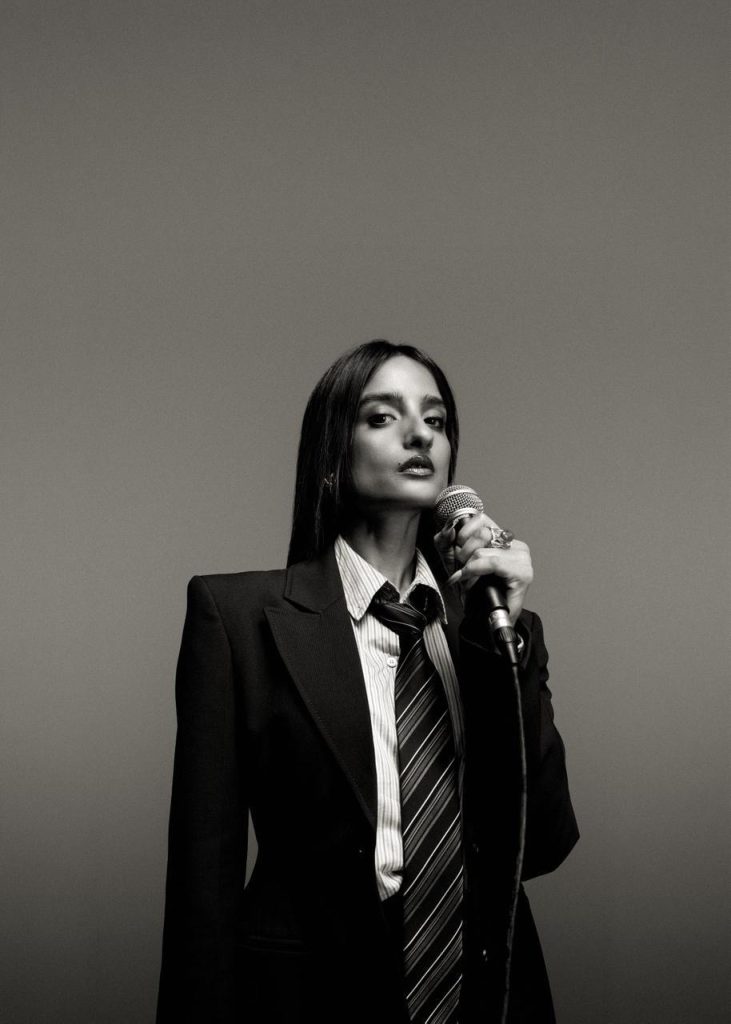
This year, the festival welcomed Punjabi independent artist Rashmeet Kaur from Delhi for a July 11 performance at the Vancouver Playhouse. Her concert was nothing short of captivating. From the moment she stepped onto the stage, she commanded the audience’s attention. For days afterward, I found myself replaying her music on streaming platforms. Still, those recordings only felt like placeholders until the next opportunity to experience her live.
She held the audience completely in her grasp. Her voice and sense of rhythm filled every corner of the theatre. Even though I understood none of the lyrics, I couldn’t take my eyes off her. Each time she encouraged the audience with, “Sing it!”, I felt a little guilty that I couldn’t join in.
Rashmeet builds community through music
Now recognized as one of South Asia’s rising pop artists, Rashmeet grew up studying Punjabi devotional music and Indian classical music. Her debut album was a Gurbani record sung entirely in Punjabi. Gurbani refers to the sacred writings and teachings of Sikh Gurus, passed down through recitation and song as a way of sharing spiritual wisdom.
Nearly four years later, she returned with her second album, KAURA (Aura of Kaur), bringing her deep musical roots into the mainstream through her first pop record. What surprised me even more was the scale of the project. The album brought together 35 musicians and producers, which explains why it took almost four years to complete. Every track was co-written with songwriters from different places and produced by a different producer, allowing each song to retain its own distinct perspective.
Even within today’s global music industry, this kind of creative process remains uncommon. Collaboration means making room for others within an intensely personal artistic practice. It requires vulnerability, openness, and a willingness to embrace uncertainty and constant change. For an independent artist, it becomes far more than simply making an album.
“This is a journey of moving forward with community.”
That is how Rashmeet described the project in the interview below.
Each concert is unique
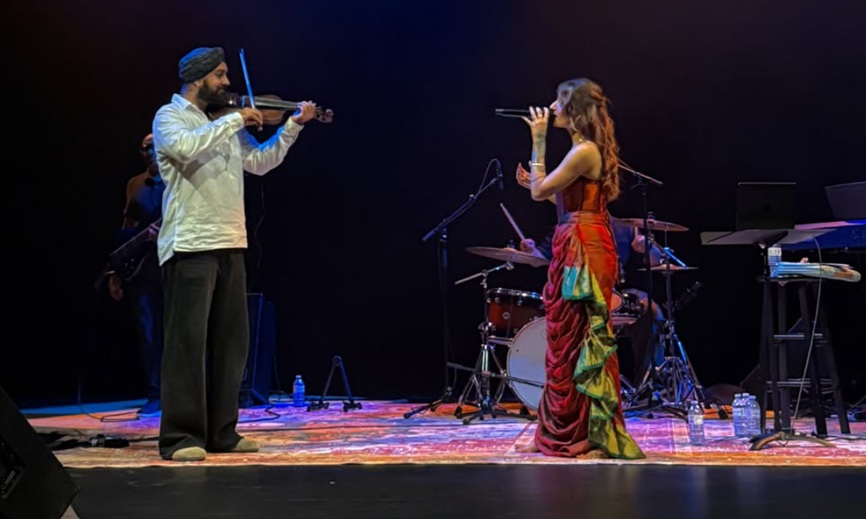
That same spirit carried through to the final stop of her North American tour. She invited Raaginder, a Punjabi-American violinist from San Francisco, to join her on stage and even premiered an unreleased collaboration with Canadian Punjabi producer Raman Bains. Throughout the tour, she performed with different local musicians in each city.
Embracing change has become one of Rashmeet’s greatest strengths as a live performer. Every concert becomes a unique experience. It reminded me of how festival artistic director Am Johal described the concept of raga: a framework that creates space for improvisation.
This year’s Indian Summer Festival adopted the theme “Ragas for a Ruptured World”. In an era marked by geopolitical conflict and growing division, the festival seeks to rebuild genuine human connection. In the program guide, Johal offered an accessible explanation for audiences unfamiliar with Indian classical music:
“In Indian classical music, a raga is more than a musical form. It is a framework for improvisation, a way of holding structure and freedom together, a practice of listening deeply and responding to the moment. We offer this festival as a series of ragas”
Another aspect that stayed with me was the festival’s commitment to creating conversations across generations.
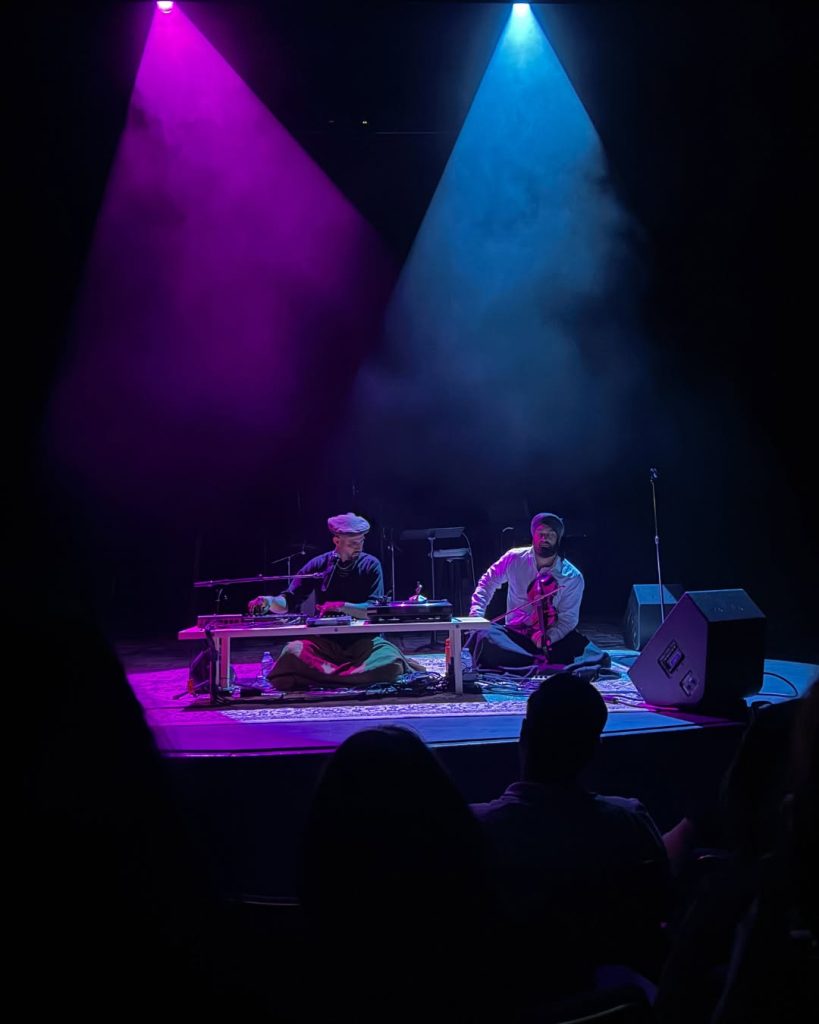
DJ Asad Khan weaves stories with music
Rashmeet’s opening act was Vancouver-based Punjabi DJ Asad Khan. Born in Pakistan, he immigrated to Canada with his family at the age of thirteen and grew up surrounded by Sufi music and Punjabi folk traditions.
Rather than standing behind a DJ booth, he sat cross-legged on the floor and invited the audience into a deeply personal listening experience. Instead of simply remixing older songs, Khan wove together stories from his own life, offering context that allowed listeners to understand the emotions and cultural history behind the music. The performance remained gentle throughout, yet never once lost its ability to hold the room.
Looking back, the evening brought together two artists whose journeys reflected different sides of the Punjabi experience. One came from India. The other built his life in Canada. Both remain deeply rooted in Punjabi culture while embracing musical influences from around the world, creating a compelling portrait of contemporary Punjabi music.
As someone who knew very little about South Asian culture, they opened a door I hadn’t realized was there, making Punjabi music feel personal, immediate, and profoundly welcoming.
Follow Pancouver on Instagram @PancouverMedia, on X @PancouverMedia, and on Bluesky @pancouver.bsky.social.