

About 14 years ago, Music on Main artistic director David Pay became enraptured with “promenade theatre”. In these productions, audience members stand and walk through a venue, rather than sit. They take in the action all around them.
“I really fell in love with the experience of being in my body as I’m experiencing live performance,” Pay recalls in a phone interview with Pancouver.
This week, Music on Main will share one of these immersive theatrical experiences with Vancouverites in the world premiere of The Tempest Project. Running from Wednesday (July 17) to Monday (July 22), it’s a roving music-filled journey through the Vancouver Playhouse, exposing secret places inside the 62-year-old venue.
Pay, the director, says that when the audience arrives at the Playhouse, they will be sorted into six different groups of up to 20 members. Guides will shepherd them through the building, where they will hear sounds and music from different spaces. Eight outstanding Vancouver musicians will perform, drawing on diverse backgrounds to create a truly intercultural listening and theatrical experience.
“I feel like there are all sorts of philosophical, aesthetic, and artistic things happening in The Tempest Project,” Pay says. “But I think at its core, it’s just a really fun and beautiful way to experience the theatre and experience this music.”
The protagonist in William Shakespeare’s The Tempest is Prospero, who employs sorcery to control other characters. However, Music on Main’s adaptation is not filled with magic tricks, according to Pay. Instead, sound designer Nancy Tam inserts audio elements that invite the audience to question what they’ve experienced.
“The more each audience member feels engaged and looks for things and listens for things, the more they’ll hear,” Pay says.

The Tempest Project team
A decade ago, Music on Main presented the first large immersive musical event conceived by Pay. The Orpheus Project featured some of Vancouver’s most accomplished musicians at the Cultch, including Veda Hille, Mark Takeshi McGregor, and Alfredo Santa Ana. Pay says that he’s been wanting to create another immersive project ever since.
For The Tempest Project, Santa Ana is a composer and he and Pay are among the non-musician performers.
“It’s a blending together of music performance and immersive theatre and installation,” Pay declares. “A lot of the techniques that we use for this come from different kinds of theatre.”
Shakespeare wrote The Tempest more than 400 years ago during the reign of King James I. The Bard never could have imagined that his final manuscript as a sole playwright would be adapted by a diverse group of musicians in the New World with ancestral roots in countries from across the globe.

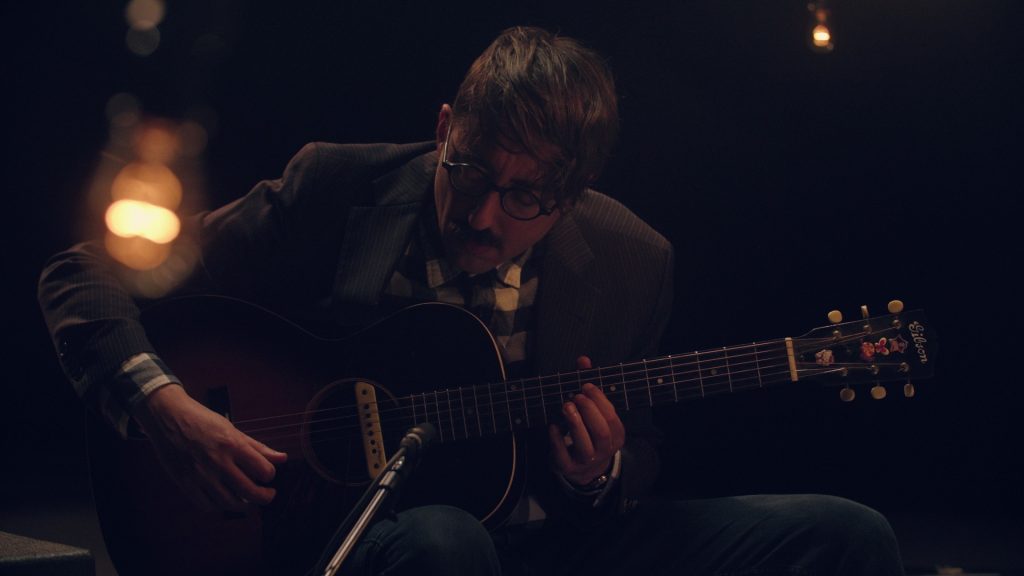
The team goes by the name of The Tempest Project Company. It features Aram Bajakian (guitar), Paolo Bortolussi (flute), Julia Chien (percussion), Dailin Hsieh (zheng), Rachel Kiwo Iwaasa (piano), Saina Khaledi (santour), Jonathan Lo (cello), and Julia Ulehla (vocals).
In addition, Music on Main commissioned pieces from American composer Gabriel Kahane. The Tempest Project Company also lists Tam and Khaledi as composers.
“The reasons I chose these musicians, first and foremost, is that each one of them is astonishing,” Pay insists. “They are like magicians themselves. They all play absolutely extraordinarily, and are renowned in so many different ways. But they come from so many different backgrounds—musical backgrounds, cultural backgrounds—and different kinds of experiences. To me, that really reflects Vancouver.”
Interculturalism drives the music
Meanwhile, Shayna Goldberg is producer; Alexis Douglas is production manager; and Jessica Bournival is stage manager.
Even though all the musicians are highly capable at performing “western art” pieces of music, Pay didn’t want this ensemble to go down that road. Rather, he wanted the musicians to “learn from each other and create something that is uniquely about this ensemble and this place and this time”.
“Saina Khaledi gave everybody in the ensemble a workshop on Persian music,” Pay says. “Dailin Hsieh invited a musician to come in and give a workshop on Chinese music.”
An Indigenous consultant also offered a one-day presentation, sharing insights on allyship and history. In addition, he showed the team exercises that are designed to embody different experiences and feelings.
Pay believes that all of this had a positive impact on the production. He notes that star pianist Rachel Kiwo Iwaasa recently revealed that she has become stronger at improvisation as a result of being part of such an intercultural group.
This leads to an obvious question: what did Pay learn about interculturalism from embarking on The Tempest Project? He replies that interculturalism is most definitely not about integrating other cultures into the dominant culture.
“For me, good and meaningful intercultural work isn’t a one-way street,” Pay says. “It isn’t a two-way street. We’re actually all in the yard together. Let’s tend the garden.”
Music on Main will present The Tempest Project in collaboration with The Tempest Project Company from July 17 to 22 at the Vancouver Playhouse. For tickets and showtimes, visit the Music on Main website. Follow Pancouver on X (formerly Twitter) @PancouverMedia and on Instagram @PancouverMedia.




