

Classical Indian musician and singer Akhil Jobanputra believes that any art form is inherently spiritual. He tells Pancouver that it invariably involves exploring one’s inner self, and then externalizing what is within.
According to Jobanputra, president of the Indian Classical Music Society of Vancouver, artists create feedback loops with the world around them.
“As an Indian classical vocalist myself, we heavily rely on yogic practices to still the mind and open up the body as a vehicle for creativity,” Jobanputra says. “There’s a lot of intersections with various spiritual traditions. And some spiritual traditions have had historical associations with certain music and dance traditions.”
On Saturday (September 21), the Indian Classical Music Society of Vancouver will host an evening of music and dance at the Unitarian Church (949 West 49th Avenue). The society is calling the event Sahabhāva, which is a Sanskrit word for coexistence, community, or coming together.
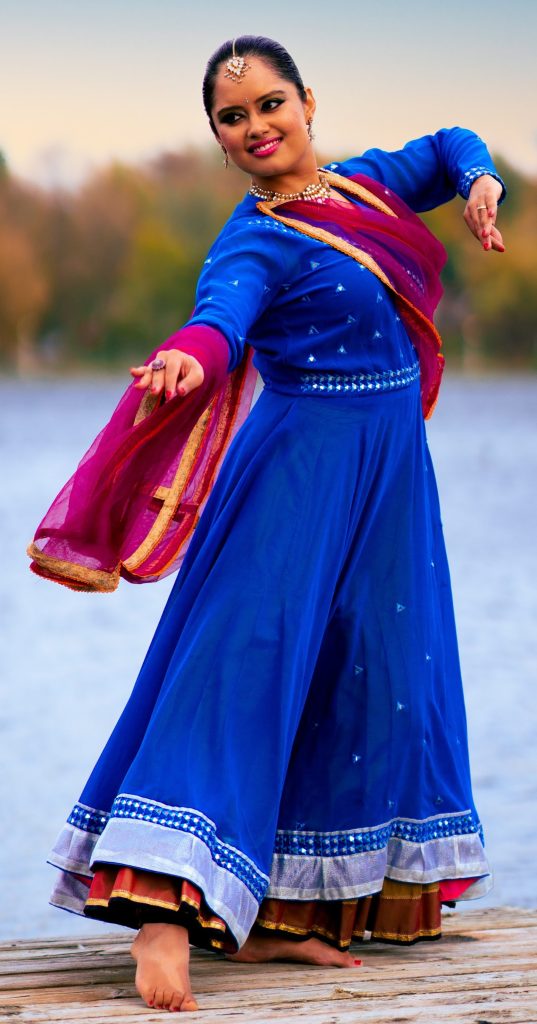
Kathak dancer Palak Dhiman, Hindustani vocalist Shoumi Roy, Carnatic vocalist Sharvari Somayaji, and sarod exponent Dwaipayan Ray will perform for the audience. Shriram Rajagopalan on violin and Jobanputra on harmonium will provide melodic support, while Hriday Buddhdev on tabla and Keerthy Raghavan on mridangam will offer percussive support.
Jobanputra developed a love of Indian classical music at a very young age. His grandparents often played devotional and Indian classical music at home, which inspired him as a child.
“Even though I was born and raised here, it didn’t feel foreign at all,” Jobanputra says. “Then, I started going to the temple as a young kid and at the temple, everyone would be singing songs together. I always wanted to participate.”
Jobanputra expands accessibility
He embraces the Indian classical music traditions of Khayal and Dhrupad, thanks to mentorship from Pandit Dr. Arun Dravid and Pandit Arijit Mahalanabis. According to Jobanputra, both these forms rely heavily on improvisation and spontaneity.
“Of course, we work within certain melodic and rhythmic frameworks,” Jobanputra emphasizes.
Jobanputra’s family ancestry goes back to the western Indian state of Gujarat. His grandparents and parents were all born in Africa as a result of his ancestors migrating there when India was part of the British Empire. The family fled Uganda and moved to Canada after Ugandan dictator Idi Amin ordered all “Asians” (i.e., people of Indian origin) to leave the country in 1972.
“Actually, my grandfather was Idi Amin’s next-door neighbour,” Jobanputra reveals. “My family were some of the first to leave Uganda and then they came here.”
Many of the Ugandan exiles to Canada were Ismaili Muslims, who view the Aga Khan—Prince Karim Al-Husseini—as their spiritual leader. Jobanputra, on the other hand, was raised as a Hindu and sang at the former Vishva Hindu Parishad Temple in Burnaby Heights.
No one in his family was heavily involved in musical traditions, but the sounds of Ustad Asada Ali Khan and other classical Indian musicians filled his home. Jobanputra enrolled in vocal lessons at the Pandit Jasraj School of Music Foundation and started learning the tabla elsewhere.
At the age of 12, Jobanputra decided to help other local classical Indian musicians by designing marketing materials and creating a Facebook page to boost their visibility.
“I realized that I had something different that I wanted to bring to the table in terms of curation and expanding the accessibility to these artforms.”

Supporting thoughtful performances
One thing led to another, and in 2017, he and a few friends formally incorporated the Indian Classical Music Society as a nonprofit society. Then, they started hosting their own programs.
The COVID-19 pandemic, however, put a stop to that for a while. But once the restrictions were lifted, the society decided to reinstate Sahabhāva as an annual live event.
“Our intention is the same,” Jobanputra says. “We want to support very thoughtful and creative local Indian classical music and dance artists.
“We are very blessed to have some really, really wonderful artists here in the community,’ he adds. “That number is always growing because there are so many new folks coming in from India, from Bangladesh, and from Pakistan—and they’re bringing their art with them.”
The Indian Classical Music Society of Vancouver (ICMSV) will present Sahabhāva: A Community Showcase of Indian Classical Music & Dance at 6 p.m. on Saturday (September 21) at the Unitarian Church (949 West 49th Avenue). For tickets and more information, visit the website.
Follow Pancouver on X (formerly Twitter) @PancouverMedia and on Instagram @PancouverMedia.




