
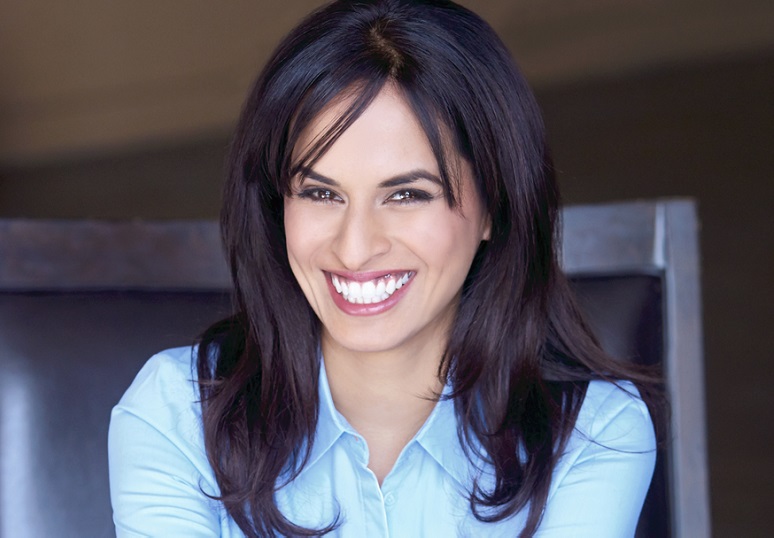
Playwright and actor Sangeeta Wylie is in high spirits as she sits down in a Vancouver coffee shop to discuss her upcoming book launch. Talonbooks recently published we the same, her first full-length play. It tells the story of a Vietnamese mother named Hà fleeing her homeland by boat with her six children, who all become separated from their father.
Meanwhile, another central character is Mai. She appears in the play as a four-year-old child and as Hà’s grown-up daughter who learns in adulthood about their astonishing journey. Along the way, the family survived typhoons, pirate attacks, and intense hunger.
The play was inspired by a family’s true story. However, Wylie created different characters and added various elements to the story based on her research and imagination.
“I was in such awe and admiration of this woman to have survived in those conditions with six children under the age of eight,” Wylie, who’s also a dentist, tells Pancouver. “I know the family—so many of the people—and the way that they have survived has been with a lot of grace and kindness and warmth.”
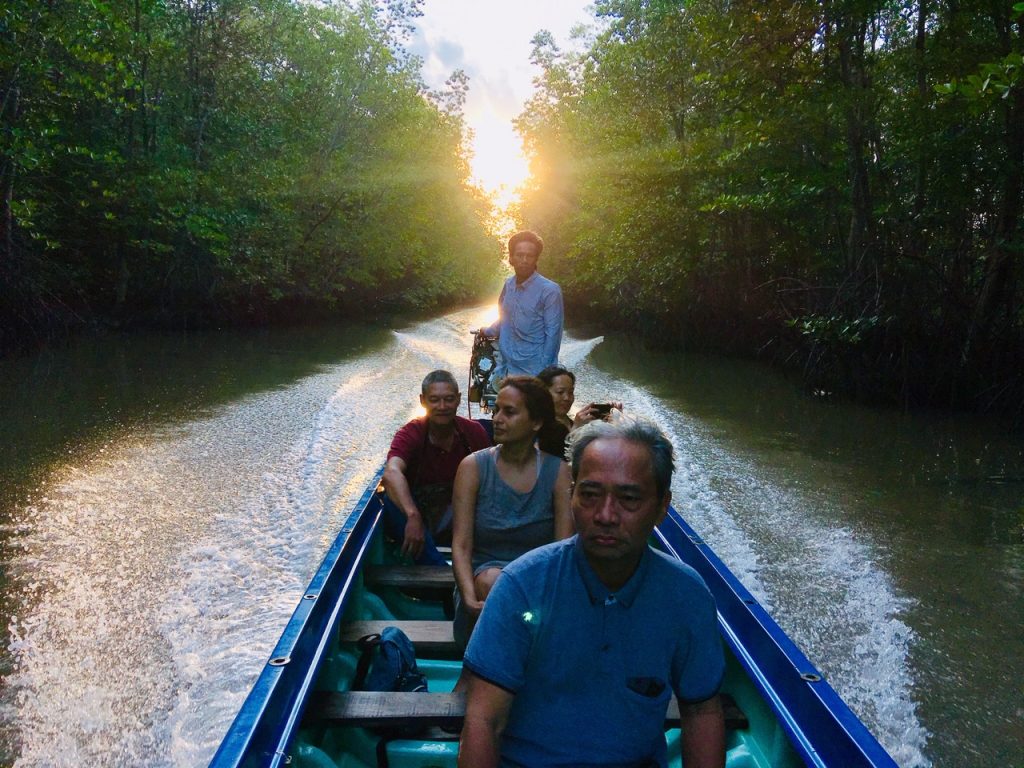
The playwright travelled to Vietnam and Malaysia to trace the family’s journey. And this first trip to Vietnam changed her.
“Despite the overwhelming hardship this beautiful country has experienced at the hands of colonization, wars, sanctions, political unrest, and the lasting effects of Agent Orange, I was struck by how kind and generous the people were,” Wylie writes in her book. “I experienced a bare authenticity unlike anything I had seen in other places I’d visited. A simplicity in living that lacked pretension. It made me feel humble at once and taught me a very important lesson: to allow myself to surrender.”

Title of we the same emerges from dialogue
Wylie also spent time in Vietnam with the nonprofit group Planet Smile for Kids Society, which provides dental care. In addition, it educates dental workers in other countries on treating children with cleft lip and palate and other craniofacial anomalies.
She also returned to Malaysia to conduct more research. Wylie originally used the title “Boat People” as a placeholder before settling on we the same.
“The mother and her daughter are speaking about a specific incident on the boat,” Wylie explains. “And her daughter says to her, ‘How could you let us be around [those people]? There was a drug addict on the boat. We were children.’ ”
Hà responds by telling her daughter: “we the same.” To Wylie, this simple phrase eloquently captures the situation at sea.
“We are defined by who we are in life, whether that’s as a mother or by what we do or by who’s attached to us or whatever,” Wylie says. “It all gets erased when you’re on a boat as a refugee.”
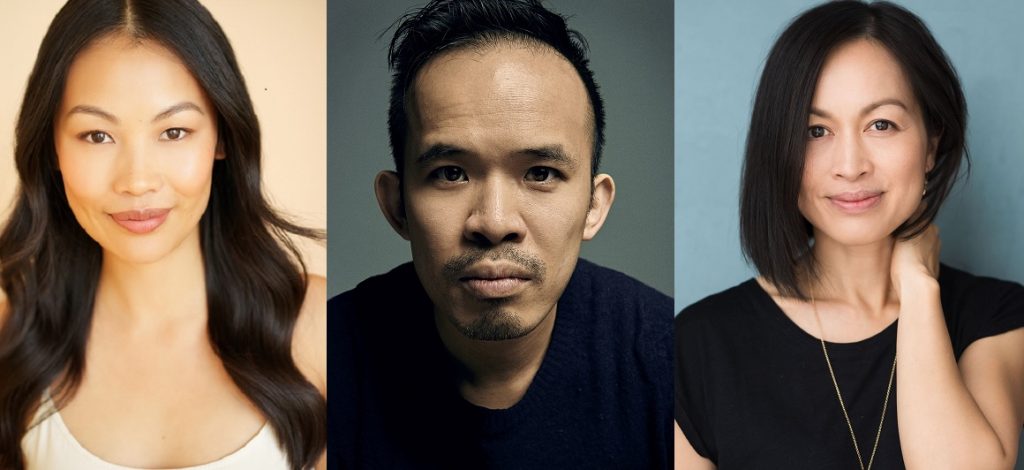
Vancouver TAIWANfest will co-present the book launch of we the same at noon on September 2 in the Annex (823 Seymour Street). Talonbooks, Pacific Canada Heritage Centre – Museum of Migration (PCHC – MoM) Society, and Lac Viet Radio-Lac Viet Public Education Society are co-presenting the event, which includes readings by Elizabeth Thai, Chris Lam, and Nhi Do. They will also join a panel discussion on the refugee experience with human-rights advocate Hamoudi Saleh Baratta. Plus, there will be some Vietnamese music.
“Vi An Diep is a self-trained đàn tranh musician and she composed original music for the play,” Wylie says. “She’ll be playing some of that—and it is ethereal!”
Channeling we the same
Wylie is particularly pleased by the book’s front-cover illustration. It shows a crowded boat in the water and a dragon in the background, along with a shadowy figure swimming beneath the surface. The dragon refers directly to a scene in the play.
“I think the artist was incredible,” Wylie tells Pancouver. “I am really proud of this piece after a really thorough four-and-a-half years from first page to stage.”
Wylie’s play, we the same, premiered at the Cultch in 2021, earning six Jessie Richardson Award nominations and winning two. Wylie was shortlisted for the Playwrights Guild of Canada’s John Palmer Award. Her dramaturg, Rachel Ditor, has since included we the same in her coursework as a University of Victoria sessional instructor.
“I feel it needs to be read more than seen, in some ways,” Wylie says, “because I feel the text is rich and able to allow you to have your own imagination for what that is.”.
During the writing process, she sometimes felt like she was channeling this story.
“When I’m in the ‘zone’, everything around me seems to be a sign—seems to be telling me something about the play,” Wylie recalls. “I would almost describe it as the veil was lifted and you could actually see things clearly everywhere… I remember just needing to know certain things and they would appear.”
As an actor, Wylie has always enjoyed digging into the motivations of her characters. She says that she loves going down rabbit holes as part of the research process. This also helped in developing characters in we the same.
“They start to write themselves as long as you can understand,” the playwright notes. “If you can see them, you can hear them.”
High praise from talented directors
Wylie would love to see her play eventually turned into a full-scale Broadway production. People have told her that it feels very cinematic.
“When I started to write this, I was inspired by the interviews I did, and actually wrote images for the things that really stood out in my imagination,” she reveals. “I drew the scenes from the images.”
She’s thrilled that Canadian film director Deepa Mehta wrote a glowing forward to her book, describing we the same as “visceral and vital”. Moreover, prominent Vancouver theatre artists Tetsuro Shigematsu and Marcus Youssef offered lavish praise in back-cover blurbs.
“Sangeeta Wylie’s extraordinary we the same is much more than the harrowing chronicle of one family’s courageous struggle to leave war-ravaged Viet Nam,” Youssef wrote. “It is a meditation on memory, legacy, and the liberatory possibilities available to all of us, if and when we have the courage to make space for stories like these to be told.”

When we the same premiered, Wylie initiated nine community partnerships to promote public engagement. She also stipulated in her contract that there had to be an Asian assistant director mentorship. The Wuchien Michael Than Foundation provided the funds.
Furthermore, she devised the idea of holding roundtable discussions. Panelists included Baratta, who’s a former Syrian refugee, and staff at the settlement agency MOSIAC.
“We believe in the power of honest and open collaboration, which I continue to do in my healthcare work,” Wylie says. “We are more than the sum of the parts when we come together in an honest way. And if we allow an environment to be supportive, there’s no limit to what we can do.”
“Mother Earth” by Vi An Diep.
Event details
TAIWANfest Vancouver will co-present Sangeeta Wylie’s launch of her book, we the same, at noon on September 2 at the Annex (823 Seymour Street). Talonbooks, Pacific Canada Heritage Centre – Museum of Migration (PCHC – MoM) Society, and Lac Viet Radio-Lac Viet Public Education Society are co-presenting the event. It includes music by Vi An Diep, readings by Elizabeth Thai, Chris Lam, and Nhi Do, and a panel discussion on refugees’ experiences. For tickets, visit the TAIWANfest Vancouver website.
Follow Pancouver on X @PancouverMedia and on Instagram @PancouverMedia.




