

Many Canadians would be hard-pressed to define the differences between multiculturalism, interculturalism, and transculturalism. But they each have important distinctions. And appreciating the nuances of transcultural perspectives helps contextualize the 2025 PuSh International Performing Arts Festival. It runs from January 23 to February 9 in Vancouver.
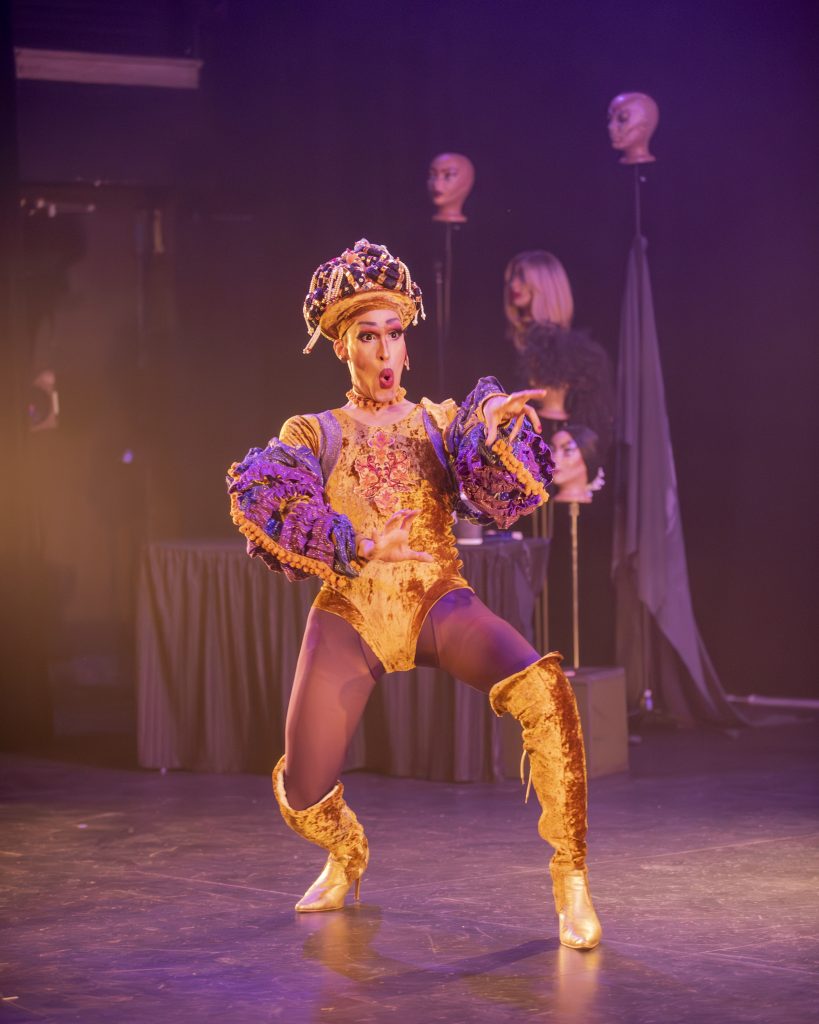
In a phone interview with Pancouver, artistic director Gabrielle Martin cites Bijuriya as an example of a show featuring a transcultural artist.
“We have a lot of that here from Gabriel Dharmoo, who has used a form of drag in this performance and also talks about a lot of intersectionality,” Martin says. “Not only of his composer identity, his drag identity, and his Indian identity, but his francophone Canadian identity.”
Theatrical hybridity like this would have been unimaginable 50 years ago in Vancouver. The PuSh festival, Indian Summer Festival, and Music on Main will co-present Bijuriya, which brings together pop tunes, experimental soundscapes, Bollywood soundtracks, comedy, and socio-political commentary.
Martin also points to Montreal-based choreographer, dancer, and filmmaker Châu Kim-Sanh as another transcultural artist at the festival. In re-creating the mood of Saigon in Bleu Néon, Châu dances in the squat position. Moreover, bathed in fluorescent lighting, she raps to Vietnamese pop songs.
“She has consciously engaged in it in a way to reclaim her culture and her voice,” Martin explains.
Saigon is now called Ho Chi Minh City. However, many residents continue to use the old name, as does Châu, who was born in France.
Making transcultural connections
Multiculturalism recognizes the existence of many distinct cultural groups in society while acknowledging that some deserve special protections to address discrimination, oppression, and past exclusion. Interculturalism, on the other hand, promotes dialogue and cultural engagement between different cultural or ethnic groups.
Transculturalism is more complex and nuanced. Defined by Cuban scholar Fernando Oriz in 1940, it speaks to cultural convergence and exchange. Transculturalism breaks down boundaries associated with multiculturalism and nation states in pursuit of shared interests and common values across cultures and borders.
Oxford Reference defines transcultural in this way: “The movement of ideas, influences, practices, and beliefs between cultures and the fusions that result when the ideas, influences, practices, and beliefs of different cultures come together in a specific place, text, or contact zone.”
Furthermore, according to Oxford Reference, this “movement of cultures is not always reciprocal or voluntary—indeed, a large majority of what is deemed transcultural is the product of colonization, diaspora of different types, and exile”.
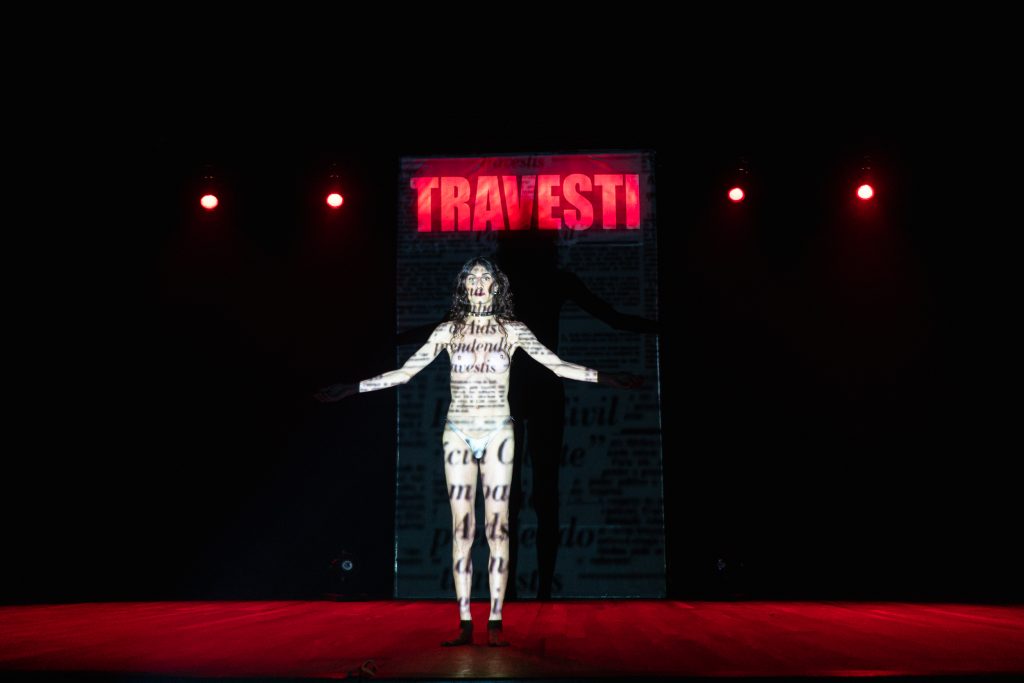
As artistic director of the PuSh festival, Martin is eager to centre transcultural perspectives linked to the Global South. In 2025, several shows will reflect this. Transpofagic Manifesto, for example, is Brazilian human-rights activist Renata Carvalho’s bold reclamation of the term travesti.
According to the PuSh festival website, the self-described transpologist (trans anthropologist) “invites the public to behold her, stripped of gender-enforcing constraints, and engage in a conversation on how harmful perceptions of trans people are constructed and reproduced”.
“That audience engagement piece is really important for her work,” Martin says.
The PuSh festival is looking for a local trans Brazilian artist to help with interpretation. The local person would gain an opportunity to work alongside an international artist who is subverting the hypersexualization of trans bodies.

Artists respond to histories of subjugation
Transpofagic Manifesto is not the only PuSh show that takes on discrimination against trans people. Neurodivergent U.K. artist Ray Young’s OUT brazenly challenges homophobia and transphobia through an intimate duet. Drawing from dancehall, voguing, and Black liberation movements, it “smashes through our violent colonial histories to reimagine, reclaim, and celebrate our delicious queer future”.
In the Global South, transculturalism can manifest itself in “De-Westernization”. Sometimes it’s in response to earlier compromises that were necessary to survive as subjugated cultures.
“One only needs to think of the Chinese food and cuisine cultures that today sit side by side with African ones in cities such as Lagos, Nairobi, and Johannesburg,” wrote Hangwei Li and Bob Wekesa in the Journal of Transcultural Communication in 2023. “Indeed, the term trans-regionalism, increasingly popular in the social sciences speaks to the emergent fusions of cultures that do not necessarily emanate from the West in the globalized world we live in today.”
Meanwhile, another intriguing show from the Global South is Géometrie de vies (Geometry of Lives) by the Kinshasa-based Collectif d’Art-d’Art. Co-directed by Michael Disanka and Christiana Tabaro, it revolves around a boy and girl fleeing their war-torn region. Through narrative poetry, theatre, song, and dance, Géometrie de vies addresses their country’s troubled history and colonial past.
“As an international festival, I want [PuSh] to be truly international and really bring in the stories that we don’t get to hear that often,” Martin says. “I think it’s very rare in Vancouver that we get to hear perspectives from young theatre artists from the Democratic Republic of Congo.”
Canadian artist reflects on imperialism
She points out that there are many “prohibitive elements” in connection with programming from the Global South. For example, it’s not easy to secure visas. Artists from the Democratic Republic of Congo must wait more than a year. Then there are issues relating to flight routes from countries in the Global South.
“With their passport, they can’t fly through many countries,” Martin states.
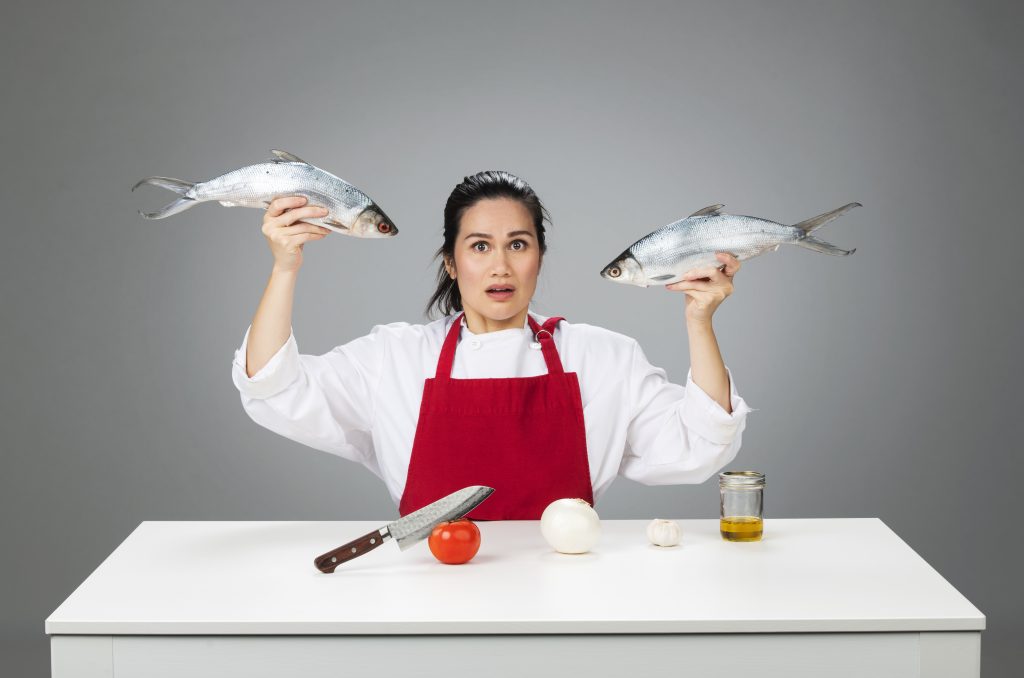
Yet it’s also possible to offer reflections on the Global South through artists in Canada. In rice & beans theatre’s Lasa Ng Imperyo (A Taste of Empire), Filipina Canadian artist Carmela Sison re-imagines Jovanni Sy’s play A Taste of Empire. Sison plays Sous-Chef Mela, who delivers a live cooking demonstration in Tagalog with English surtitles.
“We’re looking at the history of imperialism on the global food market—a subject matter that requires a certain reckoning,” Martin says. “That’s met with a really playful form, and staging with humour.”
Meanwhile, Martin notes that Petrikor Danse’s Habitat is inspired by performer Bettina Szabo’s history of migration from Uruguay. It relies on the metaphor of a hermit crab. And Chimerik 似不像 co-founders Sammy Chien and Caroline MacCaull will perform Inner Sublimity, which bridges Eastern and Western religious practices while challenging colonial narratives.
As the interview draws to a close, Martin describes herself as a curious person. She says that when she enters a theatre, she wants to experience something unlike anything she has encountered before. At the 2025 festival, she feels that L’eau du bain’s visual effects and binaural sound in De Glace (From Ice) and Theatre Conspiracy/Pandemic Theatre’s vibrotactile technology in SWIM are two such examples.
In total, the PuSh festival is offering 20 original performance-based productions for its 20th anniversary year.
“I love the unknown,” Martin adds. “And I think that’s something PuSh offers.”
For tickets and more information about the PuSh International Performing Arts Festival, visit its website. Follow Pancouver on X @PancouverMedia and on Instagram @PancouverMedia. Follow Charlie Smith on Bluesky @charliesmithvcr.bsky.social.




