The MENA Film Festival will present 43 films produced or co-produced in 27 countries. Organizers will launch this year’s event with mezze (appetizers), Persian tea, and nabat at 3 p.m. on January 25 at the VIFF Centre. That will be followed by the opening ceremony with the violin and piano duo of Ava Shadmani and Kiandokht Nouri.
MENA is an acronym for the Middle East North Africa region, where many films are centred. The first to be screened will be Afghan Canadian Alexander Farah’s short film, “One Day This Kid”, about an Afghan Canadian coming to terms with his identity. It earned award nominations at last year’s Toronto International Film Festival and Vancouver International Film Festival.
At 6:30 p.m. on Saturday (January 25) at the Vancity Theatre, the festival will screen its first feature. Berlin director Aslı Özarslan’s Elbow (Ellbogen) revolves around an 18-year-old named Hazal, who must leave her home in Germany on short notice. She flees to Türkiye, which is completely unfamiliar to her. Since Elbow’s release last year, Özarslan has captured four awards on the festival circuit. She also received a nomination for Best First Feature at the prestigious Berlin International Film Festival.
Özarslan’s feature will be followed by a bundle of eight short films under the title of Aspirations, beginning at 8:45 p.m. Among them are two Canadian films: Niya Ahmed Abdullahi’s “Nalashi” in Harari and English, and Hassib Hani’s “Ayam Zaman (The Old Days)” in English and Arabic.
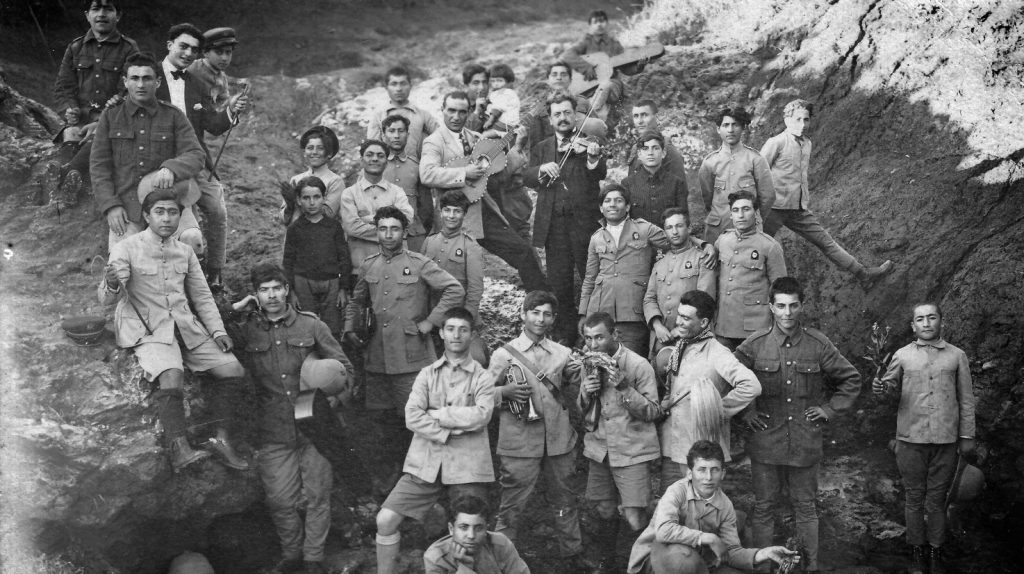
On Sunday (January 26), the MENA Film Festival will screen two more feature films. Aramazt Kalayjian and Garegin Papoyan made the documentary Tezeta about 40 orphans who survived the Armenian genocide.
MENA fest demonstrates power of music
Nearly a decade later, Ethiopian emperor and music lover Haile Selassie invited these musically minded orphans to his country. They played in a band, composed Ethiopia’s national anthem, and laid the foundation for the country’s innovative jazz fusion scene.
“Told through first-hand accounts, Tezeta reveals a uniquely Ethiopian musical story that was once lost to memory,” the MENA Film Festival states. “The documentary features interviews with important Ethiopian jazz musicians, who speak about the historical significance of Armenians during the music’s formative years.”
Tezeta will be screened at 1:45 p.m. in the Vancity Theatre, followed by a free panel discussion at 3:30 p.m.
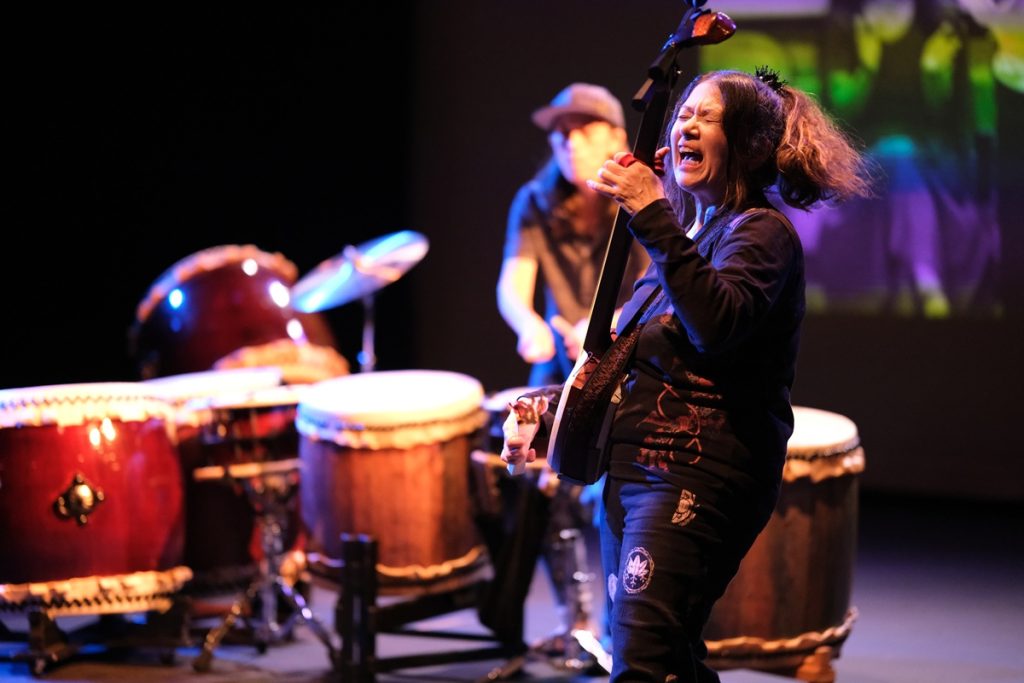
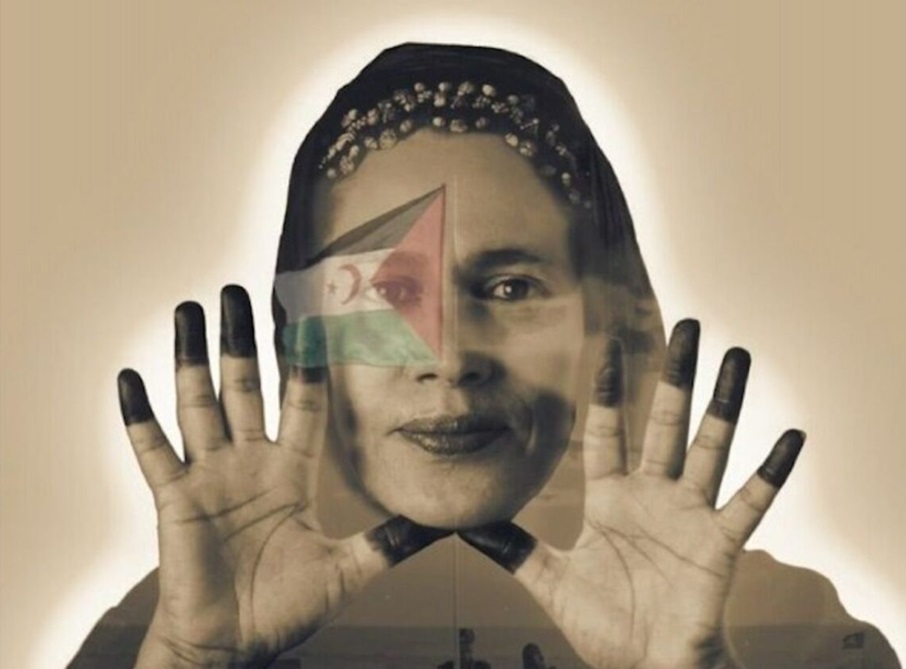
The second Sunday feature is another documentary, HAIYU – Rebel Singer Mariem Hassan and the Struggle for a Free Western Sahara. It screens at 5 p.m. in the Vancity Theatre. Anna Klara Ahren, Brahim B. Ali, Mohamedsalem Uered, and Alex Veitch’s film shares the story of Mariem Hassan, whose songs inspired those seeking independence for Western Sahara. The former Spanish colony is mostly under the control of Morocco. This is despite the United Nations’ insistence that Sahrawi people have a right to self-determination.
On the same day, the MENA Film Festival will present two bundles of short films in the VIFF Centre’s Studio Theatre. The first, called Trances, begins at 4:30 p.m. Strange Realities is scheduled for 7 p.m.
Then on Tuesday (January 28), the festival will show three features. Tunisian filmmaker Nada Mezni Hafaiedh’s intersex love story, Take My Breath, screens at 6 p.m. in the Vancity Theatre, At 6:15 p.m. in the Studio Theatre, the festival will present Sara Ben-Saud’s Canadian documentary À toi Jeddi. It’s about the director’s search for her paternal origins after discovering her Libyan grandfather’s memoir.

Festival offers workshops to filmmakers
The third feature at 8 p.m. Tuesday in the Studio Theatre is Kurdish-Belgian director Nevine Gerits’s The Pasha, My Mother and I. In this film, she explores how to free oneself from one’s heritage while still making space for future generations to build their identity.
The MENA Film Festival will screen another feature at 6:30 p.m. in the Vancity Theatre on Wednesday (January 29). Mohamed Slieman Labat’s experimental feature DESERT PHOSfate about nomadic Sahrawi people creating family gardens in refugee camps.
The festival’s final feature, No Other Land, is a documentary about a Palestinian activist, Basel Adra. He is filming his community’s destruction by Israel and forms an alliance with an Israeli journalist. It will be shown at 6:30 p.m. on Thursday (January 30) in the Vancity Theatre.
The MENA Film Festival also offers educational programs. The first is the Industry Rendezvous – Film Funding Workshop, which has a sliding-scale price of $20 to $30. Attendees can pitch their film ideas to top regional and national funders, including Telefilm Canada, Canada Media Fund, and Storyhive. In addition, speakers include Somali Canadian community organizer and filmmaker Ilhan Abdullah, Venezuelan Canadian filmmaker and producer Javier Badillo, and Filipino Canadian documentary filmmaker Joelle Cabalu. This event will take place from 1 to 5 p.m. on January 27 at 700-825 Pacific Street. It’s in the new city-owned Downtown South cultural hub operated by 221A Artist Society.
Then at 4 p.m. on January 30 in the VIFF Centre’s Vancity Theatre, Vancouver-based Chilean-Palestinian film producer Ana Belén Asfura will lead the 2025 MENA Film Festival Marketing and Distribution Workshop. Fees range from $15 to $25 for the two-hour event, which is designed for emerging and mid-career filmmakers, producers, and others hoping to promote films to wider audiences.
Event details
For a full list of films, panel discussions and workshops, visit the MENA Film Festival website. The festival will also stream many films until February 6. Follow Pancouver on X @PancouverMedia and Bluesky @pancouver.bsky.social, as well as on Instagram @PancouverMedia. Follow Charlie Smith on Bluesky @charliesmithvcr.bsky.social.