
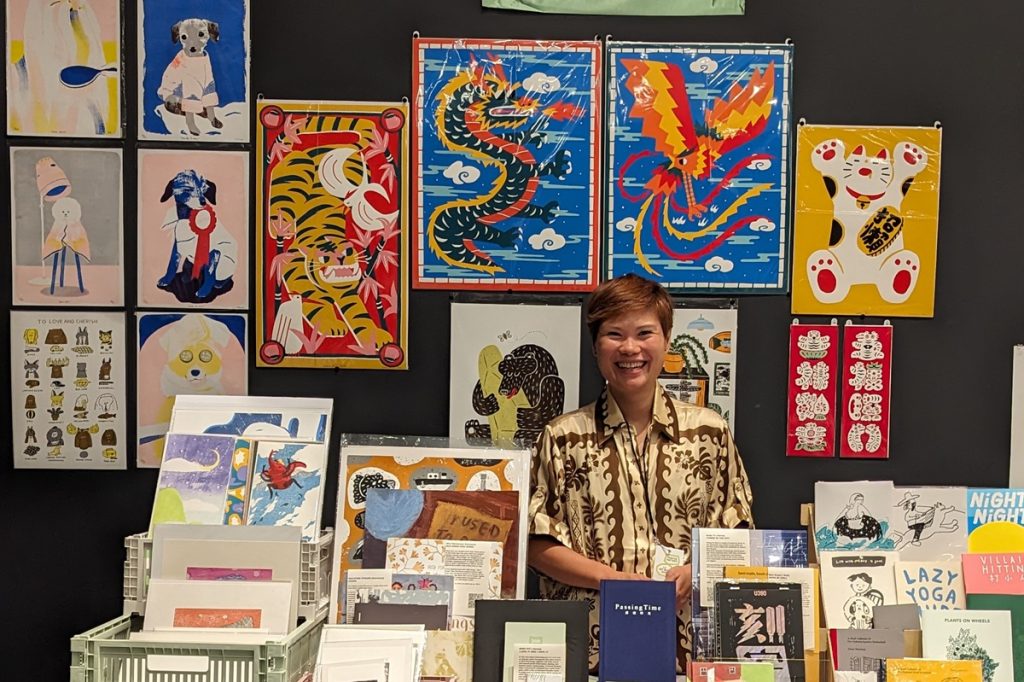
Phemie Chong thought she was finished with printmaking when she was living in the United Kingdom, where she had immigrated as a 12-year-old. But sometimes, life offers an unexpected surprise. After studying printmaking in Edinburgh, Chong moved to Budapest, where she met her Australian husband. Later, they moved to Hong Kong, where she noticed that nobody was selling any handmade prints.
“It seemed like there was a market,” Chong tells Pancouver over Zoom. “Initially, I thought if people are buying from IKEA, they can buy directly from artists.”
She opened her Hong Kong gallery, ODD ONE OUT, in 2012, printing and selling zines by Kylie Chan Kai and other artists. A zine is a self-published, small-circulation booklet, pamphlet or magazine that often address unconventional subjects. Back then, according to the printmaker, this artform was popular in the U.K., but wasn’t very well known in Hong Kong. The gallery held its first zine exhibition in 2014.
“For the artist, it’s their portable portfolio that they can distribute to whoever is interested in their work—or to try to promote their work,” Chong says.
ODD ONE OUT is the first gallery in Hong Kong dedicated to illustration, graphic arts, and printmaking. It now sells other artists’ products online, such as magazines, greeting cards, ceramics, drawings, paintings, limited-edition art prints, stationery, and home and lifestyle items.
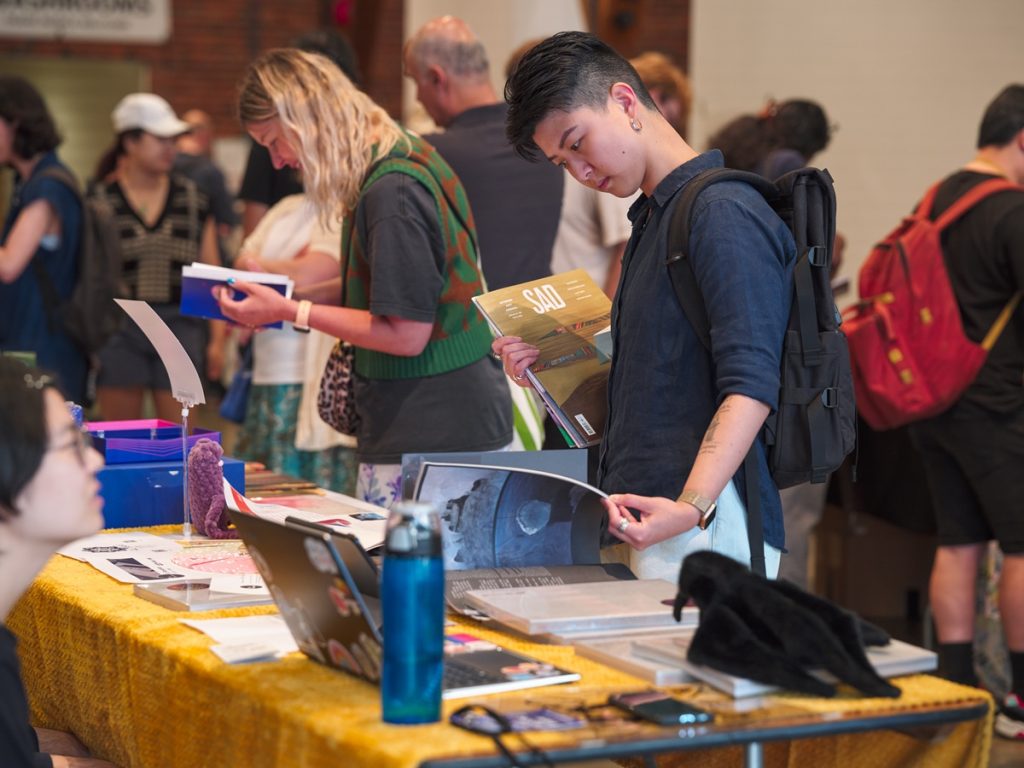
Chong recalls visit to Japanese paper mill
Printmaking can occur on distinct types of paper, fabrics, wood, and other surfaces. Chong believes that artificial-intelligence programs will never be able to replicate this traditional artform.
“They cannot produce texture on the page; they can’t produce paper,” she states. “They can’t create the physical material that you’re holding. Actually, I think that because there are more technologies, people are more into traditional craft.”
To support her point, Chong cites a trip that she took a couple of years ago to the Awagami Factory in Tokushima Prefecture in Japan. This facility produces inkjet, fine art, and decorative papers. Staff make washi papers through two handmade methods known as Temezuki and Nagashizuki.
“Papermaking in the ancient Heien period was described as follows: pulps such as kozo (mulberry), hemp and gampi were cut into small pieces and cooked in a mild alkaline solution,” the Awagami website states. “The cooked material was rinsed, cleaned and beaten to break down the fibers. The resulting pulp was then mixed with water and scooped onto a screened frame.”
The papermaker then shakes the frame to even out the pulp. Each sheet of paper created through this process is stacked on top of one another, separated by a piece of cloth.
“It’s similar to printmaking,” Chong says. “It has to be really hands-on. Technology can speed up the pace, but you can’t take away the physical aspect.”
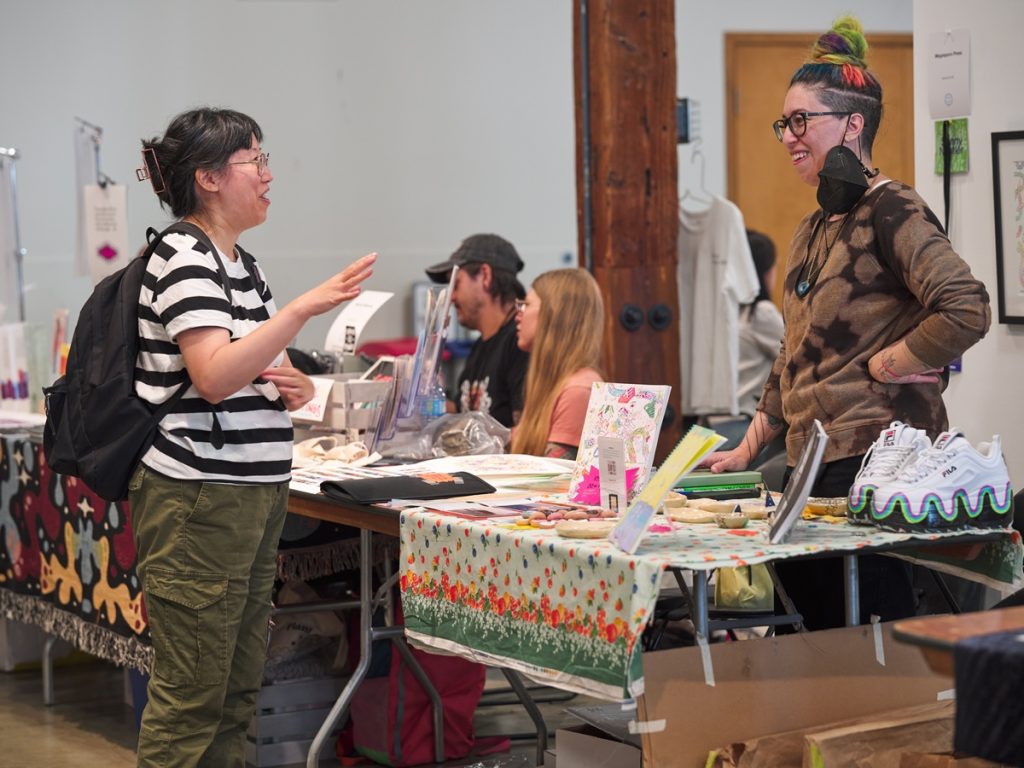
Screen printing works well for some projects
Chong has found that kozo works really well with screen printing because it absorbs ink so well. But she notes that screen printing isn’t ideal for every project.
“If you work mainly on iPads with multiple colours, it might not be the best for you.”
That’s because ODD ONE OUT prints individual colours separately—layer by layer—in screen printing. If the artist is using a dozen or more colours, it’s not worthwhile. However, she adds, screen printing works exceptionally well if the artist is using just two solid colours.
ODD ONE OUT is one of the 29 new exhibitors at this year’s Vancouver Art Book Fair, which runs from Friday (July 4) to Sunday (July 6) at the Roundhouse Community Arts & Recreation Centre. Other new exhibitors include Ottawa-based Nothing New Projects, San Francisco–based Now Place, and New York–based Homie House Press.
The OCW Arts & Publishing Foundation will present the Vancouver Art Book Fair. Libby Leshgold Gallery at Emily Carr University of Art + Design, Fillip, Vancouver Art Gallery, and Western Front have produced the program, which includes readings, panel discussions, and artists’ talks.
In her interview with Pancouver, Chong mentions that she has editioned and collaborated with artists from different countries, including the U.K., Australia, and Japan. However, she is not currently working with any Canadian artists.
“We will explore that,” Chong says with a smile. “That’s why we are coming to Vancouver.”
The OCW Arts & Publishing Foundation will present the Vancouver Art Book Fair. It runs from 5 to 9 p.m. on Friday (July 4), 11 a.m. to 6 p.m. on Saturday (July 5), and 11 a.m. to 5 p.m. on Sunday (July 6) at the Roundhouse Community Arts & Recreation Centre. For more information, visit the website. Follow Pancouver on Instagram @PancouverMedia and on Bluesky @pancouver.




