
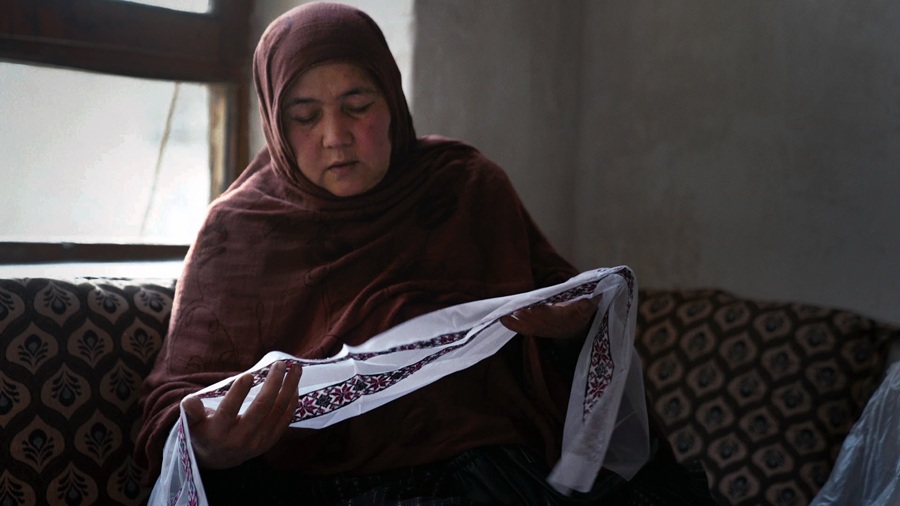
For many in the West, Afghanistan can seem distant and unfamiliar, often perceived as a land of women in chadors and armed men. Media representations often simplify complex realities and reinforce images and stereotypes.
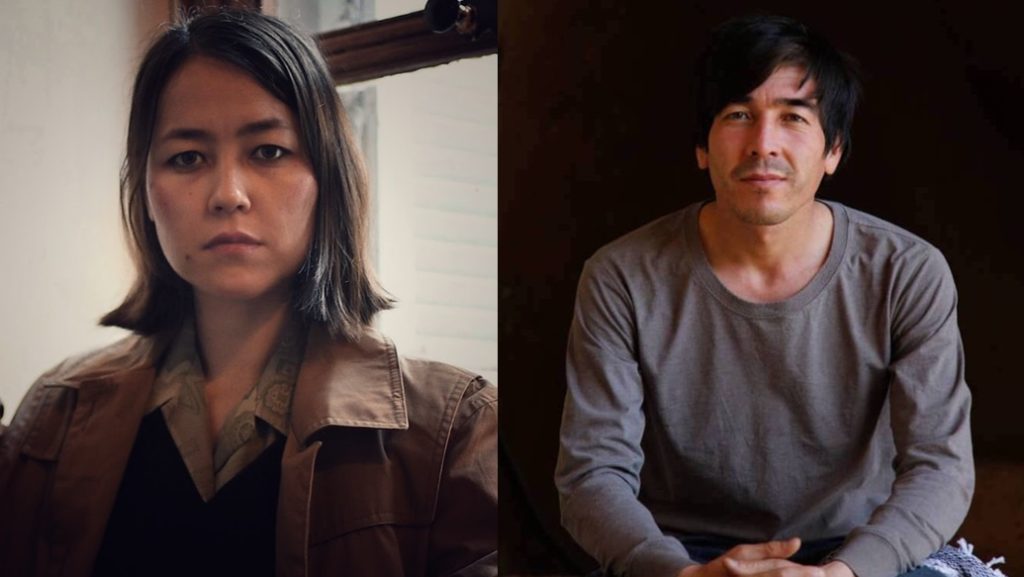
In her debut feature documentary, Writing Hawa, Najiba Noori confronts this western gaze and helps us look at life in an Afghan society beyond one-dimensional portrayals. With a background in journalism, the director, Noori, along with her brother, Rasul Noori, captures the essence of daily, intimate life, seemingly mundane yet profoundly significant.
There are not many films that depict how women relate to men and how they live and work in their private and public spheres in Afghanistan. This documentary is shot predominantly within the intimate confines of Noori’s home, where we observe her family life. The film is deeply personal and makes you feel privileged and welcomed into Noori’s family, witnessing their private and tender moments and struggles.
Writing Hawa was in the making for five years. The filming begins in 2019 when Najiba Noori, a journalist by profession, starts interviewing members of her family from three generations in their Kabul home. They belong to the Hazara community, an ethnic group that has been historically subjected to oppression and discrimination in Afghanistan. When the Taliban takes over in 2021 threatening women’s freedom, Noori asks her brother to finish the filming.
The piece is clearly not filmed by a detached observer. There is complete trust between the filmmakers and the subjects, and a bond, which can only exist because they are all family. As a result, the camera’s presence is almost imperceptible, extending the interior of the house seamlessly.
Hawa reflects lives of many Afghan women
Hawa, the unschooled mother, stands at the heart of the narrative. She was forced to marry a man 30 years her senior at the age of 13. This intimate portrait of Hawa’s life reflects the lives of many women in Afghanistan. Throughout the film, we observe Hawa taking care of everybody in her household; her children and grandchildren and her homebound husband, who suffers from dementia.
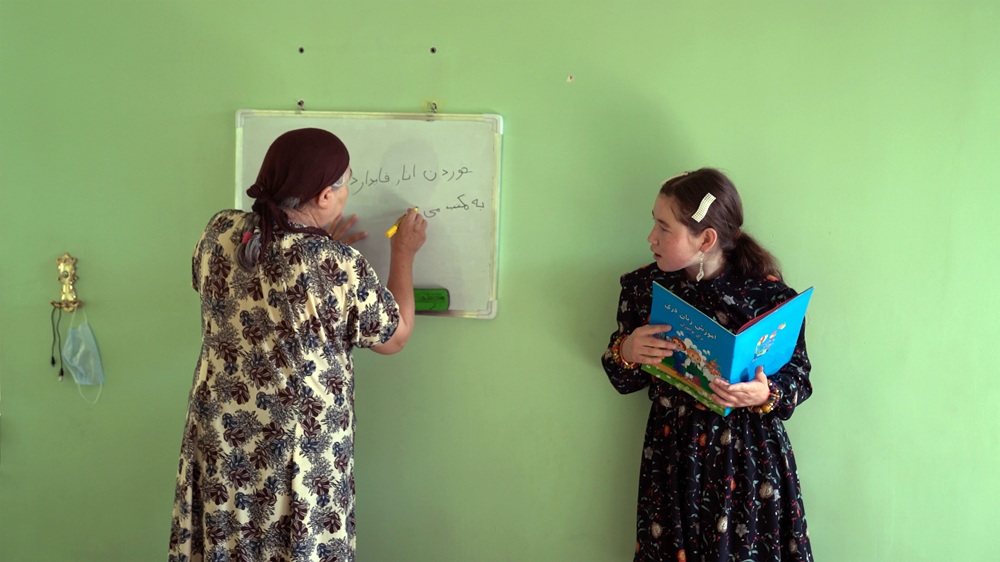
Inspired to take charge of her life, Hawa embarks on a small retail business and learns how to read and write. We observe her transformation as she changes her hair colour, travels to small towns, and makes business connections. It is refreshing to see how men in the family defy common assumptions and demonstrate signs of solidarity and allyship with women. They support Hawa with her business endeavour and Najiba with her journalism and filming career. There are heartwarming and playful moments as we watch her sons and grandsons guide Hawa through reading and spelling.
Halfway through the film, we encounter another compelling story. Hawa’s 15-year-old long-lost granddaughter, Zahra, who has been held captive under her father’s watch, arrives unexpectedly. Due to custody issues, Zahra hasn’t seen her mother since she was two. We witness heart-wrenching scenes of tears and joy as they reunite. Hawa wants to care for her granddaughter as much as possible and ensure she receives a proper education, but custody remains with the father, who may force her into an early marriage.
The television is always on in the living room as a constant connection between the household and the outside world. The director skillfully illustrates how every piece of political news impacts the family’s personal lives. Beautiful moments and stories of success are tinged with dread as the audience is aware of the historical events yet to unfold.
Taliban crushes aspirations
Afghanistan’s future and Hawa’s life changes when America returns all power to Taliban after occupying the country for two decades. Nobody believed that such a U.S. deal with the Taliban would happen. Hawa, who is poised for success, feels defeated as her plans and aspirations are crushed.
On the day of the Taliban takeover, Najiba hastily jams essentials into a bag and flees for Paris. As a journalist and a woman, she faces significant risks under the rule of Taliban. Her brother continues filming, but he is beaten and imprisoned when he is caught.
The music and the cinematography at the airport evoke a profound sense of weight and sorrow. We see striking images of people on the tarmac departing Afghanistan. No one leaves their homeland unless they are forced to, and many cannot, no matter how hard they try.
Writing Hawa serves as a powerful reminder not to overlook Afghanistan, and to bring a forgotten cause to the forefront: women’s freedoms, education, and empowerment.
The film has received several awards including the prestigious FIPRESCI Award (International Federation of Film Critics Prize) at the International Documentary Film Festival Amsterdam (IDFA) in 2024.
Watch the trailer for Writing Hawa.
The MENA Film Festival in Vancouver will screen Writing Hawa at 8 p.m. on Sunday (January 18) at the VIFF Cinema. For tickets, visit the MENA website. The festival runs from January 15 to 23. Nural Sümbültepe is a B.C. teacher. Follow Pancouver on X @PancouverMedia, Bluesky @pancouver.bsky.social, and Instagram @PancouverMedia.




