

The National Film Board of Canada has distinguished itself by producing many award-winning films by Indigenous directors. The first was mixed Mi’kmaq and Scottish-Irish director Willie Dunn’s “The Battle of Crowfoot”, which was filmed in 1968. This 10-minute short has been called Canada’s first music video. And it captured the Gold Hugo Prize as the best short film at the 1969 Chicago Festival and the Blue Ribbon Award at the 1970 American Festival.
On Friday (June 5), the NFB is collaborating with the Vancouver Public Library to present 14 more recent short films by Indigenous directors. The free Indigenous Shorts Film Festival runs from 12:30 to 4:30 p.m. in the Montalbano Family Theatre on the eighth floor of the central branch (350 West Georgia Street). It coincides with National Indigenous History Month in Canada, which takes place every June.
One of the prize winners is “Inkwo for When the Starving Return”. This 2024 film about an Indigenous youth’s battle against an ancient evil won a Leo Award for best animation program. Red River Métis director and animator Amanda Strong and screenwriters Bracken Hanuse Corlett (Waukinuxv and Klahoose) and Richard Van Camp (Tłı̨chǫ Dene) also won Leo Awards for their work. The 18-minute short, which was adapted from Van Camp’s short story, is set two lifetimes in the future..
Moreover, “Inkwo for When the Starving Return” won nearly two dozen other honours. That included the Sun Jury Award at imagineNative Film + Media Arts Festival.
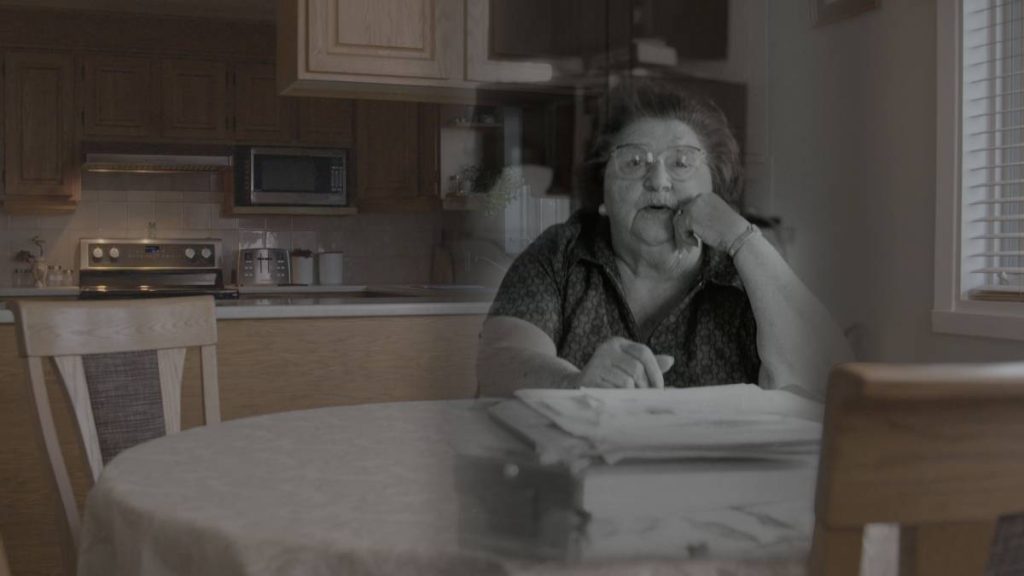
Indigenous Shorts Film Festival recalls a feminist warrior
Another award-winning film is Mohawk director Courtney Montour’s impressive 34 minute “Mary Two-Axe Earley: I Am Indian Again”. This biography of the legendary feminist activist from Kahnawake was named best documentary short at the 2021 American Indian Festival.
For more than two decades, Earley faced intense opposition from elected chiefs and councils and endured death threats for her opposition to a discriminatory section of the Indian Act. It took away an Indigenous woman’s Indian status and the status of her children if she married a non-Indigenous person.
In addition, the Indigenous Shorts Film Festival will present two works by Ossie Michelin, a freelance Inuk journalist from North West River in Labrador. The festival opener is the 23-minute documentary “Feather Fall”. In it, Michelin reflects on his reporting for APTN in 2013 about a police raid on an Indigenous blockade in Elsipogtog. The protesters were opposing a shale gas project supported by the New Brunswick government. Michelin then returns a decade later to address how the events that he covered affected the community.
The second Michelin film is the delightful “Evan’s Drum”. This 14-minute documentary short revolves around an Inuk family in Happy Valley–Goose Bay, focusing particular attention on a precocious little boy with a love for drumming.
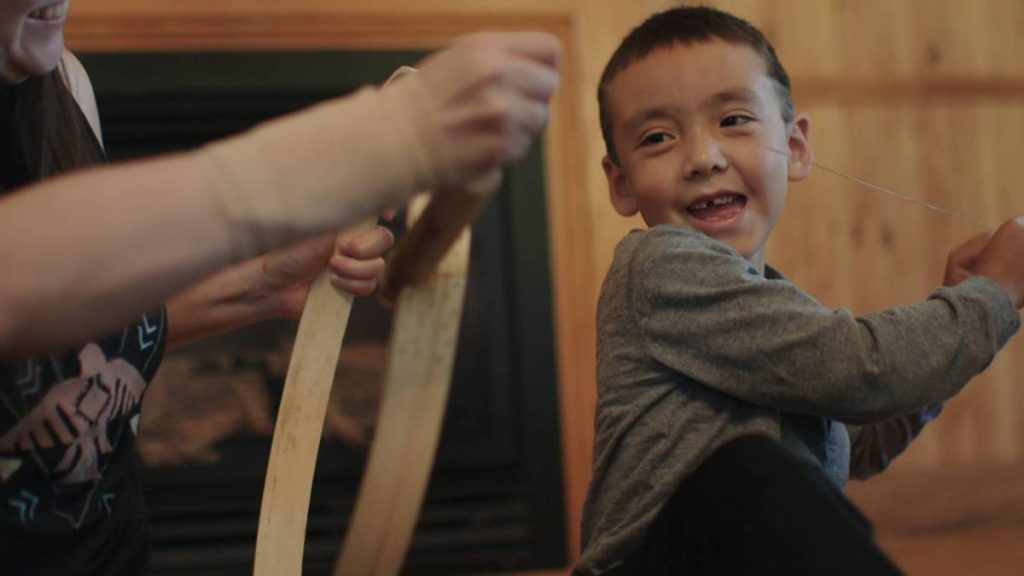
Traditions and childhood memories
The Atikamekw Cree director of Indigenous Arts at the Banff Centre for Arts and Creativity, Janine Windolph, also has two shorts in the festival. The first is “Our Maternal Home”, a 15-minute film about a Cree family coming to terms with generational and cultural disconnection. The second Windolph film is “Stories are in Our Bones”. In this 11-minute short, she takes her sons fishing with their kokum (grandmother), a residential school survivor.
Among the other 14 films is Alanis Obomsawin’s “My Friend the Green Horse”, which closes the festival. In this whimsical and poignant animated and live-action short, the legendary Abenaki filmmaker reveals how she found refuge as a child in a dream world populated by animal spirits.
Visit the Vancouver Public Library website for a full list of films at the Indigenous Shorts Film Festival.
Follow Pancouver on Instagram @PancouverMedia, on X @PancouverMedia, and on Bluesky @pancouver.bsky.social.


